

In 2026, writing an "SEO-friendly blog post" has nothing in common with the outdated keyword-stuffing tactics of the past decade. For years, digital marketing blogs prescribed a simplistic, mechanical checklist: pick a primary keyword with high volume, repeat it in your title, sprinkle it every 200 words, write at least 1,500 words of superficial text, and wait for Google to reward you with page-one rankings. Today, executing that formula will not merely fail to rank—it will actively trigger algorithmic devaluation across your entire domain.
The search ecosystem has permanently entered the era of multimodal neural ranking, Google AI Overviews, conversational search engines, and real-time Information Gain scoring. Search algorithms no longer evaluate pages as isolated bags of words; they parse documents as structured knowledge graphs. They measure semantic entity completeness, verify authentic practitioner experience (E-E-A-T), calculate incremental information value compared to the existing index, and evaluate real-time user engagement telemetry.
To capture sustainable organic traffic, earn coveted AI Overview citations, and convert casual readers into enterprise pipeline revenue, content creators must operate with the precision of software architects. You need a systematic, repeatable engineering framework that harmonizes human editorial storytelling with algorithmic retrieval mechanics. This playbook presents the definitive 7-step framework for writing SEO-friendly blog posts in 2026—guiding you from search intent deconstruction to semantic outline design, information gain engineering, multimodal asset integration, and technical pre-launch validation.
The Shift in 2026: Why Generic Blog Posts No Longer Rank
Before executing the framework, every content creator, editor, and growth marketer must confront the architectural reality of modern search engines. As we explored in our foundational guide to writing content that ranks and converts readers, Google's index is currently saturated with billions of pages of commoditized text generated by Large Language Models.
When millions of websites prompt automated AI tools to "write a 2,000-word guide on topic X," the resulting articles share an identical, bland semantic profile. They rehash the same surface-level definitions, cite the same Wikipedia-level facts, and structure points in the same predictable bulleted lists. In response, search engines engineered sophisticated defensive mechanisms:
- The Information Gain Scoring Patent: Google's algorithms now evaluate how much new, non-redundant information a page contributes to the searcher compared to the top 20 results already indexed. A post that merely synthesizes what competitors have already stated receives a near-zero Information Gain score and is suppressed from search results.
- Zero-Click AI Overview Compression: For purely factual or definitional queries (e.g., "what is a canonical tag"), Google's conversational AI models generate complete synthesis boxes at the top of the viewport. If your article only answers basic definitions, users will never click through to your site. High-ranking content in 2026 targets complex, multi-layered decision problems requiring nuanced practitioner judgment.
- User Engagement Telemetry: In an era where third-party cookie tracking has decayed, search engines rely heavily on first-party behavioral metrics. If an organic searcher clicks your link and bounces back to the SERP within 8 seconds (pogo-sticking), Google's ranking systems infer that your content failed to satisfy the query, triggering rapid ranking decay.
Publishing unedited, raw AI-generated blog posts is the fastest route to algorithmic suppression under Google's Helpful Content classifiers. While generative AI is an exceptional tool for semantic brainstorming, research synthesis, and outline scaffolding, every published paragraph must be infused with authentic human voice, proprietary data, verified case studies, and practitioner perspective.
To consistently outperform both human competitors and automated generative scrapers, your content production must follow a disciplined, multi-phase operational pipeline. Below is the 7-step blueprint.
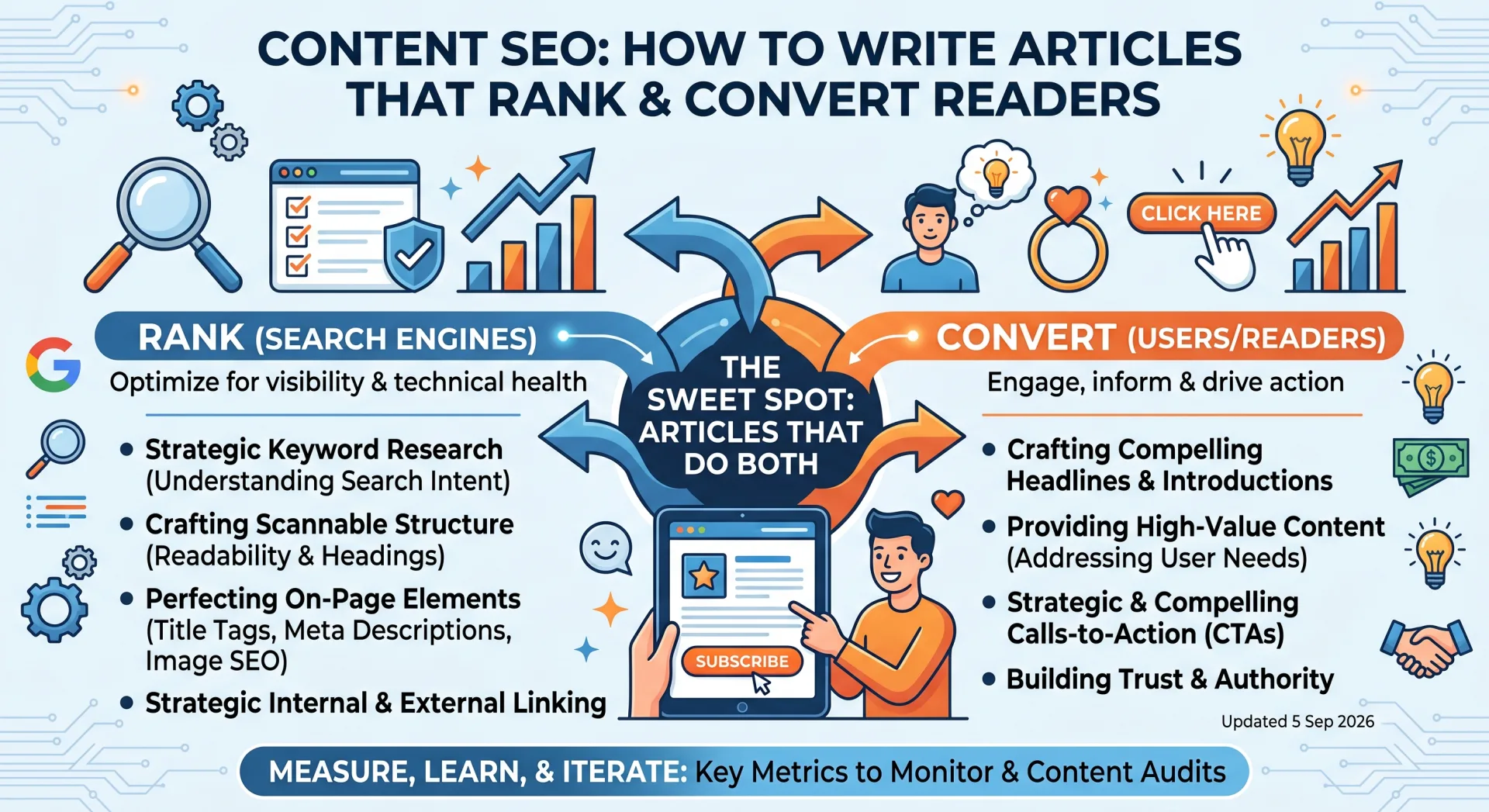
Step 1: Search Intent Deconstruction & Entity Clustering
Every successful SEO blog post begins not with a keyword list, but with a deep psychological and algorithmic deconstruction of Search Intent. Search intent represents the underlying objective a user seeks to accomplish when typing a query into a search bar. If your content format conflicts with Google's algorithmic interpretation of intent, your page will never achieve top rankings—regardless of how well-written it is or how many backlinks you build.
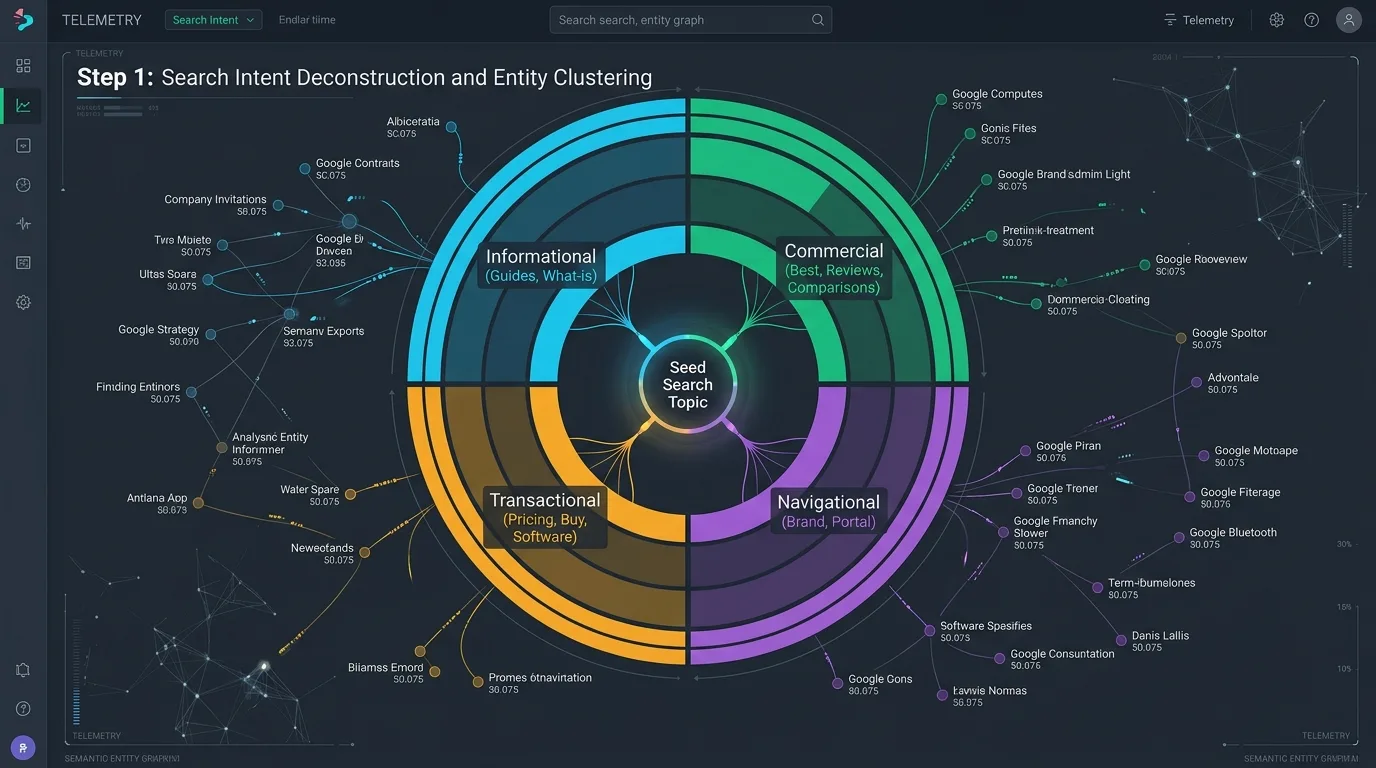
The Four Core Intent Archetypes in 2026
Modern search engines categorize user intent into four primary buckets, each demanding a distinct editorial format:
| Intent Archetype | User Psychological State | Dominant SERP Features | Mandatory Content Format | Conversion Strategy |
|---|---|---|---|---|
| Informational | Seeking knowledge, diagnosis, or how-to processes | AI Overviews, Featured Snippets, People Also Ask (PAA) | Exhaustive step-by-step guides, tutorials, and technical teardowns | Lead magnet opt-in, newsletter subscription, related cluster post link |
| Commercial Investigation | Evaluating competing options before a purchase | Review stars, comparison tables, Reddit/forum modules | Side-by-side comparison matrices, "Best Of" lists, and buyer guides | Free trial signup, interactive calculator, case study download |
| Transactional | Ready to buy, sign up, or download immediately | Google Shopping, sponsored ads, product carousels | High-conversion product landing pages and clear pricing tiers | Direct checkout, demo request button, enterprise contact form |
| Navigational | Looking for a specific website, brand, or portal | Sitelinks, Knowledge Graph, brand cards | Clean homepage navigation and clear brand positioning | Login portal link, self-service documentation gateway |
Entity Clustering Beyond Keyword Strings
In modern semantic SEO, search engines rely on the Google Knowledge Graph to evaluate topical depth. Entities are unique, well-defined objects, concepts, or individuals (e.g., Core Web Vitals, Largest Contentful Paint, JavaScript Execution). When auditing your topic, do not simply search for long-tail variations of your primary keyword. You must identify the semantic entity co-occurrences that search engine neural networks expect to see in a definitive document.
For example, if you are writing about "how to fix crawl errors", a superficial article only repeats the phrase "crawl errors." An authoritative entity-optimized article systematically integrates related semantic entities: HTTP 301 redirects, robots.txt disallow directives, XML sitemaps, canonical tags, server response headers, crawl budget allocation, and Google Search Console URL inspection. As highlighted in our complete tutorial on conducting advanced keyword research, semantic entity coverage is what elevates a post from page 4 to position 1.
To audit entity coverage before writing, conduct a SERP dissection across the current top 5 organic results:
- Extract the recurring nouns, technical standards, tools, and processes cited by all top-ranking competitors.
- Check Google Autocomplete and the "People Also Ask" questions for secondary entities.
- Identify missing sub-topics that competitors failed to explain thoroughly—this represents your primary window for Information Gain.

Step 2: Information Gain Engineering & E-E-A-T Signals
Once search intent is mapped, you must address the single most decisive ranking criterion in modern search: Information Gain. In simple terms: What unique insight, data, or perspective does your article provide that does not currently exist on any of the top 10 ranking pages on Google?
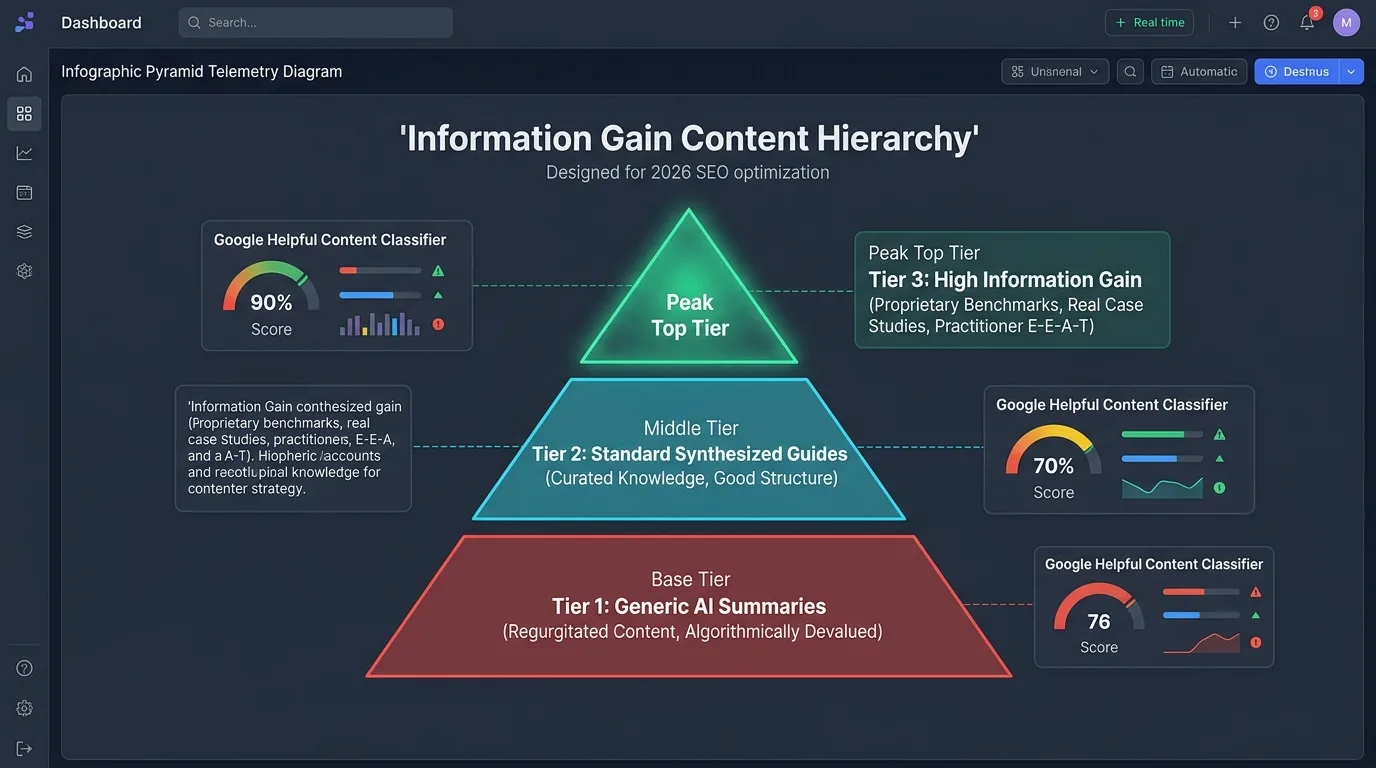
The Information Gain Content Hierarchy
To visualize how search engines evaluate content value, consider the three tiers of digital publishing:
- Tier 1: Commodity AI Summaries (Bottom of Pyramid): Articles that scrape and rephrase the existing SERP using automated prompts. They offer zero unique data, zero first-hand experience, and zero original perspective. Google's Helpful Content algorithms actively devalue this tier.
- Tier 2: Standard Synthesized Guides (Middle of Pyramid): Well-organized, cleanly formatted articles that curate established industry knowledge. While useful for beginners, they struggle to rank #1 in competitive commercial niches because they lack competitive moats.
- Tier 3: High Information Gain (Peak of Pyramid): Content containing proprietary benchmarks, original surveys, first-hand engineering teardowns, authentic practitioner experiments, or contrarian methodologies backed by verifiable data. This tier captures top rankings, earns natural editorial backlinks, and gets cited inside AI Overviews.
Embedding Verifiable E-E-A-T into Your Copy
Google's Quality Rater Guidelines emphasize Experience, Expertise, Authoritativeness, and Trustworthiness (E-E-A-T). You can programmatically signal authentic practitioner experience by following four editorial rules:
- Use First-Person Practitioner Voice: Instead of passive statements like "It is recommended to check canonical tags," write "In our audit of 45 enterprise client websites, we discovered that 68% suffered from self-referential canonical loops that drained crawl budget."
- Include Real Screenshots and Process Telemetry: Replace generic stock photography with annotated UI screenshots, terminal command outputs, and live diagnostic dashboards showing real software interfaces.
- Document Failure Modes and Edge Cases: Amateur content only discusses idealized success scenarios. Authoritative content explains where strategies break down, how edge cases trigger unexpected errors, and the exact trade-offs involved in technical decisions.
- Transparent Author Byline & Credentials: Ensure every article features a detailed author bio establishing verified domain credentials, industry experience, and links to professional profiles, validated through structured JSON-LD author schema markup.
Before drafting an article, run a small test or compile a proprietary mini-benchmark. For example, instead of writing another generic "Best SEO Tools" post, test 5 free tools on the same website and publish the exact discrepancy in keyword rankings between them. That single data point establishes instant Information Gain and generates irresistible link-bait for other publishers.
Step 3: Search-Optimized Outline & Heading Hierarchy (H1–H3)
A high-ranking blog post is not a monolithic block of prose; it is a modular, highly structured information architecture. Search engine crawlers parse your heading hierarchy (<h1>, <h2>, <h3>) to build an internal table of contents and understand how topics relate logically to one another.
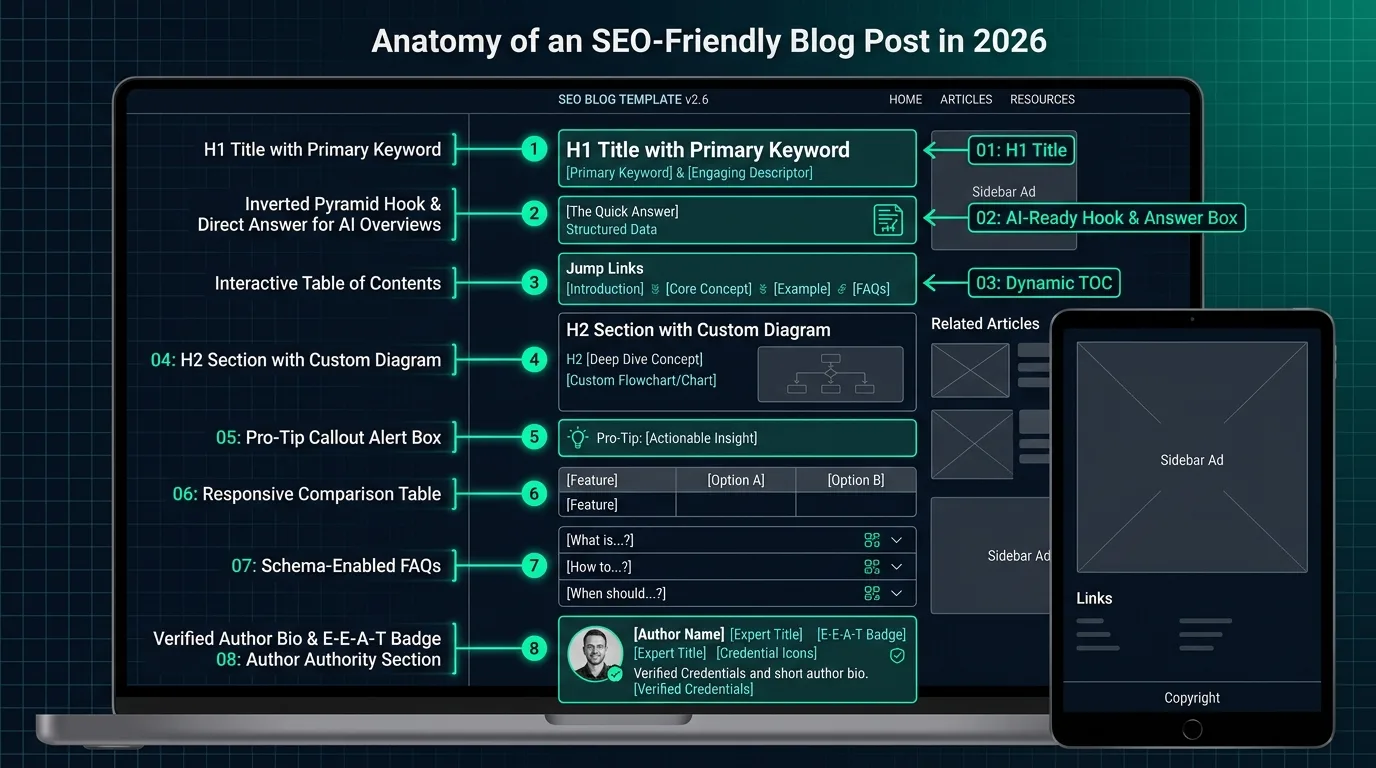
The Strict Rules of Heading Syntax
Beginners frequently make structural heading errors that confuse search bots. Follow these four non-negotiable architectural rules:
- Exactly One <h1> Tag Per Page: Your
<h1>is reserved exclusively for the post title. It must include your primary target keyword, ideally placed within the first 60% of the character string, followed by a compelling modifier or benefit hook. Keep total pixel width under 580px (approximately 50 to 60 characters) to prevent SERP truncation. - Strict Chronological Nesting: Never skip heading levels for visual styling (e.g., never jump from an
<h2>directly to an<h4>). An<h3>must logically represent a direct sub-topic of the preceding<h2>. - Actionable and Descriptive Phrasing: Avoid cryptic or poetic headings like "A New Horizon" or "Thoughts on Speed." Use descriptive, keyword-rich headings like "Step 3: Configuring HTTP Caching to Reduce Server Response Latency."
- Incorporate Secondary Semantic Questions: Leverage questions extracted from Google's "People Also Ask" boxes directly into your
<h3>headings to maximize your probability of capturing multiple SERP feature placements.
Headline Formulas with Proven CTR Psychological Triggers
Your headline is the single most critical asset determining organic Click-Through Rate (CTR). High ranking with low CTR signals to Google that your title is unappealing, leading to ranking demotion. Use one of these three battle-tested headline architectures:
- The Step-by-Step Blueprint:
[Primary Keyword]: The [Number]-Step Framework [Year/Benefit]
Example: "How to Write SEO-Friendly Blog Posts: A 7-Step Framework" - The Comprehensive Teardown:
The Complete Guide to [Primary Keyword]: [Compelling Outcome]
Example: "Core Web Vitals Optimization: A Step-by-Step Playbook for 2026" - The Contrarian / Comparative Truth:
[Option A] vs [Option B]: Which Delivers the Best [Metric] in [Year]?
Example: "SEO vs SEM vs SMM: Which Channel Delivers the Best ROI in 2026?"
Directly beneath an informational <h2> or <h3> heading (e.g., "What is Interaction to Next Paint?"), write a concise, bolded 40-to-60-word paragraph that provides a complete, standalone definition. Google's snippet extraction algorithms specifically scan for tight, authoritative answer blocks immediately following heading tags.
Step 4: High-Velocity Drafting & Hook Engineering (The Inverted Pyramid)
Modern online readers do not read web pages linearly; they scan them rapidly. If an organic searcher lands on your blog post and encounters three paragraphs of rambling throat-clearing fluff (e.g., "Since the dawn of the internet, marketing has always been important..."), they will hit the back button within five seconds. You have lost both the reader and your search ranking.
The 5-Part Hook Anatomy Formula
Every high-converting blog post introduction must accomplish five distinct psychological objectives within the first 150 words:
- The Pain Stator: Identify the exact technical frustration, loss of traffic, or financial inefficiency the reader is currently battling.
- The Contrarian Truth: Dispel a common industry myth or expose why traditional conventional advice is actively failing in 2026.
- The Mechanism: Introduce the core concept, algorithm shift, or framework that solves the problem.
- The Proof / Authority: State the verified data set, practitioner credentials, or real-world testing that validates your approach.
- The Roadmap: Provide an upfront summary of what the article will teach, paired with a clickable Table of Contents.
Engineering Skimmability and Reader Retention
To maintain high engagement rates and signal positive dwell time to Google's ranking systems, format your text for visual rhythm:
- Max 3 to 4 Sentences Per Paragraph: Large walls of text cause cognitive fatigue on mobile devices. Keep paragraphs concise and focused on a single idea.
- Bold Key Conceptual Anchors: Bold the first few words of key sentences or critical metrics so scanning readers instantly grasp the core argument.
- Use Bulleted and Numbered Lists: Whenever presenting three or more items, convert them into clean HTML
<ul>or<ol>lists rather than burying them inside run-on sentences. - Deploy Native Callout Alert Boxes: Break up long narrative stretches by highlighting essential warnings, pro-tips, and real-world examples in distinctive UI containers.
Step 5: Visual Asset Enrichment & Multimodal Optimization
Google is an increasingly multimodal search engine. In 2026, Google Lens, image search carousels, video packs, and interactive modules occupy massive portions of the SERP viewport. Publishing an article comprised solely of plain text is an archaic practice that caps your traffic potential.
Articles enriched with custom infographics, architecture diagrams, and structured data tables earn up to 94% more organic backlinks and achieve 2.4x higher session durations than text-only competitors. However, visual assets must be engineered with technical precision:
- Eliminate Meaningless Stock Photography: Stock photos of smiling corporate actors shaking hands add zero Information Gain. Replace them with custom diagrams, system flowcharts, telemetry charts, and annotated screenshots that explain complex concepts visually.
- Modern Next-Gen Image Formats (WebP & AVIF): Never upload raw uncompressed PNGs or JPEGs exceeding 500KB. Compress all graphics into modern WebP or AVIF formats, ensuring typical image sizes remain under 120KB without visual degradation.
- Mandatory Width, Height & Lazy Loading Attributes: To prevent Cumulative Layout Shift (CLS) penalties, always declare explicit
widthandheightdimensions in your HTML or CSS. Always specifyloading="lazy"on all in-content images below the viewport fold to accelerate initial page rendering. - Descriptive, Semantic Alt Text: Do not stuff keywords into alt attributes (e.g.,
alt="seo blog post seo tools ranking"). Write natural, descriptive captions explaining what the image illustrates (e.g.,alt="Technical data flow diagram showing search intent clustering across informational and commercial quadrants").
Step 6: Internal Linking Topology & External Citation Strategy
Links are the circulatory system of the web. Internal links distribute PageRank equity across your domain, establish thematic topical clusters, and guide readers toward high-value conversion pages. External links cite authoritative primary sources, signaling to search engines that your content is grounded in verified consensus.
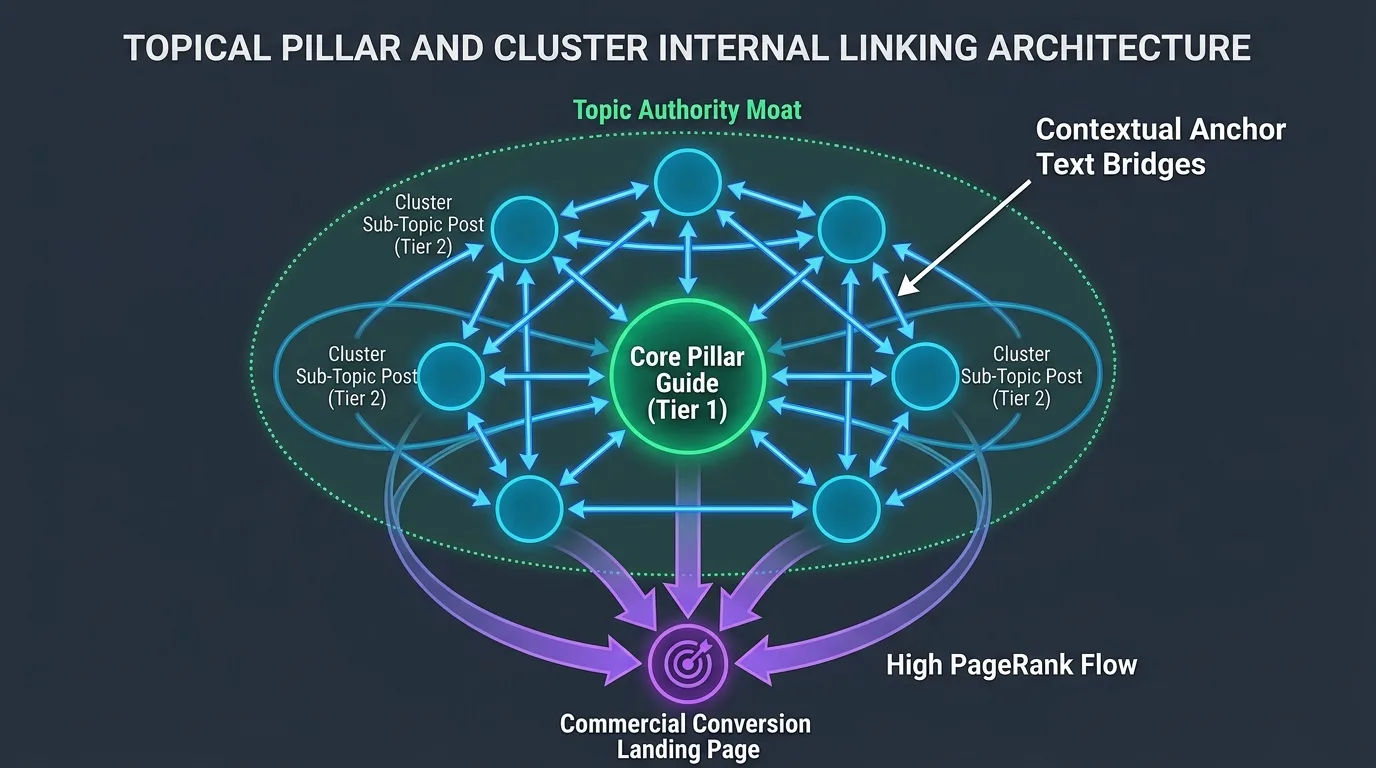
The Pillar-and-Cluster Linking Architecture
Rather than publishing disconnected articles, organize your content into Topical Silos:
- The Pillar Page (Tier 1): An exhaustive, high-level guide targeting a broad commercial head term (e.g., our comprehensive guide to SEO for beginners).
- The Cluster Posts (Tier 2): Highly focused deep dives targeting specific long-tail queries (e.g., our tutorials on the 12 best free SEO tools and SEO vs SEM vs SMM ROI comparisons).
- Bidirectional Hyperlinks: Every cluster post must link back up to the pillar page using descriptive anchor text, and the pillar page must link down to each cluster post. This signals to Google's topical classifiers that your site possesses complete semantic mastery over the entire topic.
Anchor Text Distribution Strategy
Over-optimizing internal anchor text with exact-match commercial keywords can look artificial to automated quality classifiers. Maintain a healthy internal anchor portfolio:
- 40% Descriptive Partial-Match: e.g., "read our comprehensive guide to optimizing on-page SEO elements"
- 40% Entity & Topical Synonyms: e.g., "monitoring site architecture and fixing crawl budget errors"
- 20% Branded / Natural Phrasing: e.g., "learn more in our schema markup playbook"
Step 7: Pre-Publishing Technical Audit, Core Web Vitals & Schema Validation
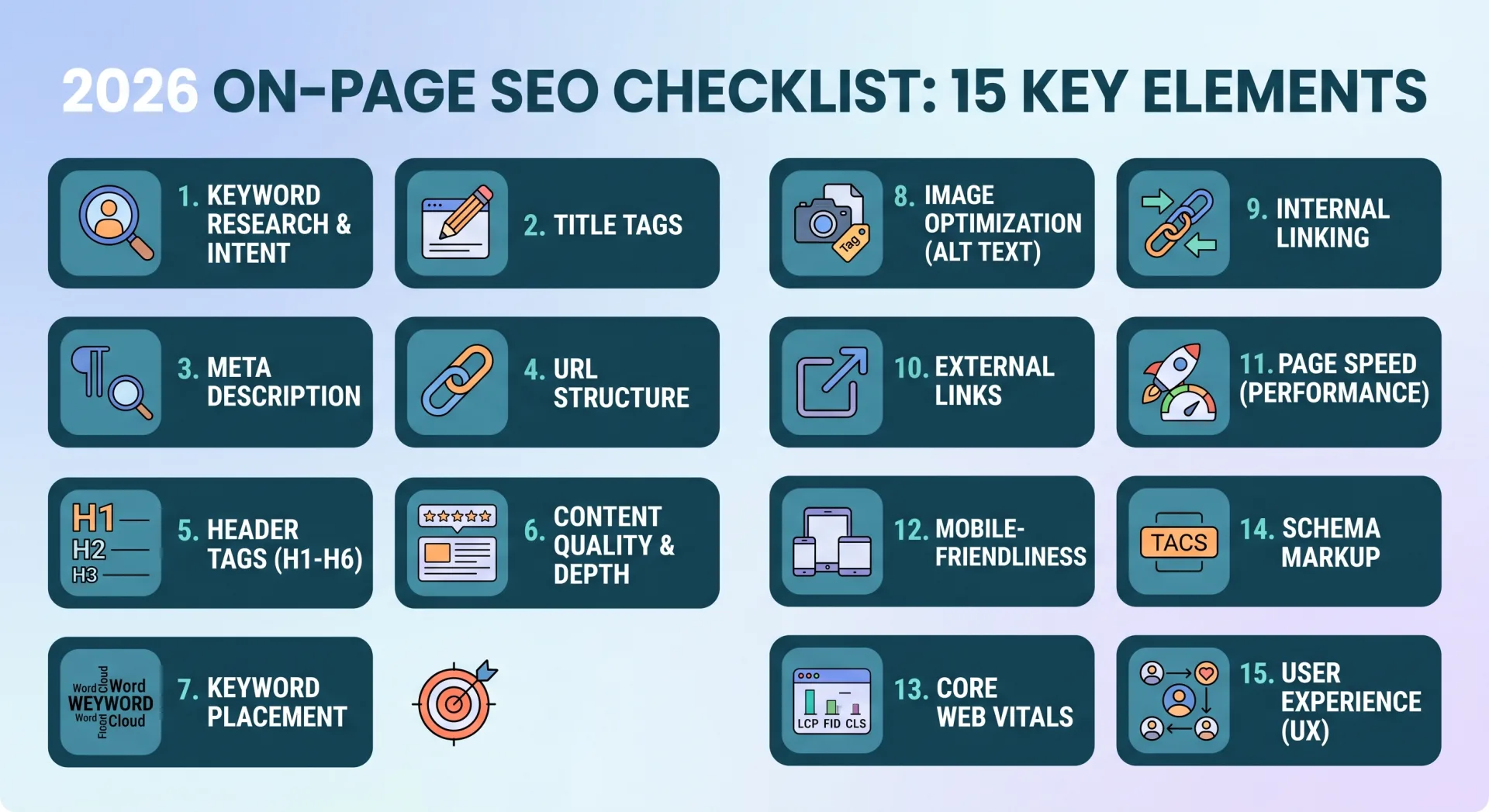
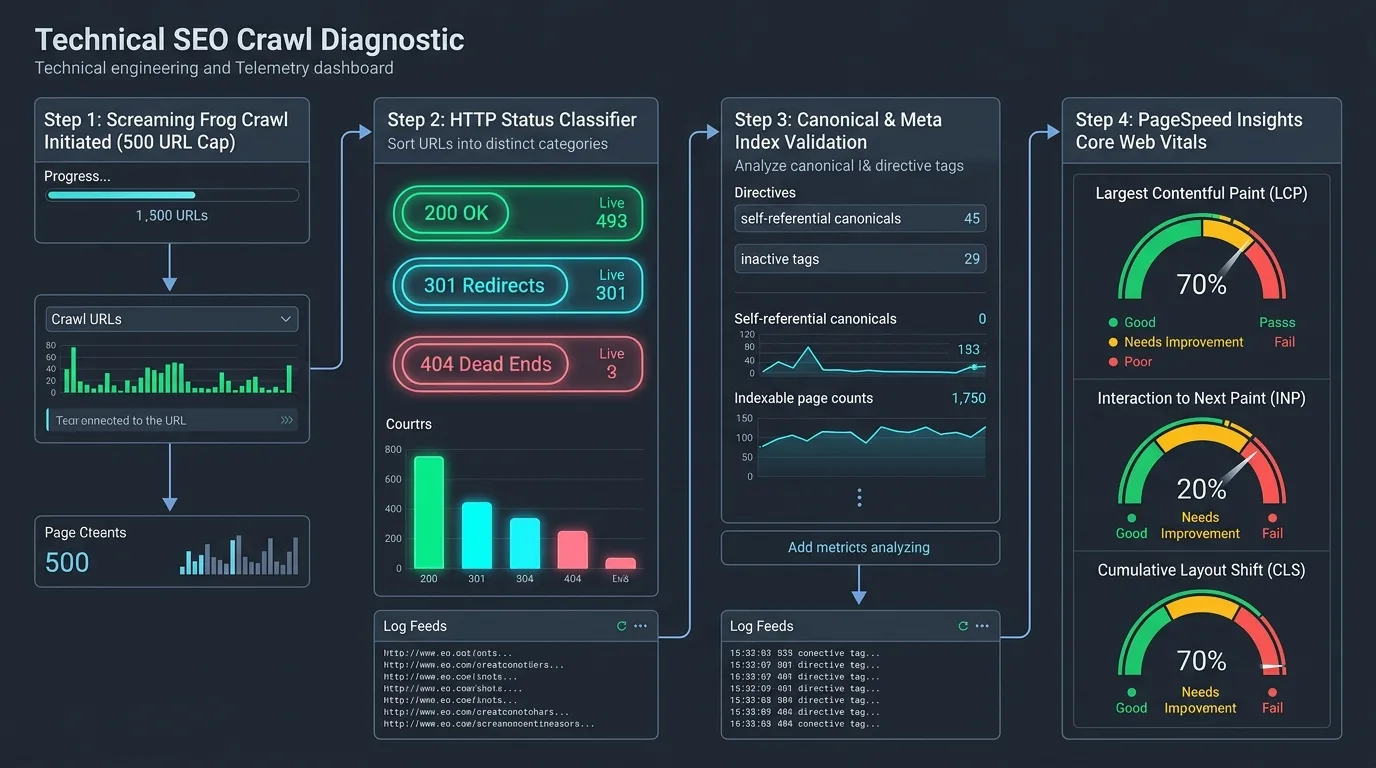
Writing is only half the battle. Before clicking "Publish," every article must pass a rigorous 15-point editorial, architectural, and technical quality audit. Skipping this step is why thousands of well-written articles sit in indexation purgatory without generating a single organic click.
| Audit Dimension | Validation Requirement | Target Threshold / Benchmark | Verification Tool |
|---|---|---|---|
| Title Tag Pixel Width | Primary keyword included, compelling hook | Under 580 pixels (50–60 characters) | SERP Simulator / Detailed SEO |
| Meta Description | Includes primary query, benefit, and call to action | Under 960 pixels (140–155 characters) | Detailed SEO Extension |
| URL Slug Hygiene | Short, lowercase, hyphenated, zero stop words | 3 to 5 words max (e.g., /blog/write-seo-blog-posts) |
CMS Permalink Settings |
| Heading Hierarchy | Single H1, chronological H2/H3 nesting | Zero jumped heading levels | Detailed SEO Headings Tab |
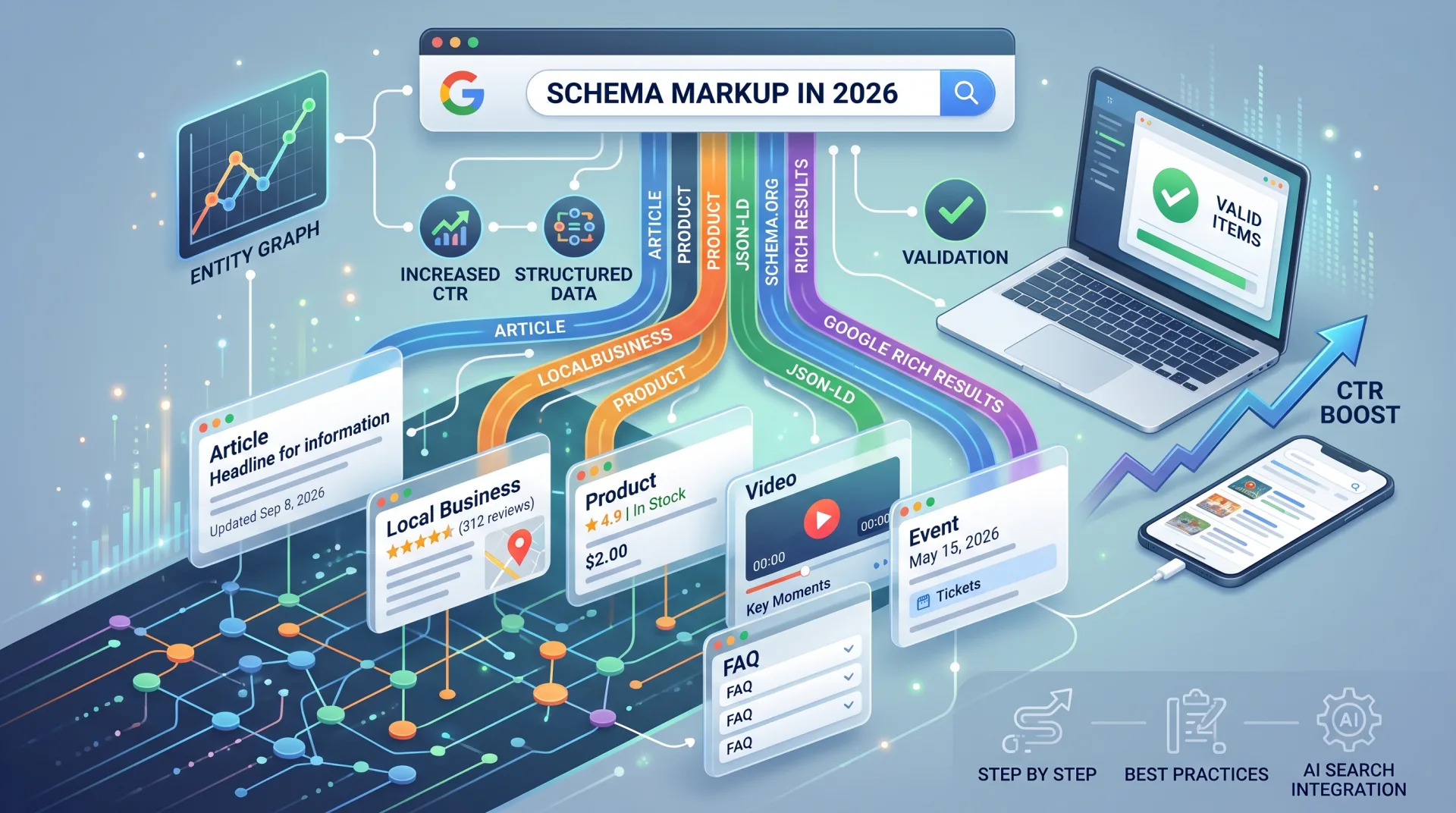
| Structured Data (Schema) | Valid JSON-LD code for Article & FAQPage | Zero syntax errors or missing required fields | Google Rich Results Test Tool |
| Core Web Vitals Speed | Largest Contentful Paint (LCP) & Interaction (INP) | LCP < 2.5s | INP < 200ms | CLS < 0.1 | Google PageSpeed Insights |
| Internal Links | Contextual links to relevant pillar and cluster pages | Minimum 4 to 8 relevant internal links | Screaming Frog Inlinks Tab |
| OpenGraph & Social Cards | Declared og:title, og:image (1200x630), twitter:card | High-contrast 16:9 social share preview | Twitter Card Validator / Meta Debugger |
Once an article is published and indexed by Google, never alter the URL slug arbitrarily. Changing /blog/how-to-write-seo-posts to /blog/seo-blog-writing-framework without implementing an immediate 301 permanent redirect will instantly orphan all existing backlink equity, trigger 404 crawl errors in Google Search Console, and cause your rankings to vanish overnight.
Post-Publication: Combating Content Decay & Refresh Cycles
Publishing an SEO-friendly blog post is not a one-time event; it is the birth of an ongoing digital asset. Over time, all high-ranking articles experience a natural phenomenon known as Content Decay. Competitors publish fresher data, Google updates its algorithms, links break, and search volumes fluctuate.
To defend your page-one rankings indefinitely, implement a semi-annual Content Refresh Protocol:
- Monitor Google Search Console Query Drift (Every 90 Days): Filter GSC for queries in positions 8 to 20 with high impressions but low click-through rates. Integrate these exact emerging queries as new
<h3>subsections or add them into your FAQ accordion. - Update Outdated Dates, Statistics & Case Studies: Search engines heavily favor fresh, active documents. Update year references in titles (e.g., from 2025 to 2026), replace broken external references, and verify that all software recommendations reflect current UI versions.
- Audit Broken Internal & External Links: Run periodic crawls using free technical audit tools like Screaming Frog to identify 404 links and immediately repair them.
- Optimize Core Web Vitals & Server Caching: Ensure server-side caching, image CDNs, and script minification maintain sub-second speed benchmarks as your site scales, following our dedicated guide on Core Web Vitals performance tuning.
Frequently Asked Questions (FAQ)
Below are authoritative answers to the ten most common technical and strategic questions regarding writing SEO-friendly blog posts in 2026.
What is the ideal word count for an SEO blog post in 2026?
There is no universal "magic" word count. The optimal length is determined entirely by Search Intent. For concise, direct questions, a 600-word post that provides an immediate answer may rank #1. However, for comprehensive commercial guides and technical pillar topics, top-ranking articles typically range between 2,500 and 4,500 words to provide exhaustive entity coverage and satisfy Information Gain requirements. Never add fluff merely to inflate word count.
Does Google penalize blog posts written with AI tools?
Google has explicitly stated that it does not penalize content simply because it was created using AI. Google evaluates content based on its quality, accuracy, utility, and Information Gain—not the method of production. However, unedited AI content that merely rehashes existing web summaries will naturally fail to rank because it lacks original research, authentic human experience, and novel insights.
What is the ideal keyword density in modern SEO writing?
Keyword density is an obsolete metric. Modern semantic search engines use natural language processing (NLP) and vector embeddings to understand topic relevance. Instead of repeating your exact primary keyword to hit an arbitrary percentage (e.g., 2%), focus on natural language, semantic synonyms, and related entity concepts. If your writing sounds awkward to a human reader, you have over-optimized.
How many internal links should an SEO blog post include?
As a rule of thumb, include 3 to 5 contextual internal links for every 1,000 words of content. Every link should point to a highly relevant supporting article or commercial landing page using descriptive, natural anchor text. Avoid cramming dozens of irrelevant links into a single paragraph, as this dilutes link equity and disrupts user readability.
How long does it take for a newly published SEO blog post to rank on Google?
On a new domain with low Domain Authority, ranking typically takes between 3 to 6 months as search engine crawlers evaluate content quality, index pages, and establish topical trust. On an established, high-authority domain with mature topical clusters, a well-optimized article can achieve page-one rankings within 7 to 21 days.
Why is the Inverted Pyramid format critical for SEO in 2026?
The Inverted Pyramid delivers the core answer immediately above the fold. This satisfies modern searchers who scan for quick solutions, drastically reducing bounce rates. Furthermore, Google's generative AI systems frequently scrape the introductory paragraphs of web pages to generate AI Overviews and Featured Snippets. Placing the direct answer upfront maximizes your snippet visibility.
What is Schema markup, and why is it necessary for blog posts?
Schema markup (specifically JSON-LD) is machine-readable microdata embedded in your page's code that explicitly defines your content attributes: the article headline, author credentials, publisher organization, date published, and FAQ items. It eliminates ambiguity for search engine crawlers and qualifies your page for enhanced rich snippets in Google search results.
Should blog posts use exact-match keywords in every heading?
No. Using your exact primary keyword in every <h2> and <h3> looks unnatural, creates a terrible reading experience, and risks triggering over-optimization algorithms. Include your primary keyword in the <h1> and one or two primary <h2> tags, and use semantic synonyms, LSI variations, and related questions for the remaining headings.
How often should existing blog posts be updated?
Audit your core high-traffic blog posts every 6 to 12 months. If an article begins losing impressions or rankings in Google Search Console, initiate an immediate content refresh: update statistics, add new FAQs, improve Core Web Vitals speed, and expand sections with fresh original insights.
What is the single most common reason high-quality blog posts fail to rank?
The most common reason is Intent Mismatch. A writer may produce a brilliant, beautifully written 4,000-word theoretical essay, but if searchers for that query wanted a quick comparison table or a downloadable template, Google will rank the competitor who gave searchers the exact format they wanted. Always analyze the live SERP before writing a single word.
Conclusion: The Compounding Power of Systematic SEO Writing
Writing SEO-friendly blog posts is neither an arcane mystery nor a creative lottery. It is a structured engineering discipline that rewards clarity, technical rigor, and an uncompromising dedication to user value.
When you master the 7-step framework—deconstructing search intent, engineering genuine Information Gain, building strict heading hierarchies, drafting high-velocity inverted pyramid copy, enriching pages with multimodal assets, establishing clean internal link topology, and auditing technical speed—you stop chasing algorithm updates. You create permanent, defensible search assets that build brand equity, capture qualified buyer attention, and compound organic revenue for years to come.


Ratings & reviews
No reviews yet. Be the first.