
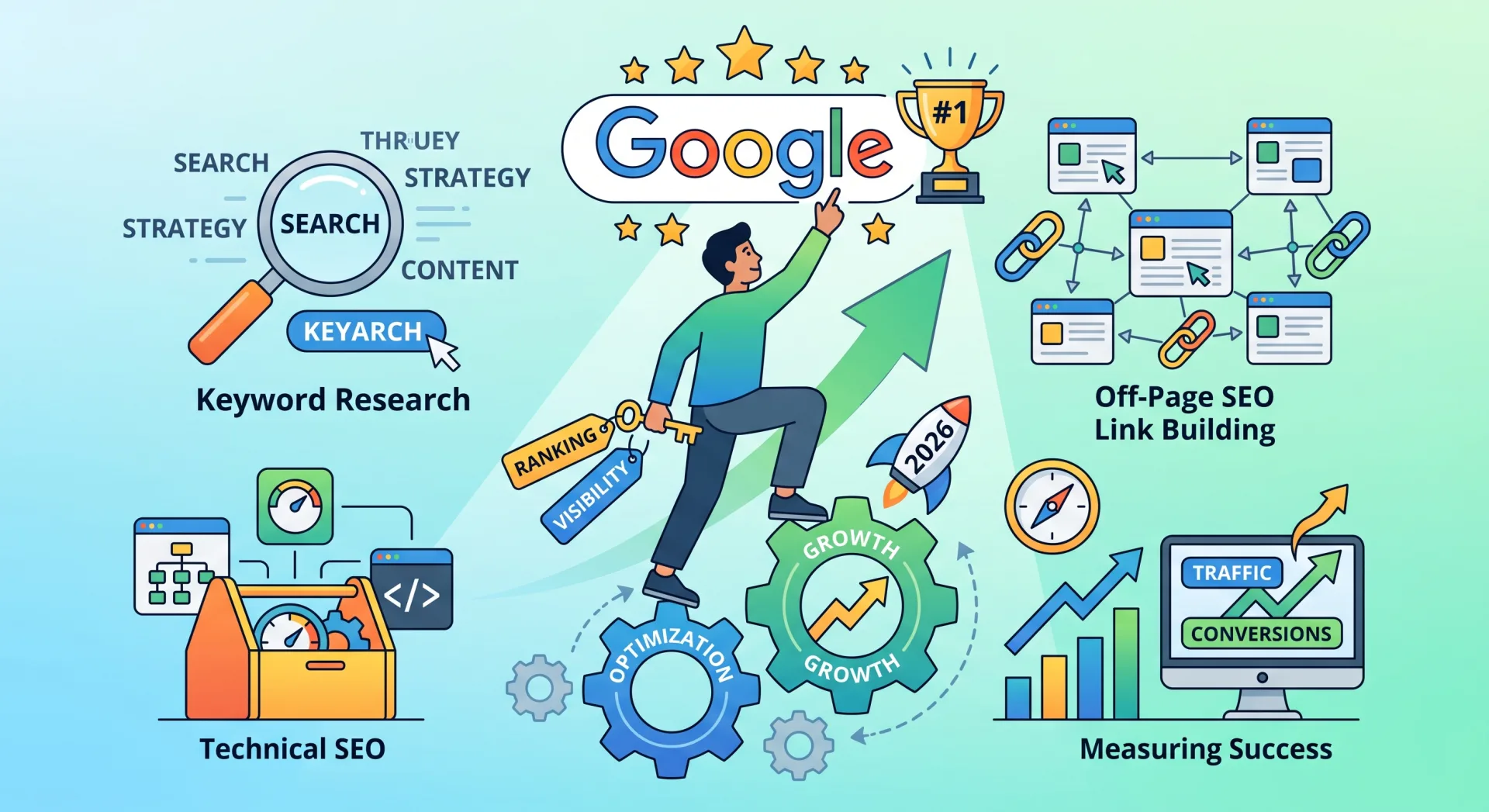
Welcome to the ultimate guide for anyone looking to understand and master Search Engine Optimization (SEO) in 2026. If you're a beginner eager to see your website climb Google's search results, this comprehensive resource is tailor-made for you. We'll demystify the core concepts of SEO, explain how search engines like Google operate, and provide actionable strategies to improve your site's visibility, attract more organic traffic, and ultimately achieve your online goals. From foundational principles to the latest best practices, you'll gain the knowledge and confidence to effectively optimize your online presence and outrank your competitors.
In today's digital landscape, a strong online presence is non-negotiable. Appearing prominently in search engine results is crucial for businesses, bloggers, and anyone with a website. This guide will serve as your roadmap, breaking down complex SEO jargon into easy-to-understand terms and offering practical steps you can implement immediately. By the end of this article, you'll have a solid understanding of how to optimize your content, build authority, and navigate the ever-evolving world of search engine algorithms.
Whether you're launching a new website or looking to revitalize an existing one, mastering SEO is an ongoing journey. This guide focuses on fundamental principles that remain constant, alongside modern techniques that reflect the current state of search engine technology. Get ready to transform your approach to online visibility and unlock the full potential of your digital assets.
Understanding the Basics: What is SEO and Why Does it Matter?
Search Engine Optimization, or SEO, is the practice of increasing the quantity and quality of traffic to your website through organic search engine results. In simpler terms, it's about making your website more appealing to search engines so they show it higher up on their results pages when people search for terms relevant to your business or content. This "organic" traffic is incredibly valuable because it consists of users actively looking for what you offer, making them more likely to convert into customers or engaged readers.
The primary goal of SEO is to improve your site's visibility. When your website ranks higher in search results, more people see it. This increased visibility translates directly into more clicks, more visitors, and ultimately, more opportunities for your business or content to succeed. Without effective SEO, even the most beautifully designed and informative website might remain undiscovered by its target audience.
SEO isn't just about tricking search engines; it's about creating a better experience for users. Search engines like Google strive to deliver the most relevant and high-quality results to their users. By optimizing your site for search engines, you're also optimizing it for your human visitors. This includes ensuring your site is fast, easy to navigate, secure, and provides valuable, well-organized content. When you align your efforts with what search engines value, you create a win-win situation for both your site and its users.
The Role of Search Engines in Discoverability
Search engines act as vast digital libraries, constantly indexing and categorizing the immense amount of information available on the internet. When you type a query into a search engine, it doesn't just scan the live web at that moment. Instead, it consults its colossal index of web pages that it has already discovered and analyzed. This process involves three main stages: crawling, indexing, and ranking.
Crawling is the discovery phase, where search engine bots (often called spiders or crawlers) follow links from page to page, discovering new content and updates to existing content. Indexing is where the search engine processes and stores the information it has crawled. It analyzes the content, keywords, images, and other media on each page to understand what it's about. Finally, ranking is when the search engine decides which pages are most relevant and valuable for a user's specific query and displays them in order on the search results page.
Understanding these stages is crucial because SEO strategies are designed to facilitate each one. For example, making sure your site has a clear link structure and a sitemap helps crawlers find all your important pages. Creating high-quality, keyword-rich content helps search engines properly index your pages for relevant searches. And optimizing for user experience, mobile-friendliness, and site speed contributes to better ranking.
Keyword Research: The Foundation of Your SEO Strategy
Keyword research is the cornerstone of any successful SEO strategy. It's the process of identifying the words and phrases that people use when searching for information, products, or services related to your business. By understanding these keywords, you can tailor your content to match user intent, ensuring that your website appears in front of the right audience at the right time.
Effective keyword research goes beyond simply guessing what people might search for. It involves using specialized tools to uncover popular search terms, analyze their search volume (how many times they're searched per month), and assess their competition (how difficult it might be to rank for them). The goal is to find a balance between high-volume keywords that attract a lot of traffic and long-tail keywords (more specific, longer phrases) that often have lower competition and higher conversion rates.
Starting with a broad list of topics relevant to your business is a good first step. Brainstorm services, products, and problems your target audience might be trying to solve. Then, use keyword research tools to expand this list, discover related terms, and refine your understanding of user search behavior. This foundational work will guide your content creation and on-page optimization efforts, ensuring every piece of content you produce is strategically aligned with what your audience is actively seeking.
Identifying Your Target Keywords
When identifying target keywords, think about the different stages of the buyer's journey. Some users are just exploring a topic (informational keywords), others are comparing options (navigational/commercial investigation keywords), and some are ready to make a purchase (transactional keywords). Your content strategy should aim to address all these stages.
For instance, if you sell organic coffee beans, an informational keyword might be "benefits of organic coffee," a commercial investigation keyword could be "best organic coffee brands," and a transactional keyword would be "buy organic coffee beans online." Each type of keyword requires a different content approach, from blog posts and guides to product pages and comparison articles.
Don't solely focus on high-volume keywords. While they offer significant traffic potential, they are often highly competitive. Incorporate long-tail keywords (e.g., "best fair trade organic coffee beans for pour-over") as they tend to attract highly qualified traffic with a stronger intent to convert.
On-Page SEO: Optimizing Your Content and Website Structure
On-page SEO refers to all the optimization efforts you make directly on your website to improve its search engine ranking. This includes optimizing your content, HTML source code, and overall site structure. The goal is to make it easy for both search engines and users to understand what your page is about, its relevance, and its value.
One of the most critical aspects of on-page SEO is content optimization. This involves strategically incorporating your target keywords into your page titles, headings, body text, and meta descriptions. However, keyword stuffing (overusing keywords unnaturally) is a detrimental practice. Instead, focus on creating high-quality, comprehensive, and engaging content that naturally incorporates relevant keywords and their variations.
Beyond content, technical elements play a significant role. This includes optimizing your URL structures to be clean and descriptive, ensuring your site is mobile-friendly, improving page loading speed, and using internal linking to connect related content. A well-optimized on-page strategy ensures that search engines can easily crawl, index, and understand the context of your pages, leading to better rankings.
Key On-Page Elements to Optimize
- Title Tags: The title tag is what appears in the browser tab and as the main clickable headline in search results. It should be compelling, accurately describe the page's content, and include your primary keyword, ideally near the beginning.
- Meta Descriptions: This short snippet appears under the title in search results. While not a direct ranking factor, a well-written meta description can significantly increase click-through rates by enticing users to visit your page.
- Header Tags (H1, H2, H3, etc.): These structure your content, making it easier to read for both users and search engines. Your H1 tag should contain your primary keyword, and subsequent H2s and H3s can use related keywords and variations to break down your content into logical sections.
- URL Structure: Keep your URLs short, descriptive, and keyword-rich. Avoid long strings of numbers or irrelevant characters.
- Image Optimization: Use descriptive alt text for all images. This not only helps search engines understand the image content (improving image search visibility) but also aids accessibility for visually impaired users. Compress images to reduce file size and improve page load times.
- Content Quality and Depth: Create comprehensive, authoritative content that answers user queries thoroughly. Google favors content that demonstrates expertise, authoritativeness, and trustworthiness (E-A-T).
<!DOCTYPE html>
<html lang="en">
<head>
    <meta charset="UTF-8">
    <meta name="viewport" content="width=device-width, initial-scale=1.0">
    <title>Your Primary Keyword | Catchy Phrase - Your Brand</title>
    <meta name="description" content="A compelling summary of your page content, including your target keyword, designed to encourage clicks.">
</head>
<body>
    <h1>Main Topic with Primary Keyword</h1>
    <p>Your engaging introductory paragraph.</p>
    <h2>Sub-topic with Related Keyword</h2>
    <p>Detailed information about the sub-topic.</p>
    <img src="image.jpg" alt="Descriptive alt text for image with keyword">
</body>
</html>
Off-Page SEO: Building Authority and Trust
Off-page SEO refers to all the activities you perform outside of your website to improve its search engine ranking. The most significant component of off-page SEO is link building, which involves acquiring backlinks from other reputable websites to your own. These backlinks act as "votes of confidence" from other sites, signaling to search engines that your content is valuable, trustworthy, and authoritative.
While link building is paramount, off-page SEO also encompasses other factors like social media marketing, local SEO (for businesses with a physical location), and brand mentions. These activities contribute to your overall online presence and help build your brand's reputation and visibility, which indirectly influences your search rankings.
The quality of your backlinks is far more important than the quantity. A few high-quality backlinks from authoritative and relevant websites are much more beneficial than hundreds of low-quality or spammy links. Google's algorithms are sophisticated enough to distinguish between natural, editorially earned links and artificial, manipulative ones. Focusing on earning natural backlinks through valuable content and genuine outreach is key to long-term SEO success.
Strategies for Effective Link Building
- Content Marketing: Create exceptional, shareable content (e.g., in-depth guides, original research, infographics, engaging videos) that naturally attracts backlinks from other sites looking to reference quality information.
- Guest Blogging: Write articles for other reputable websites in your industry. In return, you usually get a backlink to your site in your author bio or within the content.
- Broken Link Building: Find broken links on other websites and suggest your relevant content as a replacement. This provides value to the website owner and earns you a backlink.
- Competitor Analysis: Analyze your competitors' backlink profiles to identify potential linking opportunities you might have missed.
- Resource Page Link Building: Identify resource pages in your niche that list helpful tools, articles, or services, and suggest your relevant content for inclusion.
Avoid "black hat" link building tactics such as buying links, participating in link schemes, or using automated link-building software. These methods violate Google's Webmaster Guidelines and can result in severe penalties, including de-indexing your site from search results.
Technical SEO: Ensuring Your Site is Search Engine Friendly
Technical SEO focuses on optimizing your website's infrastructure to help search engines crawl, index, and understand your site more effectively. It deals with the behind-the-scenes aspects that directly impact how search engines interact with your pages. While often less visible than content or link building, a strong technical foundation is crucial for any successful SEO strategy.
One of the most critical aspects of technical SEO is site speed. Google has explicitly stated that page speed is a ranking factor, especially for mobile searches. Users also expect fast-loading websites; slow sites lead to high bounce rates and poor user experience. Optimizing image sizes, leveraging browser caching, using a Content Delivery Network (CDN), and minimizing code can significantly improve loading times.
Another vital element is mobile-friendliness. With the majority of searches now originating from mobile devices, Google uses mobile-first indexing, meaning it primarily uses the mobile version of your content for indexing and ranking. Ensuring your website is fully responsive and provides an excellent experience across all devices is no longer optional; it's a necessity for ranking well.
Key Technical SEO Considerations
- Site Architecture: A logical, hierarchical site structure makes it easy for search engines to crawl and for users to navigate. Use clear categories and subcategories, and ensure important pages are easily accessible within a few clicks from the homepage.
- XML Sitemaps: An XML sitemap lists all the important pages on your website, helping search engines discover and index them more efficiently. Submit your sitemap to Google Search Console.
- Robots.txt File: This file tells search engine crawlers which pages or sections of your site they should or shouldn't crawl. Use it carefully to prevent indexing of unimportant or sensitive pages.
- SSL Certificate (HTTPS): Having an SSL certificate encrypts data transferred between your server and users' browsers, making your site secure. Google considers HTTPS a minor ranking signal and users trust secure sites more.
- Canonical Tags: Use canonical tags to tell search engines which version of a page is the "master" version when you have duplicate or very similar content on different URLs. This prevents issues with duplicate content and ensures link equity is consolidated.
- Schema Markup: Structured data, or schema markup, helps search engines better understand the content on your pages. It can enable rich snippets (enhanced search results with extra information like star ratings or product prices), making your listings more appealing.
Measuring Success and Adapting Your Strategy
SEO is not a one-time task; it's an ongoing process that requires continuous monitoring, analysis, and adaptation. Once you've implemented your SEO strategies, it's crucial to track your performance to understand what's working, what isn't, and where you can make improvements. Tools like Google Analytics and Google Search Console are indispensable for this purpose, providing a wealth of data about your website's performance in search.
Google Analytics helps you understand user behavior on your site. You can see how much traffic you're getting, where it's coming from (organic search, direct, social, etc.), which pages are most popular, how long users stay on your site, and their conversion rates. This data allows you to assess the quality of your organic traffic and identify areas for content or user experience improvement.
Google Search Console, on the other hand, provides direct insights into how Google views your site. It shows you which keywords your site is ranking for, your average position in search results, click-through rates, and any crawling or indexing errors Google has encountered. It also alerts you to security issues or manual penalties. Regularly reviewing these reports is essential for maintaining a healthy and high-performing website in search.
Key Metrics to Monitor
- Organic Traffic: The number of visitors coming to your site from search engines. This is a primary indicator of your SEO success.
- Keyword Rankings: Your website's position in search results for your target keywords. Tracking improvements here shows the effectiveness of your on-page and off-page efforts.
- Click-Through Rate (CTR): The percentage of people who click on your listing in search results compared to how many times it was shown (impressions). A higher CTR often indicates compelling title tags and meta descriptions.
- Bounce Rate: The percentage of visitors who leave your site after viewing only one page. A high bounce rate from organic search might suggest that your content isn't meeting user intent or your page experience is poor.
- Conversion Rate: The percentage of organic visitors who complete a desired action (e.g., make a purchase, fill out a form, sign up for a newsletter). This directly measures the business impact of your SEO.
- Page Load Time: How quickly your pages load. Faster load times contribute to better user experience and can positively impact rankings.
The search engine landscape is constantly evolving, with Google frequently updating its algorithms. Staying informed about these changes and being prepared to adapt your strategy is vital. Subscribe to reputable SEO blogs, follow industry experts, and regularly audit your website to ensure it remains compliant with best practices and continues to perform well in search results.
Conclusion
Embarking on your SEO journey can seem daunting, but by understanding and diligently applying the fundamental principles outlined in this guide, you are well-equipped to significantly improve your website's visibility and Google ranking. From meticulous keyword research and robust on-page optimization to strategic off-page authority building and crucial technical SEO considerations, each element plays a vital role in your overall success. Remember that SEO is not a sprint, but a marathon—a continuous process of learning, implementing, analyzing, and adapting.
The digital landscape of 2026 demands a holistic approach to SEO, one that prioritizes user experience, high-quality content, and technical excellence, all while adhering to search engine guidelines. By consistently applying these best practices and leveraging the powerful insights from tools like Google Analytics and Search Console, you'll not only climb the search engine results pages but also build a sustainable online presence that drives valuable organic traffic and helps you achieve your business objectives. Start implementing these strategies today, and watch your website's potential unfold.
How long does it take to see SEO results?
SEO is a long-term strategy. While some small improvements might be visible within a few weeks, significant ranking changes and substantial organic traffic growth typically take 4 to 12 months, or even longer for highly competitive keywords. Consistency and patience are key.
Do I need to be a coding expert to do SEO?
No, you don't need to be a coding expert. While some technical SEO aspects involve understanding basic HTML or server configurations, many platforms (like WordPress) offer user-friendly SEO plugins. Basic knowledge of HTML structure is beneficial, but most on-page and off-page SEO can be done without deep coding expertise.
What is the most important factor for Google ranking?
There isn't one single "most important" factor; Google uses hundreds of ranking signals. However, consistently high-quality, relevant content that genuinely solves user problems, combined with a strong backlink profile from authoritative sites and excellent user experience (including site speed and mobile-friendliness), are among the most influential factors.
How often should I update my content for SEO?
Regularly updating and refreshing your content is beneficial for SEO. Evergreen content (content that remains relevant over time) should be reviewed annually to ensure accuracy and freshness. For time-sensitive topics, more frequent updates might be necessary. Google favors fresh, up-to-date content that provides the most current and accurate information to users.
Is social media important for SEO?
While social media signals are not direct ranking factors, they play an indirect but significant role in SEO. Social shares can increase content visibility, leading to more traffic, brand mentions, and potentially natural backlinks. A strong social media presence can also enhance brand authority and trust, which can influence search engine perception over time.
What are "black hat" SEO tactics and why should I avoid them?
"Black hat" SEO tactics are manipulative techniques designed to trick search engines into ranking a site higher, rather than providing value to users. Examples include keyword stuffing, hidden text, cloaking, and buying links. You should avoid them because they violate Google's Webmaster Guidelines and can lead to severe penalties, including your site being removed from Google's index entirely.


Ratings & reviews
No reviews yet. Be the first.