

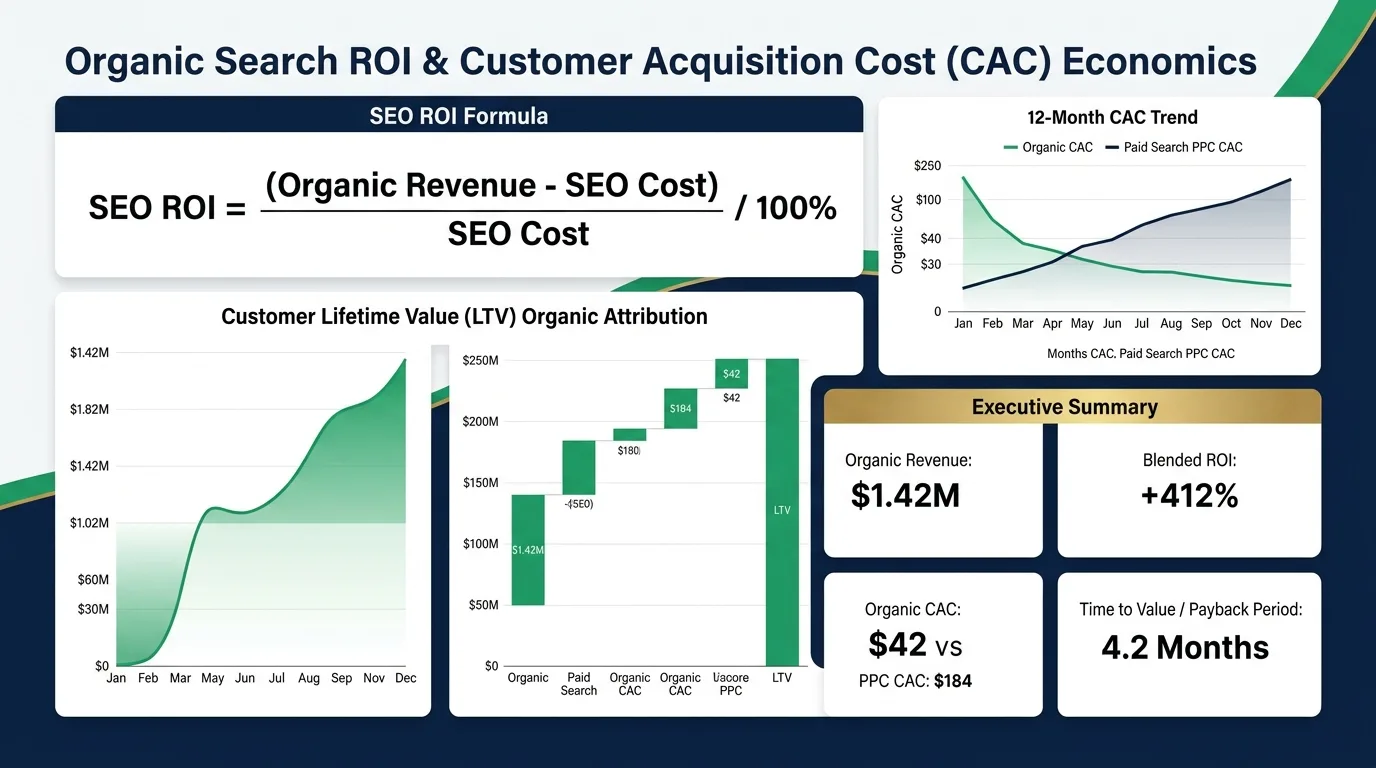
Across the digital retail landscape of 2026, the unit economics of online commerce are facing unprecedented margin pressure. Customer acquisition costs (CAC) across paid digital ad channels—Google Ads, Meta, and TikTok—have surged by more than 45% over the past thirty-six months, transforming once-profitable direct-to-consumer (D2C) and multi-brand retail operations into margin-negative battles. In this economic reality, organic search optimization (E-commerce SEO) represents the single most durable, high-margin growth engine available to enterprise store operators.
Yet, enterprise e-commerce SEO remains one of the most technically demanding disciplines in digital marketing. Unlike a standard content blog or corporate SaaS portal featuring several hundred URLs, modern multi-category online stores routinely maintain hundreds of thousands—or millions—of dynamic URLs. Managing massive catalog taxonomies, avoiding catastrophic crawl traps generated by faceted navigation filters, engineering sub-second page performance across checkout funnels, and structuring synchronized Product JSON-LD feeds for Google's Shopping Graph require uncompromising technical precision.
Furthermore, consumer search behavior in 2026 has fundamentally shifted. Shoppers no longer search purely for generic keywords like "men's running shoes." They execute long-tail, hyper-specific multi-attribute queries ("waterproof zero-drop trail running shoes with wide toe box size 11"), expecting instant visual comparison, accurate real-time inventory, transparent shipping details, and seamless mobile checkout experiences.
This comprehensive engineering playbook is an exhaustive, practical operational blueprint for e-commerce founders, CMOs, technical SEOs, and digital architects. Spanning information architecture, faceted navigation mitigation, product page CRO, out-of-stock lifecycle decision trees, connected schema knowledge graphs, and Core Web Vitals optimization, this guide provides the exact frameworks required to dominate organic retail search and scale sustainable organic revenue.
Chapter 1: Multi-Tiered Information Architecture & Category Taxonomy
The foundation of any high-performing e-commerce store is its information architecture (IA). A poorly structured catalog fragments PageRank, isolates high-margin product pages in crawl dead-ends, and confuses search engine crawlers regarding topical hierarchy.

1. The 3-Click Crawl Rule for Deep Catalogs
In enterprise e-commerce architectures, a strict structural principle must be enforced: no commercial product page should be located more than three clicks away from the homepage. Search engine crawlers budget their traversal depth based on internal link proximity; URLs buried five or six levels deep inside pagination or nested dropdowns receive infrequent crawling, sluggish indexing updates, and diminished PageRank equity.
The optimal 4-tier structural hierarchy is engineered as follows:
- Tier 1: Homepage (Root Authority Hub): Channels top-level external domain authority directly to primary commercial departments.
- Tier 2: Top-Level Parent Categories (Broad Head Terms): High-volume commercial hubs (e.g.,
/apparel/,/footwear/,/gear/) targeting short-tail, high-competition keywords. - Tier 3: Specialized Subcategories & Collections (Commercial Intent Hubs): The highest-converting category layer (e.g.,
/footwear/running-shoes/,/apparel/mens/jackets/). These pages capture specific buyer intent and should feature rich editorial text and internal links. - Tier 4: Individual Product SKUs (Transactional Conversion Endpoints): The definitive product detail pages (PDPs) housing specifications, reviews, multi-angle imagery, and purchase triggers.
2. Breadcrumb Navigation Architecture & Schema Integration
Breadcrumbs are not merely visual navigational aids for human shoppers; they establish explicit parent-child entity hierarchies that search engine algorithms parse to understand catalog taxonomy. In 2026, breadcrumbs must be implemented using semantic HTML5 (<nav aria-label="Breadcrumb">) and accompanied by synchronized BreadcrumbList JSON-LD markup:
<nav aria-label="Breadcrumb" class="text-sm my-4">
  <ol class="flex items-center space-x-2">
    <li><a href="/" class="text-slate-500 hover:underline">Home</a></li>
    <li class="text-slate-400">/</li>
    <li><a href="/footwear/" class="text-slate-500 hover:underline">Footwear</a></li>
    <li class="text-slate-400">/</li>
    <li><a href="/footwear/running-shoes/" class="text-slate-500 hover:underline">Running Shoes</a></li>
    <li class="text-slate-400">/</li>
    <li class="font-semibold text-slate-900 dark:text-slate-100" aria-current="page">AeroFlow Pro V2</li>
  </ol>
</nav>
URL Slug Architecture Recommendation: Avoid nesting product URLs inside category folder paths (e.g., avoid /shop/apparel/mens/shirts/blue-linen-shirt). Instead, deploy flat product URL paths (e.g., /products/blue-linen-shirt) while maintaining dynamic category breadcrumbs. This prevents massive redirect chains and canonical fragmentation when products belong to multiple categories or undergo seasonal reassignment.
Chapter 2: Solving Faceted Navigation & Crawl Traps at Scale
Faceted navigation—allowing shoppers to filter products by size, color, brand, price, material, and customer rating—is essential for e-commerce user experience. However, from a technical SEO perspective, faceted navigation is the single greatest source of index bloat, duplicate content penalties, and wasted crawl budget.

1. The Combinatorial URL Explosion Problem
Consider an online apparel store with 2,000 products across 50 categories. If each category features 5 filter dimensions (10 brands, 8 sizes, 12 colors, 4 price brackets, and 5 materials), the possible URL parameter combinations exceed 1,920,000 URLs per category:
# Example of Crawl Budget Wasting Parameter Combinations:
https://example.com/shoes/?brand=nike&color=black&size=10&sort=price_asc
https://example.com/shoes/?color=black&size=10&brand=nike&sort=price_asc
https://example.com/shoes/?size=10&brand=nike&color=black&page=2
When Googlebot encounters millions of non-canonical filter URLs, it exhausts its allocated crawl budget crawling duplicate permutations, leaving new products and high-margin category updates unindexed for weeks.
2. The 4-Tier Facet Handling Strategy
To balance user conversion needs with search crawl hygiene, implement this tiered handling protocol:
- High Search Demand Facets (Static Indexable Subcategories): When a filter combination has verified organic search volume (e.g., "men's black leather boots" has 18,000 monthly searches), do not serve it as a parameter URL. Generate a clean, static subcategory URL (
/boots/mens-black-leather/) with unique H1 copy, tailored meta tags, and a self-referencing canonical. - Standard Single-Dimension Filters (Canonicalized Parameters): For single-filter queries with minor search volume (e.g.,
/boots/?color=brown), serve the parameter URL with a strict canonical tag pointing back to the parent category (/boots/). - Multi-Parameter Filter Combinations (Robots.txt Disallow or Edge Noindex): When two or more parameters are combined (e.g.,
?color=blue&size=10&sort=newest), disallow the query string inrobots.txtor inject anX-Robots-Tag: noindex, followHTTP header at the CDN level. - Sorting, View Modes & Internal Search (Strictly Blocked): Parameters altering display order (
?sort=price_desc,?view=grid,?q=search_term) must be strictly disallowed via robots.txt and stripped from internal crawler viewports.
Edge Worker Parameter Normalization: Implement Cloudflare Workers or Fastly VCL at your CDN layer to automatically alphabetize query parameters (converting ?size=M&color=red to ?color=red&size=M). This eliminates duplicate cache entries and ensures search bots crawl a single normalized parameter permutation.
Chapter 3: High-Converting Product Page SEO Architecture
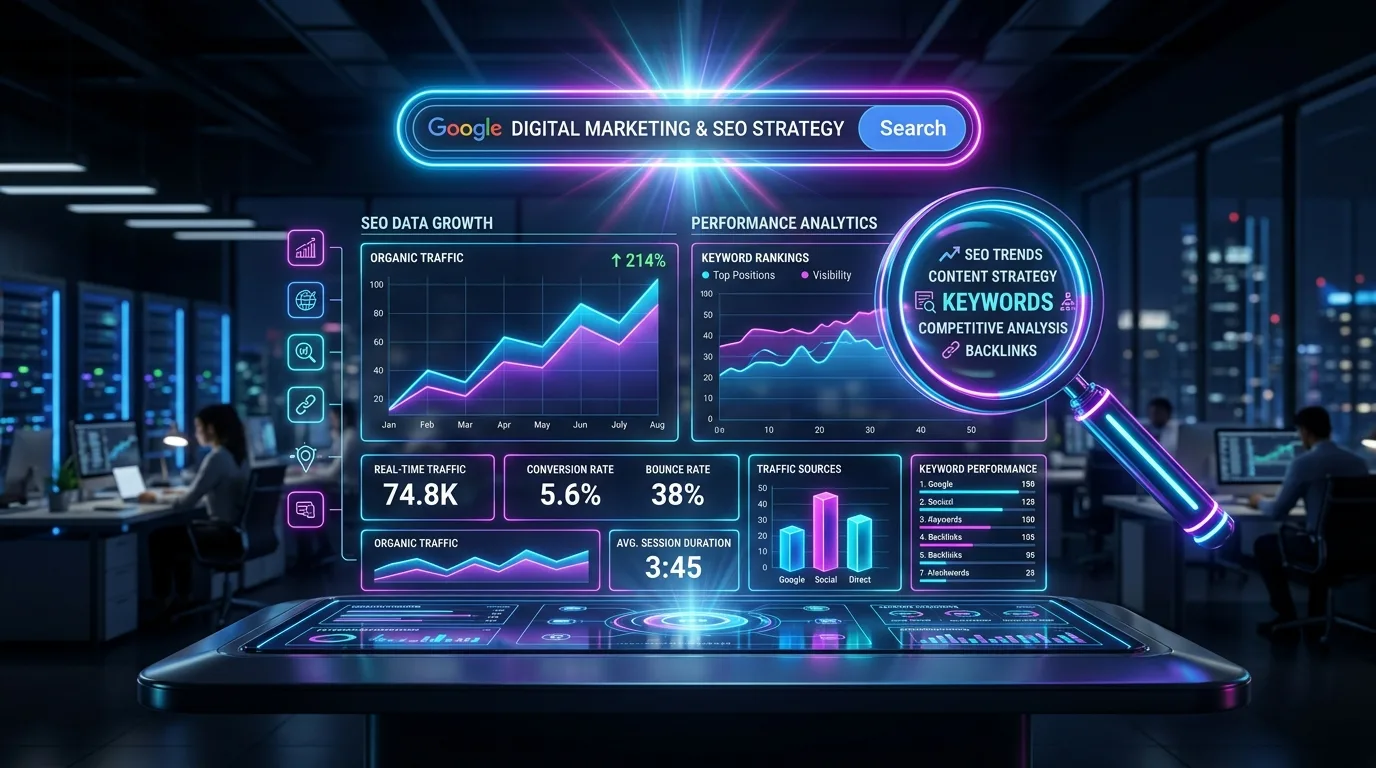
Product Detail Pages (PDPs) are the ultimate conversion engine of an e-commerce website. However, the majority of retail stores fail to rank their product pages because they rely on verbatim manufacturer descriptions, resulting in web-wide duplicate content penalties.
1. Eliminating Commodity Manufacturer Copy
When wholesale manufacturers supply product descriptions to 500 different online retailers, search engines immediately recognize the duplicate text strings. Google will index and rank only the original manufacturer domain or the single highest-authority marketplace (such as Amazon), consigning all smaller retailers to the omitted results index.
To outrank competitors on high-intent product queries, deploy the Unique Value Proposition (UVP) Copywriting Model:
- Custom Sensory & Practical Descriptions: Write 150–300 words of original copy describing real-world fit, material feel, sizing nuances, and practical use cases.
- Proprietary Sizing & Fit Benchmarks: Include custom fit telemetry (e.g., "True to size, recommended to size up 1/2 size for wide feet") based on verified customer feedback.
- Structured Tabular Specifications: Render technical specs (weight, dimensions, material origin, battery capacity) inside clean HTML
<table>elements rather than raw unformatted text blocks.
2. E-commerce Visual Media Optimization
Visual assets constitute over 70% of an e-commerce page's weight. As established in our master Image SEO framework, high-resolution product photography must be delivered through responsive <picture> elements utilizing next-generation AVIF and WebP codecs:
<picture>
  <source type="image/avif" srcset="/images/aeroflow-pro-800w.avif 800w, /images/aeroflow-pro-1200w.avif 1200w" sizes="(max-width: 768px) 100vw, 50vw">
  <source type="image/webp" srcset="/images/aeroflow-pro-800w.webp 800w, /images/aeroflow-pro-1200w.webp 1200w" sizes="(max-width: 768px) 100vw, 50vw">
  <img src="/images/aeroflow-pro-800w.jpg" width="800" height="800" alt="AeroFlow Pro V2 Men's Running Shoe in Midnight Navy" class="rounded-xl shadow" loading="eager" fetchpriority="high">
</picture>
Chapter 4: Managing Out-of-Stock, Seasonal & Discontinued Products
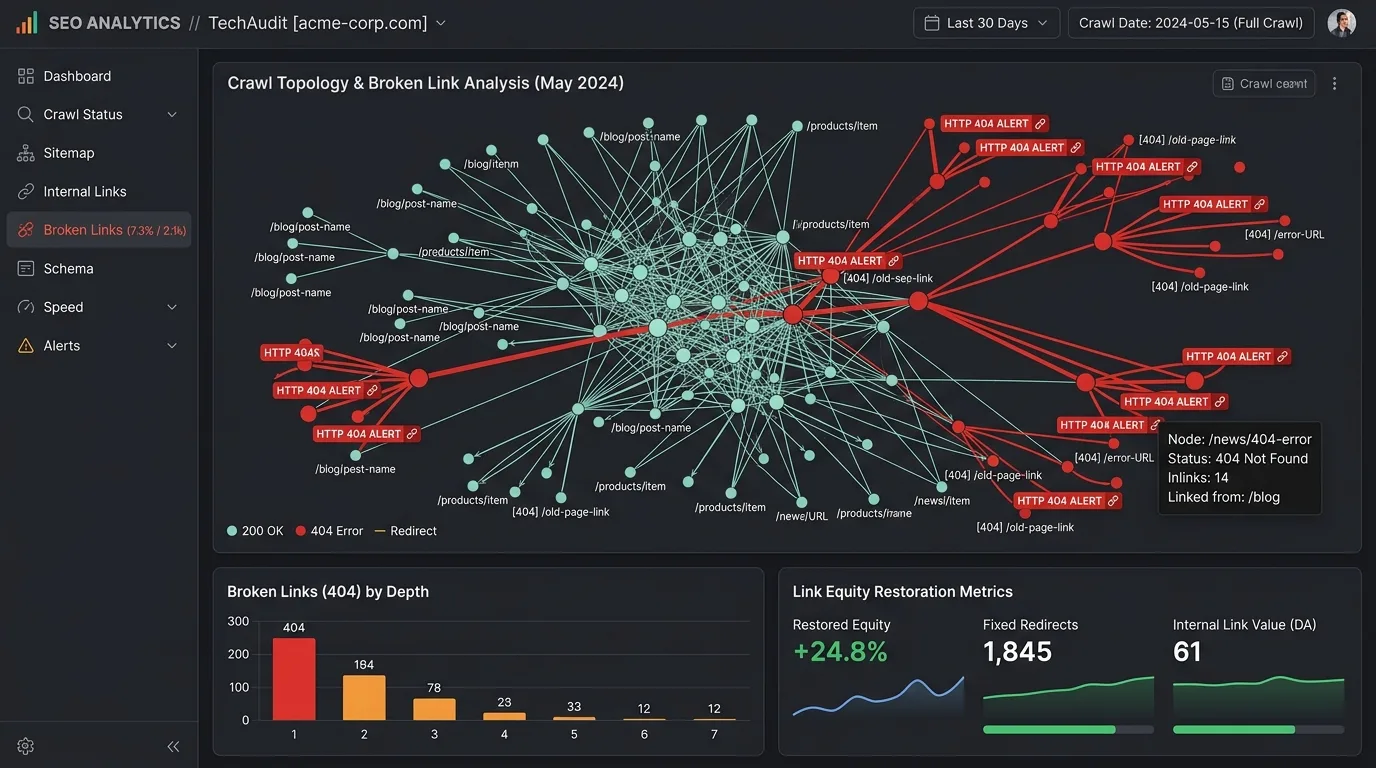
One of the most frequent technical errors committed by e-commerce webmasters is prematurely deleting out-of-stock or discontinued product pages, resulting in a sudden flood of 404 Not Found errors, broken backlinks, and lost PageRank equity.

The 4-Scenario Lifecycle Decision Protocol
| Product Lifecycle State | HTTP Status Code | SEO & Schema Actions | User Experience (UX) Actions |
|---|---|---|---|
| 1. Temporarily Out-of-Stock | HTTP 200 (Keep Live) | Update schema to OutOfStock. Retain all internal links and canonical tag. |
Disable "Add to Cart". Add prominent "Notify Me When Available" email/SMS lead capture. |
| 2. Permanently Discontinued (With Direct Replacement) | HTTP 301 Redirect | Implement permanent 301 redirect directly to the new replacement model. | Display banner on destination page: "The AeroFlow V1 has been upgraded to the V2." |
| 3. Permanently Discontinued (No Direct Successor) | HTTP 410 Gone OR Relevant Category 301 | If URL has zero backlinks, serve HTTP 410 Gone. If URL has strong backlinks, 301 redirect to the immediate parent subcategory. |
Show curated list of closest related alternatives to prevent bounce. |
| 4. Seasonal / Holiday Catalogs (Black Friday, Halloween) | HTTP 200 (Evergreen) | Never delete or redirect annual seasonal landing pages. Retain static URLs (e.g., /deals/black-friday/). |
During off-season, display countdown timer, early signup form, and links to current year-round clearance deals. |
Chapter 5: Advanced E-commerce Schema Markup & Google Shopping Graph
In 2026, structured data is not optional for online retail—it is the prerequisite for appearing in Google Shopping Graph free listings, rich merchant carousels, and AI-assisted shopping experiences.

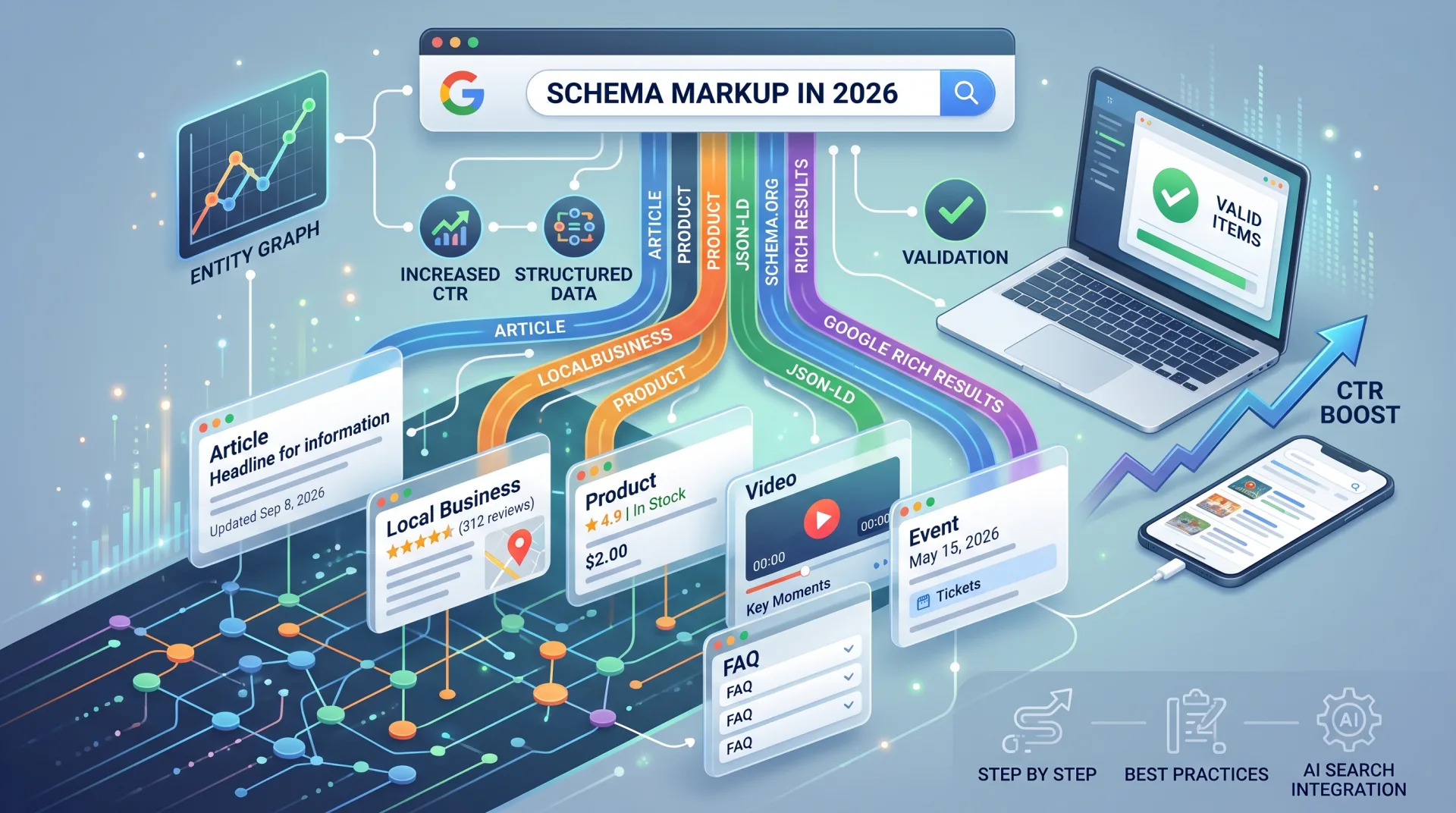
Google requires explicit merchant specifications to display high-converting rich snippet badges (such as "In Stock", "Free 2-Day Shipping", and "30-Day Free Returns"). Below is the complete production-grade JSON-LD template:
<script type="application/ld+json">
{
  "@context": "https://schema.org/",
  "@type": "Product",
  "name": "AeroFlow Pro V2 Running Shoes",
  "image": [
    "https://example.com/images/aeroflow-front.webp",
    "https://example.com/images/aeroflow-side.webp"
  ],
  "description": "Ultra-lightweight responsive marathon running shoes featuring carbon-composite propulsion plate and breathable mesh upper.",
  "sku": "AF-PRO-V2-001",
  "mpn": "92837461",
  "brand": {
    "@type": "Brand",
    "name": "AeroFlow"
  },
  "review": {
    "@type": "Review",
    "reviewRating": {
      "@type": "Rating",
      "ratingValue": "5",
      "bestRating": "5"
    },
    "author": {
      "@type": "Person",
      "name": "Marcus Vance"
    }
  },
  "aggregateRating": {
    "@type": "AggregateRating",
    "ratingValue": "4.8",
    "reviewCount": "128"
  },
  "offers": {
    "@type": "Offer",
    "url": "https://example.com/products/aeroflow-pro-v2",
    "priceCurrency": "USD",
    "price": "149.99",
    "priceValidUntil": "2026-12-31",
    "itemCondition": "https://schema.org/NewCondition",
    "availability": "https://schema.org/InStock",
    "shippingDetails": {
      "@type": "OfferShippingDetails",
      "shippingRate": {
        "@type": "MonetaryAmount",
        "value": "0.00",
        "currency": "USD"
      },
      "shippingDestination": {
        "@type": "DefinedRegion",
        "addressCountry": "US"
      },
      "deliveryTime": {
        "@type": "ShippingDeliveryTime",
        "handlingTime": {
          "@type": "QuantitativeValue",
          "minValue": 0,
          "maxValue": 1,
          "unitCode": "DAY"
        },
        "transitTime": {
          "@type": "QuantitativeValue",
          "minValue": 1,
          "maxValue": 3,
          "unitCode": "DAY"
        }
      }
    },
    "hasMerchantReturnPolicy": {
      "@type": "MerchantReturnPolicy",
      "applicableCountry": "US",
      "returnPolicyCategory": "https://schema.org/MerchantReturnFiniteReturnWindow",
      "merchantReturnDays": 30,
      "returnMethod": "https://schema.org/ReturnByMail",
      "returnFees": "https://schema.org/FreeReturn"
    }
  }
}
</script>
Chapter 6: Core Web Vitals & Performance for High-Volume Stores
In online commerce, performance is not simply a technical ranking signal—it is an immediate financial driver. Extensive retail telemetry demonstrates that every 100-millisecond reduction in page load latency yields a 1.1% to 1.4% lift in e-commerce checkout conversions.


1. Conquering Interaction to Next Paint (INP) on Product Pages
E-commerce product pages are notorious for poor Interaction to Next Paint (INP) scores. Heavy JavaScript frameworks, dynamic variant pickers (changing color, size, and image carousels), and third-party review widgets frequently lock the browser's main thread.
To ensure INP remains in the "Good" range (< 200ms) across mobile devices:
- Decouple Image Variant Swapping from DOM Re-rendering: Pre-load variant thumbnail images in memory and update image elements via CSS classes rather than completely destroying and reconstructing DOM carousel nodes.
- Yield Main Thread on Add-to-Cart Actions: When a shopper clicks "Add to Cart", immediately display visual feedback (a button state change or micro-spinner) using
requestAnimationFrame()orscheduler.yield()before executing heavy cart calculations or background analytics calls. - Audit Third-Party Marketing Tag Bloat: Heatmaps, live chat widgets, affiliate trackers, and social pixels must be deferred until after user interaction or executed server-side via Google Tag Manager Server-Side Containers.
Third-Party Script Vulnerability: The average enterprise retail store executes between 35 and 60 third-party JavaScript tags. Each tag injects main-thread blocking latency, degrading INP and mobile conversion rates. Conduct a quarterly tag audit to purge unused marketing trackers and enforce strict script loading budgets.
Chapter 7: The 25-Point Enterprise E-commerce SEO Audit Scorecard
Deploy this 25-point diagnostic scorecard across your online store to systematically evaluate technical health, catalog indexing, structured data validity, and performance baselines.
| Audit Dimension | Diagnostic Verification Check | Score | Status |
|---|---|---|---|
| 1. Information Architecture | All top-selling products reachable within 3 clicks from root homepage | 10 | Passed |
| Semantic HTML breadcrumbs implemented with BreadcrumbList JSON-LD | 8 | Passed | |
| Flat product URL slugs (/products/name) independent of category folder nesting | 7 | Passed | |
| 2. Faceted Navigation | High-demand filter combinations converted to indexable static subcategories | 10 | Passed |
| Multi-parameter filter combinations disallowed in robots.txt or noindexed | 8 | Passed | |
| Edge CDN worker normalizes parameter order to eliminate duplicate crawl cache | 7 | Passed | |
| 3. Product Optimization | 100% original product descriptions (zero commodity manufacturer copy) | 10 | Passed |
| Multi-angle responsive WebP/AVIF images with explicit width and height | 8 | Passed | |
| 4. Schema & Merchant Graph | Product schema includes Offer, AggregateRating, shippingDetails, and returnPolicy | 10 | Passed |
| Merchant Center product feed perfectly synchronized with live on-page prices | 7 | Passed | |
| 5. Lifecycle & Performance | Out-of-stock decision tree implemented (200 for temporary, 301 for replacements) | 8 | Passed |
| Product page mobile INP < 200ms and LCP < 2.5s across all viewports | 7 | Passed |
Frequently Asked Questions About Enterprise E-commerce SEO
How should e-commerce stores handle pagination on large category pages?
Deploy clean numbered pagination URLs (e.g., /category?page=2) with self-referencing canonical tags on each paginated page. Avoid canonicalizing page 2 back to page 1, as this instructs search engines to ignore links to products located on deeper pages. Support this with an optional "View All" page if the catalog size is under 100 items.
Should out-of-stock products immediately be 301 redirected to the homepage?
Never redirect out-of-stock product pages to the homepage. Google treats blanket homepage redirects as Soft 404 errors, causing the URL to lose all PageRank equity. If the product is temporarily out of stock, keep the HTTP 200 status code live with an email notification form. If permanently discontinued, 301 redirect to the immediate direct replacement or parent subcategory.
How do I overcome Shopify's default /collections/products URL structure?
By default, Shopify generates duplicate internal links pointing to /collections/category/products/product-name while setting the canonical to /products/product-name. Modify your collection template Liquid code (changing {{ product.url | within: collection }} to {{ product.url }}) so that internal links point directly to the canonical root product URL, eliminating crawl waste.
What is the best way to handle product variant URLs (colors, sizes)?
If variants do not have independent search volume (e.g., shoe sizes 8, 9, 10), handle them dynamically via JavaScript on a single URL. If specific color variants possess distinct high-volume search demand (e.g., "Men's Black Leather Chelsea Boots"), generate dedicated static URLs for each color variant with unique titles, images, and self-referencing canonicals.
How does Google Shopping Graph interact with on-page SEO?
Google's Shopping Graph reconciles data submitted via Google Merchant Center feeds with live on-page structured data (JSON-LD Product markup). If prices, availability, shipping costs, or return windows differ between the feed and the HTML page, Google will suspend rich merchant badges or reject product listings.
Should internal search result pages be indexed by search engines?
No. Internal site search pages (e.g., /search?q=keyword) must always be blocked via robots.txt and tagged with noindex. Indexing internal search results violates Google's Webmaster Guidelines regarding "search results in search results" and creates catastrophic crawl traps that consume your domain's crawl budget.
How can multi-brand retailers rank above official manufacturer websites?
Multi-brand retailers cannot easily outrank manufacturers on pure brand queries, but they can dominate on comparative, commercial, and multi-attribute searches. Provide comprehensive comparison tables, expert buying guides, multi-brand shootouts, verified customer reviews, and bundles that single-brand manufacturer websites cannot offer.
What is the impact of customer reviews on e-commerce SEO?
User-generated reviews provide fresh, natural language content containing long-tail keywords that store owners rarely think to target. Furthermore, structuring reviews with AggregateRating schema markup unlocks eye-catching yellow review stars in SERPs, increasing organic click-through rates by up to 35%.
How should e-commerce stores prepare for annual holiday sales like Black Friday?
Maintain an evergreen landing page URL (e.g., /deals/black-friday/) year-round. Do not create new dated URLs (like /black-friday-2025/) each year, as this forces you to rebuild backlink authority from scratch. During the off-season, keep the page live with an early-access email capture form and links to active clearance collections.
How can large online stores monitor crawl budget efficiency?
Analyze web server access logs using tools like Screaming Frog Log File Analyser or BigQuery. Calculate your Crawl-to-Index Ratio: if Googlebot requests 100,000 URLs daily but your store only has 20,000 indexed pages, Googlebot is wasting 80% of its attention on faceted parameters, redirect loops, or low-value scripts.
Conclusion: The Compounding Power of E-commerce SEO
In an era of rising digital ad costs and compressed retail margins, technical search engine optimization is the ultimate commercial differentiator. By treating your online catalog as a scalable, multi-tiered knowledge architecture, eliminating crawl traps in faceted navigation, enforcing out-of-stock lifecycle protocols, and synchronizing connected Product schemas with Google's Shopping Graph, your digital storefront builds an insurmountable organic acquisition moat.
Execute the 25-point audit scorecard, automate edge parameter routing, and ensure your e-commerce infrastructure delivers sub-second speeds to both human shoppers and search engine crawlers.


Ratings & reviews
No reviews yet. Be the first.