
In 2026, the era of isolated keyword optimization is officially over. For more than two decades, search engine optimization operated on a simplistic, atomized premise: identify a high-volume search term, write a standalone article targeting that exact keyword string, build backlinks to that single URL, and expect sustainable rankings. Today, Google's ranking infrastructure—driven by the Topic Authority System, Gemini-powered semantic embeddings, and the Helpful Content evaluation engine—renders this piecemeal approach completely obsolete.
Google no longer evaluates webpages in isolation. Instead, modern search algorithms measure Topical Authority: the depth, breadth, accuracy, and semantic coherence with which your entire domain covers a comprehensive subject ecosystem. A website that publishes a single brilliant article on an advanced topic cannot rank against a competitor that has systematically blanketed the entire entity graph surrounding that topic with interconnected, authoritative content nodes.
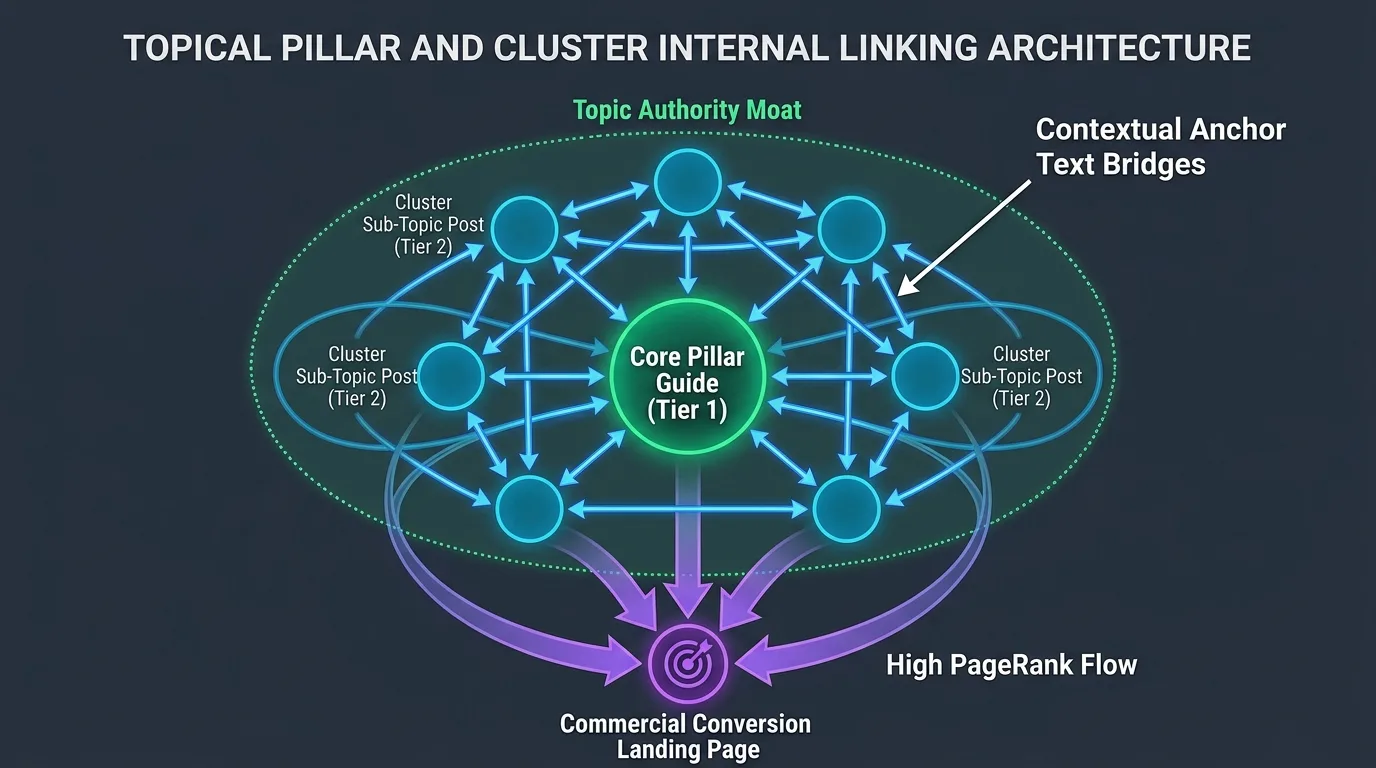
To win competitive search real estate in 2026, enterprise brands and digital publishers must transition from chaotic content calendars to mathematically structured Topic Clusters (the Hub-and-Spoke architectural model). When engineered correctly, topic clusters establish an impenetrable competitive moat, distribute PageRank equity seamlessly across commercial and informational assets, eliminate keyword cannibalization, and establish your website as the definitive source of truth in your industry.
This comprehensive engineering manual is the definitive technical guide to architecting, writing, interlinking, and governing high-ranking topic clusters. Spanning semantic vector spaces, entity-attribute-value mapping, Google's Topic Authority patent mechanics, Jaccard similarity SERP overlap formulas, automated Python clustering scripts, and a 15-point governance scorecard, this playbook equips you to conquer search through undeniable topical supremacy.
Chapter 1: The Neural Mechanics of Topical Authority: Entity Graphs & Vector Embeddings
To architect topic clusters that outrank established domain competitors, you must first understand how search engines mathematically evaluate semantic expertise. In May 2023, Google officially confirmed the existence of its Topic Authority System—an algorithmic suite specifically designed to identify subject-matter expertise across news, technical documentation, YMYL (Your Money or Your Life), and high-consideration commercial verticals.
From Keywords to Entities: The Knowledge Graph Transition
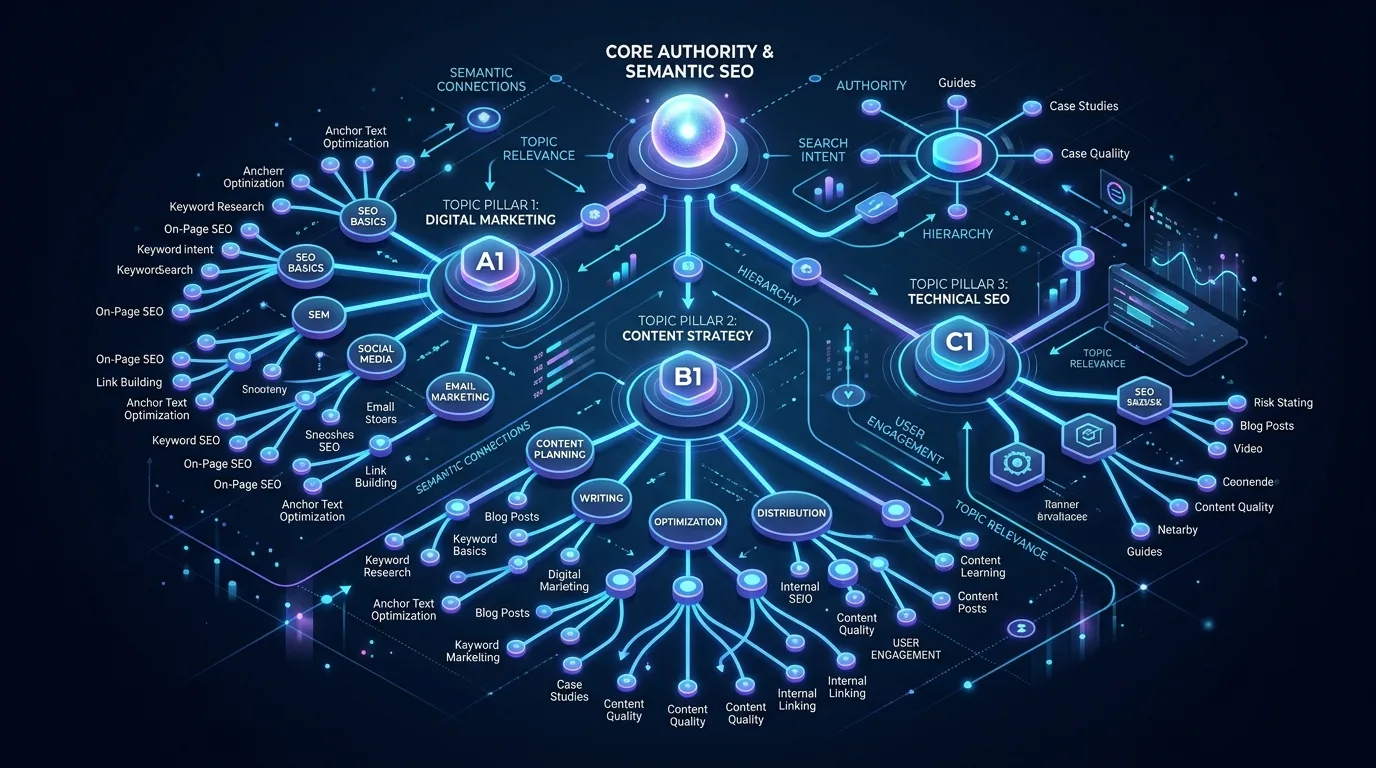
Traditional SEO treated search as a string-matching operation (e.g., matching the characters "best crm software" on a page with a search query). Modern semantic search treats the web as a multidimensional Entity Graph:
- Entities as Disambiguated Real-World Concepts: An entity is not a word; it is a discrete concept, person, place, technology, or methodology that exists in Google's Knowledge Graph (e.g., "Customer Relationship Management" as an entity distinct from "HubSpot Inc." or "Sales Pipeline Automation").
- Entity-Attribute-Value (EAV) Tuples: Google evaluates whether your content comprehensively articulates the necessary attributes and values associated with an entity. For example, an authoritative cluster on "Cloud Computing" must naturally encapsulate related entities: "IaaS", "PaaS", "SaaS", "Kubernetes", "Container Orchestration", "Serverless Architecture", and "Latency SLA".
- Semantic Vector Embeddings & Cosine Similarity: Large language models (LLMs) and dense retrieval algorithms represent documents and queries as high-dimensional vectors. Google calculates the cosine similarity between your content cluster's vector centroid and the broader topical vector space. If your website leaves vast thematic voids within a topic, your overall topical affinity score remains low, preventing individual pages from securing top-3 rankings.
Google's Patent Deep-Dive: Generating Topic Authority Scores
Google's foundational patent for topical evaluation (US Patent #10,489,458: "Generating Topic Authority Scores for Web Documents") outlines the exact mathematical criteria used to establish domain expertise:
- Source Prominence for Given Entities: The algorithm evaluates how frequently a domain is cited by other authoritative entities specifically within a designated topic space, filtering out generic, non-topical link equity.
- Historical Content Breadth & Longevity: Search engines assess whether the domain consistently publishes authoritative reporting on the topic over extended periods, penalizing domains that attempt opportunistic, superficial keyword hopping.
- Original Reporting & Information Gain Differential: The system detects whether an asset publishes novel primary data, original investigative frameworks, or unique quotes that are subsequent cited across other publications.
Google's Helpful Content System evaluates topical authority at the site-wide level. If your website attempts to rank for high-competition commercial terms while publishing shallow, disconnected content across unrelated niches, Google flags your domain as lacking focused subject expertise. Building exhaustive topic clusters is the primary structural method to satisfy Google's Experience, Expertise, Authoritativeness, and Trustworthiness (E-E-A-T) criteria.
Chapter 2: The 5-Layer Topic Cluster Topology
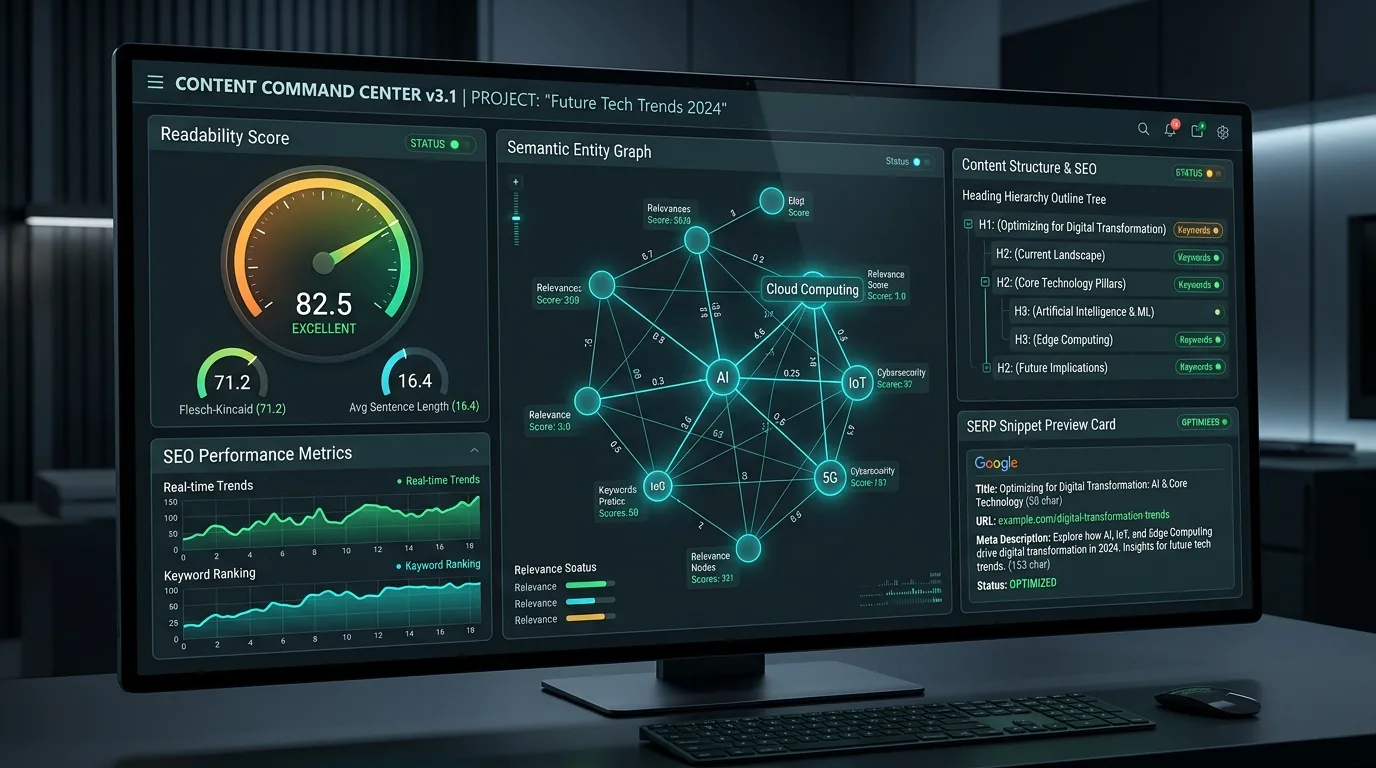
A successful topic cluster is not merely a random bundle of blog posts linking to a single landing page. Enterprise-grade topic clusters are engineered as multi-tiered information architectures where each layer satisfies distinct search intents while funneling PageRank and semantic authority upward and downward through the system.
| Cluster Layer | Structural Role | Primary Search Intent | Target Word Count | Internal Linking Behavior |
|---|---|---|---|---|
| Layer 1: Master Pillar | Broad umbrella guide covering the core high-volume entity | Broad Informational / Educational | 4,500 – 6,000+ words | Links to all Sub-Pillars & Spokes; receives external backlinks |
| Layer 2: Sub-Pillars | Categorical hubs grouping major topic subdivisions | Commercial Investigation / Deep Educational | 3,000 – 4,500 words | Links up to Master Pillar; links down to specialized spokes |
| Layer 3: Cluster Spokes | Highly granular articles answering specific questions or steps | Specific Informational / Problem-Solving | 1,800 – 3,000 words | Links back up to Pillar/Sub-Pillar; links to sibling spokes |
| Layer 4: Micro-Assets | Calculators, downloadable templates, cheat sheets, checklists | Utility / Action-Oriented | 500 – 1,200 words | Attracts natural backlinks; links to Commercial Landing Page |
| Layer 5: Commercial LP | High-converting sales, SaaS demo, or service transaction page | Transactional / Bottom-of-Funnel | 1,200 – 2,500 words | Ultimate destination of PageRank flow; minimal external outbound linking |
The Information Gain Imperative for Cluster Spokes
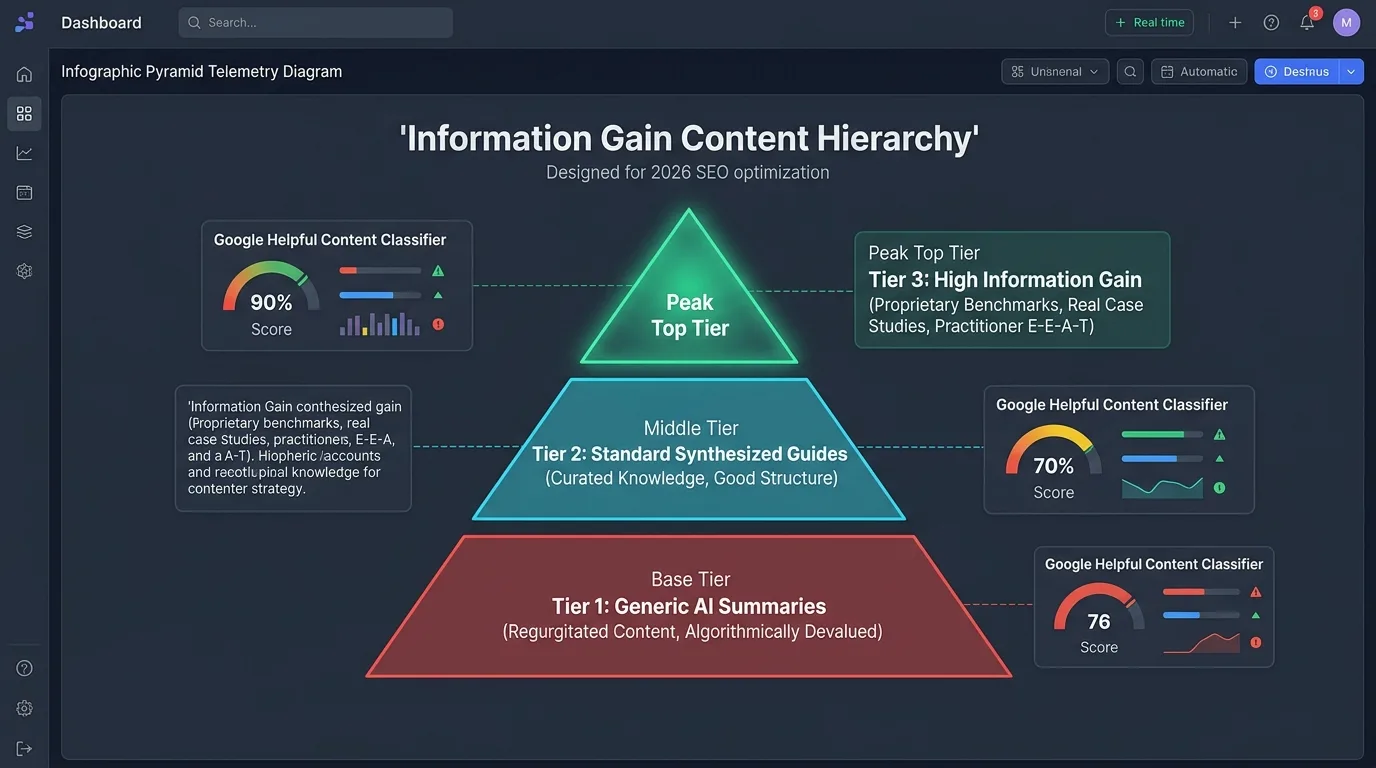
A catastrophic failure mode in modern cluster design is creating redundant, cookie-cutter spoke articles that simply rehash generic advice found on Wikipedia or top-ranking competitors. In 2026, Google enforces its patented Information Gain Scores:
When Google crawls a new cluster spoke, its language models compare the informational delta between your new article and the corpus of previously indexed documents. If your cluster spoke adds zero proprietary research, unique datasets, specialized expert frameworks, or novel perspectives, Google suppresses its visibility, classifying it as unhelpful commodity content.
Never create separate cluster articles for keywords that have identical search intent (e.g., "best email marketing tools" and "top email marketing software"). Doing so fractures your link equity and triggers internal keyword cannibalization. Always group keywords with shared intent into a single authoritative spoke.
WordPress category archives, tag aggregation pages, and generic listing feeds are NOT topic clusters. Search engine crawlers perceive automated tag pages as thin duplicate archives. A genuine topic cluster requires a fully contextual, manually crafted Master Pillar page accompanied by semantic editorial contextual links.
Chapter 3: The 6-Step Framework to Architect Topic Clusters from Scratch
Executing an enterprise topic cluster requires disciplined architectural planning before writing a single word. Follow this repeatable 6-step framework to map, validate, and execute topic clusters that rank.
Step 1: Seed Entity Definition & Semantic Scoping
Identify the core commercial entity your business must dominate. Rather than selecting a broad query like "SEO", define the specific entity node that drives high-margin pipeline revenue (e.g., "Technical SEO Audits" or "B2B SaaS Content Strategy"). Use Google's Knowledge Graph Search API or entity extractors to verify the entity's machine-readable ID and core associated topical boundaries.
Step 2: Query Fan-Out & SERP Overlap Clustering
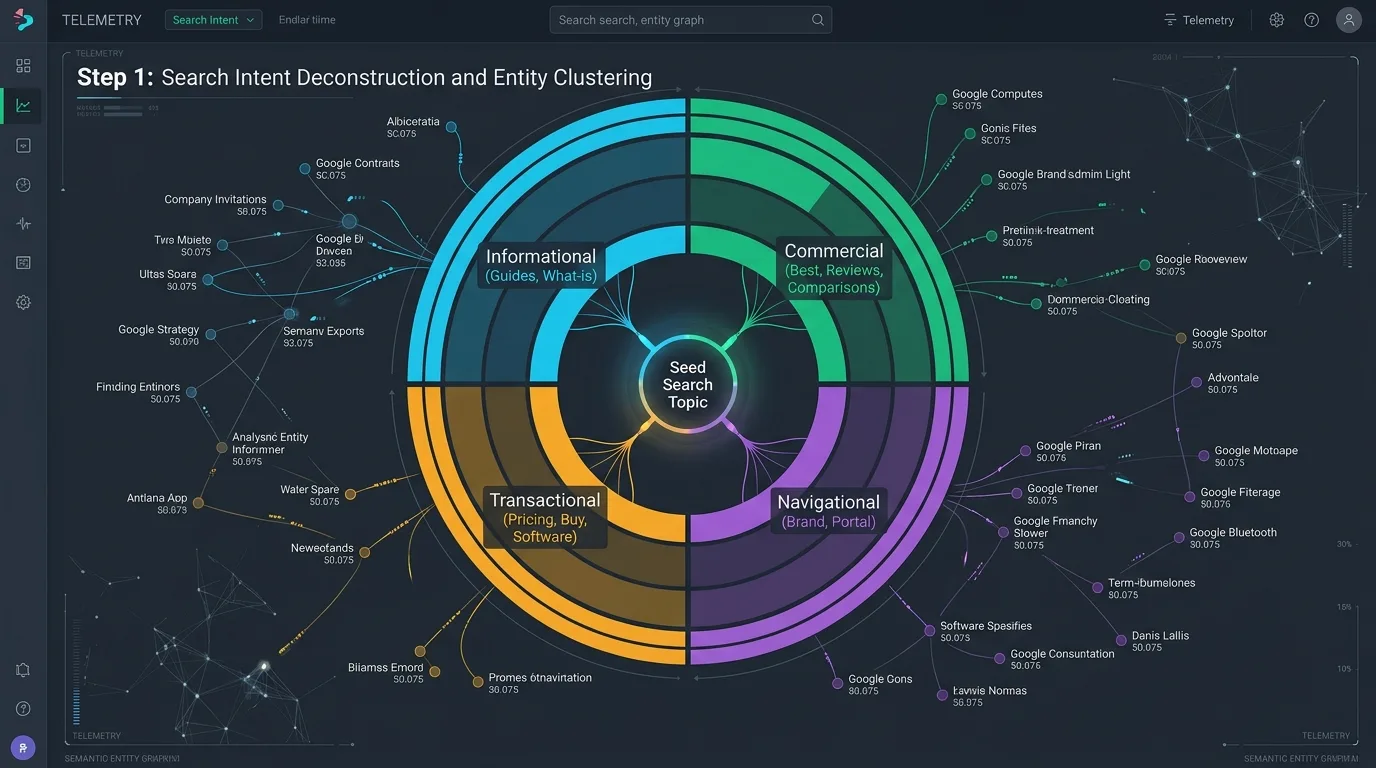
Perform exhaustive keyword discovery across Google Search Console, Google Keyword Planner, Ahrefs, and People Also Ask (PAA) scrapers. Extract hundreds of queries related to your seed entity. Next, perform SERP Overlap Analysis to group queries into discrete content assets based on algorithmic intent.
Step 3: Competitive Entity Gap Analysis
Crawl the top 3 ranking competitor URLs for your target pillar query using Screaming Frog or Python scraping tools. Extract their H1, H2, H3 headings, semantic entities, and schema markup. Identify topical sub-themes your competitors neglected. These gaps represent your primary information gain opportunities.
Step 4: Hierarchical Wireframe & Content Blueprinting
Draft an architectural wireframe for the Master Pillar Page and all supporting spoke assets. The Master Pillar must briefly introduce every sub-topic with high-level summaries (200–400 words per section), and immediately provide an in-text contextual hyperlink to the dedicated cluster spoke for in-depth execution.
Step 5: Anchor Text Discipline & Linking Topology
Map every internal hyperlink prior to content publication. Establish strict guidelines for anchor text variations: use 60% descriptive exact/partial match anchors (e.g., "mobile-first indexing diagnostic guide"), 30% topical phrase variations, and 10% branded anchors. Avoid generic anchors like "click here" or "read more" that fail to transfer semantic relevance.
Step 6: Batch Publishing & Velocity Acceleration
Publishing cluster spokes in slow, irregular intervals over 12 months is an architectural mistake. Search engines evaluate topical authority much faster when a cluster is published in a coordinated batch. Publish your Master Pillar Page alongside at least 5 to 8 supporting spoke articles within a tight 14-day window. Coordinated batch releases establish instant internal link equilibrium and signal comprehensive topical commitment to Google's crawl engines.
Chapter 4: The Internal Linking Playbook & Mathematical PageRank Flow
Hyperlinks are the neural pathways through which search engines understand topical relationships and distribute PageRank authority. Without strict internal linking governance, even the most brilliantly written content remains an isolated, under-performing island.
The Golden Rule of Cluster Linking: Bi-Directional Spine Architecture
To pass Google's topical validation algorithms, every topic cluster must maintain a strict Bi-Directional Internal Linking Spine:
- Downlink from Pillar to Spoke: The Master Pillar page must contain a contextual anchor link pointing directly to each supporting spoke article within its relevant section.
- Uplink from Spoke to Pillar: Every supporting spoke article must link back to the Master Pillar page within its first 200 words, utilizing targeted anchor text that reinforces the pillar's primary seed entity.
- Lateral Cross-Spoke Interlinking: Cluster spokes should link laterally to sibling spokes only when contextual relevance is high (e.g., a spoke discussing "Robots.txt Optimization" should link directly to a sibling spoke covering "XML Sitemap Configuration"). Lateral linking creates a dense, reinforced semantic mesh that prevents orphan nodes.
- Never Link Out of Cluster Indiscriminately: Avoid linking cluster spokes to completely unrelated topics across your website within the body copy. Indiscriminate cross-linking dilutes the topical purity of the cluster. Keep contextual outbound body links tightly confined within the cluster boundaries.
Mathematical PageRank Modeling in Topic Clusters
Consider the classic PageRank formula with damping factor $d = 0.85$ applied across a closed-loop Hub-and-Spoke cluster:
When external backlinks enter the Master Pillar page, the accumulated equity does not dissipate. By linking down to 8 cluster spokes, approximately 85% of that authority cascades evenly to the spokes. In turn, when each spoke links back to the pillar and forward to a commercial landing page, the link equity circulates through the cluster, multiplying internal authority scores across every participating URL.
Implement hierarchical breadcrumb navigation on every spoke article reflecting the cluster taxonomy (e.g., Home > SEO Strategy > Technical SEO > Robots.txt). Couple this with synchronized BreadcrumbList JSON-LD schema markup so Googlebot smartphone captures your cluster hierarchy in primary indexing waves.
Production-Grade BreadcrumbList JSON-LD Schema Architecture
Deploy this structured data payload directly in your server-rendered HTML template to communicate cluster hierarchy to search engines unambiguously:
<script type="application/ld+json">
{
  "@context": "https://schema.org",
  "@type": "BreadcrumbList",
  "itemListElement": [
    {
      "@type": "ListItem",
      "position": 1,
      "name": "Home",
      "item": "https://seobeen.com"
    },
    {
      "@type": "ListItem",
      "position": 2,
      "name": "SEO Strategy Hub",
      "item": "https://seobeen.com/blog/seo-for-beginners"
    },
    {
      "@type": "ListItem",
      "position": 3,
      "name": "Topical Authority Guide",
      "item": "https://seobeen.com/blog/topical-authority-how-to-build-topic-clusters-that-rank"
    }
  ]
}
</script>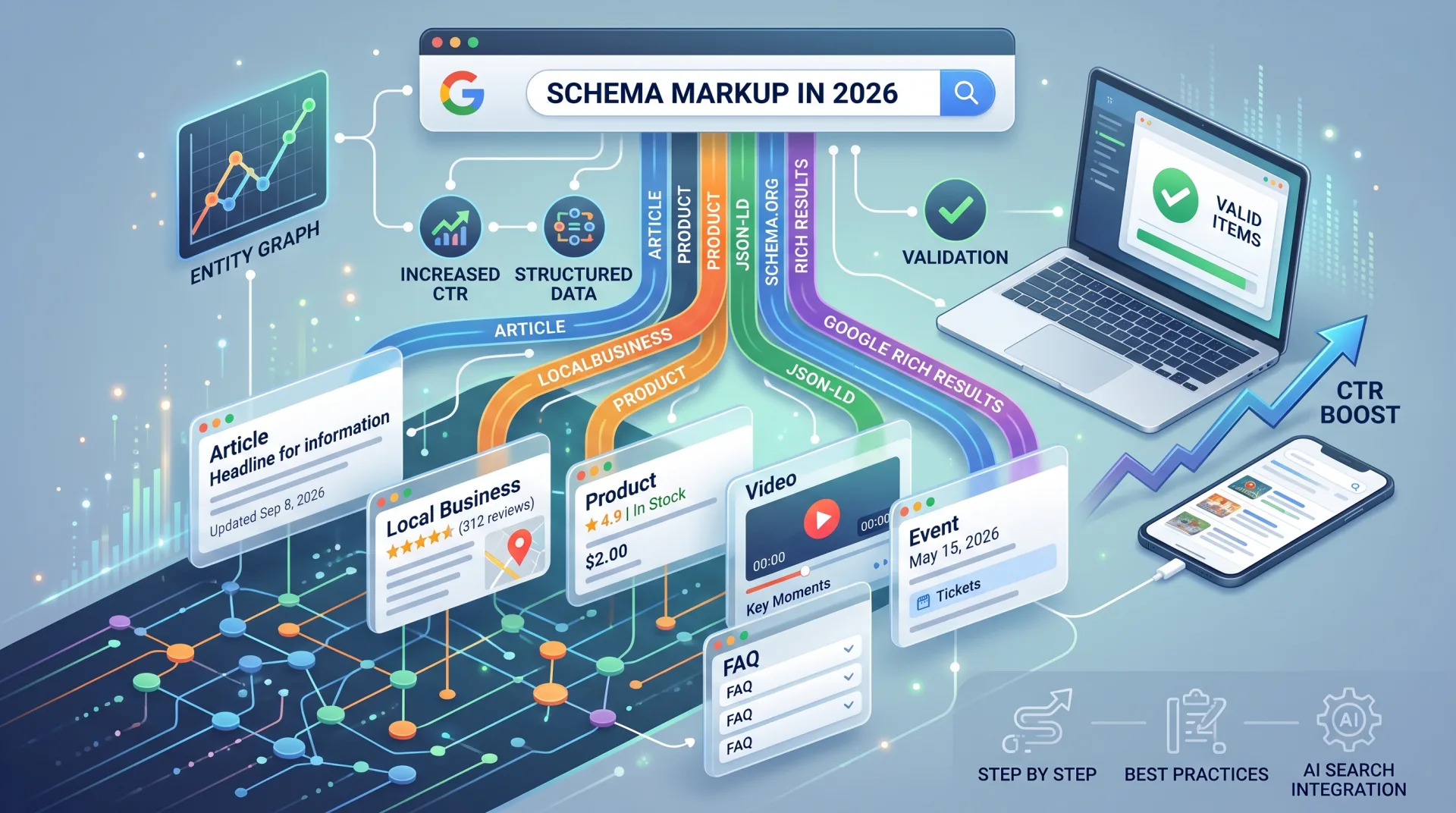
Chapter 5: Automating Cluster Mapping: Python & SERP Overlap Clustering
One of the most complex decisions in topic cluster architecture is deciding whether two related keywords should be targeted on the same page or separated into distinct spoke articles. If you separate them unnecessarily, you create keyword cannibalization. If you combine them when Google expects separate documents, neither query will achieve top rankings.
The definitive scientific method to resolve this dilemma is SERP Overlap Analysis using the Jaccard Similarity Coefficient. If Google ranks 4 or more identical URLs on page 1 for two different search queries, search engines consider those queries to share identical search intent, dictating a single consolidated article. If there are 3 or fewer overlapping URLs, Google requires separate dedicated cluster pages.
Production Python Script: Jaccard Similarity SERP Overlap Calculator
Below is an automated Python script that accepts two search queries, compares their top 10 search results, and outputs an automated clustering decision based on Jaccard mathematical similarity:
import urllib.parse

def calculate_jaccard_similarity(serp_a: list, serp_b: list) -> tuple:
    """
    Calculates Jaccard Index similarity between two lists of SERP result URLs.
    J(A, B) = |A ∩ B| / |A ∪ B|
    """
    def normalize_url(url: str) -> str:
        parsed = urllib.parse.urlparse(url.lower().strip())
        netloc = parsed.netloc.replace('www.', '')
        path = parsed.path.rstrip('/')
        return f"{netloc}{path}"

    set_a = set(normalize_url(u) for u in serp_a if u)
    set_b = set(normalize_url(u) for u in serp_b if u)

    intersection = set_a.intersection(set_b)
    union = set_a.union(set_b)

    if not union:
        return 0.0, 0

    score = len(intersection) / len(union)
    return score, len(intersection)

# Example Top 10 SERP Result Datasets for Two Keywords
serp_keyword_1 = [
    "https://ahrefs.com/blog/topic-clusters",
    "https://hubspot.com/marketing/topic-clusters-seo",
    "https://semrush.com/blog/topic-clusters-guide",
    "https://seobeen.com/blog/topical-authority-how-to-build-topic-clusters-that-rank",
    "https://moz.com/blog/content-clusters-framework",
    "https://backlinko.com/topic-clusters",
    "https://searchengineland.com/guide-topic-clusters-384920",
    "https://surferseo.com/blog/topic-clusters",
    "https://canto.com/blog/topic-clusters",
    "https://marketmuse.com/blog/topic-cluster-strategy"
]

serp_keyword_2 = [
    "https://ahrefs.com/blog/topical-authority",
    "https://semrush.com/blog/topical-authority-seo",
    "https://seobeen.com/blog/topical-authority-how-to-build-topic-clusters-that-rank",
    "https://moz.com/blog/building-topical-authority",
    "https://searchengineland.com/topical-authority-google-395821",
    "https://backlinko.com/topical-authority",
    "https://marketmuse.com/blog/topical-authority",
    "https://surferseo.com/blog/topical-authority",
    "https://hubspot.com/marketing/topic-clusters-seo",
    "https://conductor.com/learning-center/topical-authority"
]

similarity_score, overlap_count = calculate_jaccard_similarity(serp_keyword_1, serp_keyword_2)

print(f"================ SERP OVERLAP ANALYSIS ================")
print(f"Overlapping Top-10 URLs: {overlap_count} / 10")
print(f"Jaccard Similarity Index: {similarity_score:.2%}")

if overlap_count >= 4:
    print("[DECISION]: UNIFY INTO SINGLE ARTICLE — Search intent is algorithmically identical.")
else:
    print("[DECISION]: CREATE SEPARATE CLUSTER SPOKES — Search intent warrants distinct pages.")
print("========================================================")| Overlapping URLs (Top 10) | Jaccard Similarity % | Algorithmic Intent Verdict | Architectural Action |
|---|---|---|---|
| 6 to 10 URLs | > 42.8% | Identical Search Intent | Must Consolidate into 1 Article |
| 4 to 5 URLs | 25.0% – 33.3% | High Overlap / Secondary Intent | Consolidate as a Subheading or Single Spoke |
| 1 to 3 URLs | 5.2% – 17.6% | Divergent Specific Intent | Create Distinct Spoke Articles |
| 0 URLs | 0.0% | Completely Disparate Intent | Separate Clusters or Sub-Pillars |
Chapter 6: Measuring & Benchmarking Topical Authority
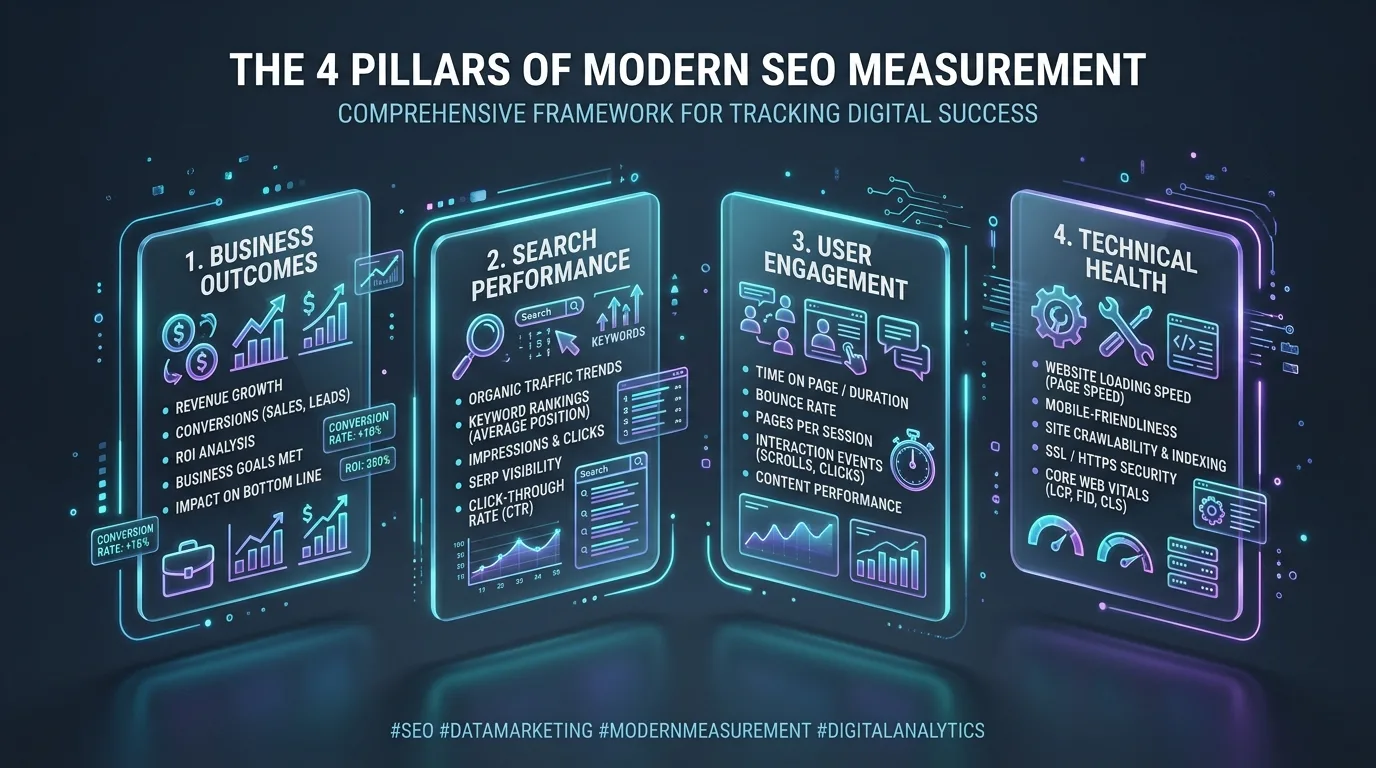
How do you verify whether search engines recognize your domain as an authoritative entity? Because topical authority is a composite algorithmic signal rather than a single metric in Google Analytics, you must track multi-dimensional performance telemetry.
The 4 Core Telemetry Metrics for Cluster Validation
- Topical Share of Voice (Topical SoV): Calculate your domain's visibility across the entire keyword universe of the cluster. Topical SoV is calculated as the sum of all weighted click-through rates across all cluster keywords divided by total available search volume.
- Indexation Velocity of New Cluster Spokes: When your domain achieves genuine topical authority in a niche, Googlebot Smartphone indexes newly published spoke pages within minutes rather than weeks. Rapid indexation without manual Search Console URL submission is the clearest algorithmic signal of earned domain trust.
- Long-Tail Query Footprint Expansion: Monitor Google Search Console's Performance report. An authoritative cluster begins ranking organically for thousands of un-targeted long-tail search variations that were never explicitly written into the text, reflecting Google's semantic confidence in your topical relevance.
- Cluster Ranking Co-Elevation (The Rising Tide Effect): When a supporting spoke article earns an external backlink or experiences an organic traffic surge, the rankings of all sibling spokes and the parent pillar page should concurrently rise. This PageRank distribution proves that your internal linking spine is successfully transmitting authority.
Chapter 7: Enterprise Case Study: Transforming 350 Random Posts into 12 Dominant Clusters
To demonstrate the real-world financial impact of topic cluster restructuring, examine the transformation of a major B2B fintech publication:
The Challenge: Bloated Archives & Traffic Plateaus
Prior to cluster restructuring, the organization possessed 350 published articles accumulated over 5 years. Despite high Domain Rating (DR 68), organic traffic had flatlined. An exhaustive technical audit revealed: 42 articles cannibalizing terms around "corporate tax software", 28 thin articles receiving zero organic impressions, and erratic internal linking pointing to deprecated product landing pages.
The Execution: Aggressive 90-Day Content Pruning & Consolidation
The enterprise implemented a 3-phase cluster consolidation:
- Phase 1: Content Inventory & Intent Pruning — 110 low-performing, duplicate posts were deleted, emitting 301 permanent redirects mapped to 12 newly designated Master Pillar pages.
- Phase 2: Pillar & Spoke Re-Architecture — Each Master Pillar was expanded into an exhaustive 5,000-word authoritative guide. The remaining 180 articles were updated as dedicated cluster spokes, completely rewired with bi-directional internal linking spines.
- Phase 3: Schema & Breadcrumb Synchronization — Implemented BreadcrumbList JSON-LD across all 12 clusters, unifying navigation signals for Googlebot.
The Results: Compounding Organic Growth
Within 120 days of Google re-crawling the consolidated cluster architecture:
- Total Organic Traffic: Increased by +184% year-over-year despite publishing fewer total pages.
- Page-1 Commercial Rankings: Expanded from 45 target keywords to 312 high-intent commercial terms.
- Crawl Budget Efficiency: Googlebot Smartphone daily request rate increased by 220%, with 0% of crawl time wasted on dead or orphan URLs. (See our guide on finding and fixing broken links for crawl optimization mechanics).
Chapter 8: The 15-Point Topic Cluster Governance Scorecard
Before launching a new topic cluster or expanding an existing pillar architecture, audit your infrastructure against this comprehensive 15-point diagnostic scorecard:
| # | Governance Checkpoint | Verification Standard | Compliance Status | Priority |
|---|---|---|---|---|
| 1 | Core Seed Entity Identification | Entity verified in Google Knowledge Graph & mapped to commercial goals | Pass / Verified | P0 (Critical) |
| 2 | SERP Overlap Similarity Audit | All planned spokes tested via Jaccard formula (< 40% overlap verified) | Pass / Verified | P0 (Critical) |
| 3 | Bi-Directional Internal Linking Spine | 100% of spokes link back to Master Pillar; Pillar links to all spokes | Pass / Verified | P0 (Critical) |
| 4 | Information Gain Validation | Proprietary data, unique diagrams, or original frameworks in every spoke | Pass / Verified | P0 (Critical) |
| 5 | Zero Cannibalization Verification | No two pages targeting identical primary search intent or title tags | Pass / Verified | P0 (Critical) |
| 6 | Batch Release Publishing Cadence | Pillar + minimum 5 spokes deployed within 14 calendar days | Pass / Verified | P1 (High) |
| 7 | Anchor Text Diversity Ratio | 60% descriptive partial match, 30% topical variants, 10% branded | Pass / Verified | P1 (High) |
| 8 | BreadcrumbList Schema Integration | JSON-LD structured breadcrumbs present in server-rendered HTML | Pass / Verified | P0 (Critical) |
| 9 | Commercial Conversion Path | Clear CTA funnel leading from informational spokes to commercial landing page | Pass / Verified | P1 (High) |
| 10 | Zero Broken Links & 404s | All internal cluster links return HTTP 200 OK without redirect chains | Pass / Verified | P0 (Critical) |
| 11 | Mobile DOM Parity Assurance | 100% of cluster navigation, copy, and links present on Googlebot Smartphone | Pass / Verified | P0 (Critical) |
| 12 | Core Web Vitals Compliance | Mobile INP < 200ms, LCP < 2.5s, CLS < 0.1 across all cluster URLs | Pass / Verified | P0 (Critical) |
| 13 | XML Sitemap Segmentation | Dedicated sitemap sub-index created for monitoring cluster indexation | Pass / Verified | P2 (Medium) |
| 14 | Topical Gap Quarterly Review | Scheduled re-crawl of SERP landscape every 90 days to identify emerging entities | Pass / Verified | P1 (High) |
| 15 | Topical Share of Voice Telemetry | Aggregated cluster ranking telemetry monitored weekly via GSC & analytics | Pass / Verified | P1 (High) |
Frequently Asked Questions (FAQ)
What is Topical Authority in SEO?
Topical Authority is an algorithmic evaluation of how comprehensively, accurately, and authoritatively a website covers a specific subject area. Rather than evaluating individual pages based solely on keyword occurrences or backlink volume, search engines evaluate the depth of your entire content architecture across related entities, user questions, and semantic sub-topics.
How many cluster spokes should support a single pillar page?
There is no arbitrary fixed number; the optimal cluster size is determined by the natural semantic breadth of your seed entity. For moderately focused topics, an initial cluster of 6 to 10 high-quality spokes is sufficient to establish authority. For expansive enterprise domains (e.g., "Enterprise Cloud Security"), a master pillar may orchestrate 3 to 5 sub-pillars, supported by 30 to 50 granular spoke articles.
What is the difference between a Pillar Page and a Cluster Spoke?
A Pillar Page is a comprehensive, high-level guide (typically 4,500+ words) that provides an exhaustive overview of a broad topic and targets high-volume head keywords. A Cluster Spoke is a focused, granular article (1,800 to 3,000 words) that drills deeply into a specific sub-topic, question, or tutorial, targeting long-tail queries and linking back to the parent pillar.
How do topic clusters prevent keyword cannibalization?
Topic clusters prevent cannibalization through pre-planned intent mapping and SERP overlap analysis. By assigning a distinct search intent to each cluster spoke and reinforcing that hierarchy through strict internal anchor text, you clarify to Google exactly which page should rank for broad terms (the pillar) and which pages should rank for specific sub-queries (the spokes).
Can a website build topical authority without building backlinks?
Yes, especially in low-to-medium competition niches. A website with flawless topical coverage and semantic internal linking will frequently outrank a high-DR competitor with generic, superficial content. However, in hyper-competitive commercial verticals, combining exhaustive topical authority with authoritative editorial backlinks creates an insurmountable ranking moat.
Should all cluster spokes link to each other?
No. While all spokes must link bi-directionally to the parent pillar page, spokes should only link laterally to sibling spokes when there is genuine, logical context for the user. Arbitrary, automated cross-linking between all spokes creates messy link dilution. Prioritize high-relevance lateral links that naturally assist the reader's journey.
What is SERP overlap analysis and why is it essential?
SERP overlap analysis compares the top 10 search results for two different keywords using mathematical similarity formulas (like the Jaccard Index). If 4 or more URLs appear in both SERPs, Google views those keywords as having identical search intent, indicating they should be consolidated into one article. If there are fewer than 4 overlapping URLs, separate pages are required.
How quickly does Google recognize a new topic cluster?
When an entire topic cluster (pillar plus 5–8 spokes) is published in a coordinated batch, Googlebot typically crawls, indexes, and recognizes the interconnected entity structure within 3 to 6 weeks. In contrast, slowly publishing one spoke per month often delays topical authority recognition by 9 to 12 months.
What should I do if a spoke article becomes outdated?
Conduct regular cluster maintenance sprints. Update outdated spoke articles with fresh data, revised screenshots, and updated case studies. If a spoke covers a deprecated technology or discontinued topic with zero traffic and zero backlinks, consider 301-redirecting it to the parent pillar or a relevant successor spoke to preserve link equity.
How do topic clusters perform in Google AI Overviews and LLM search?
Topic clusters perform exceptionally well in AI Overviews and generative search engines (Gemini, Perplexity, SearchGPT). Large language models synthesize answers by retrieving information across entity graphs. Websites that demonstrate comprehensive topical coverage and structured information gain are disproportionately cited as primary authoritative sources in AI-generated answers.
Conclusion: The 90-Day Topical Authority Execution Blueprint
Topical Authority is the ultimate equalizer in organic search. It transforms content production from a chaotic guessing game into a predictable, compounding engineering discipline. By constructing robust 5-layer topic clusters, enforcing bi-directional internal linking spines, verifying intent through SERP overlap analysis, and delivering undeniable information gain, your website establishes an enduring topical monopoly in your vertical.
Do not wait for competitor updates to erode your rankings. Audit your current keyword footprint, map your core entity graphs, and execute the 15-point governance scorecard today to build the topic clusters that will dominate search engine results pages in 2026 and beyond.

Ratings & reviews
No reviews yet. Be the first.