
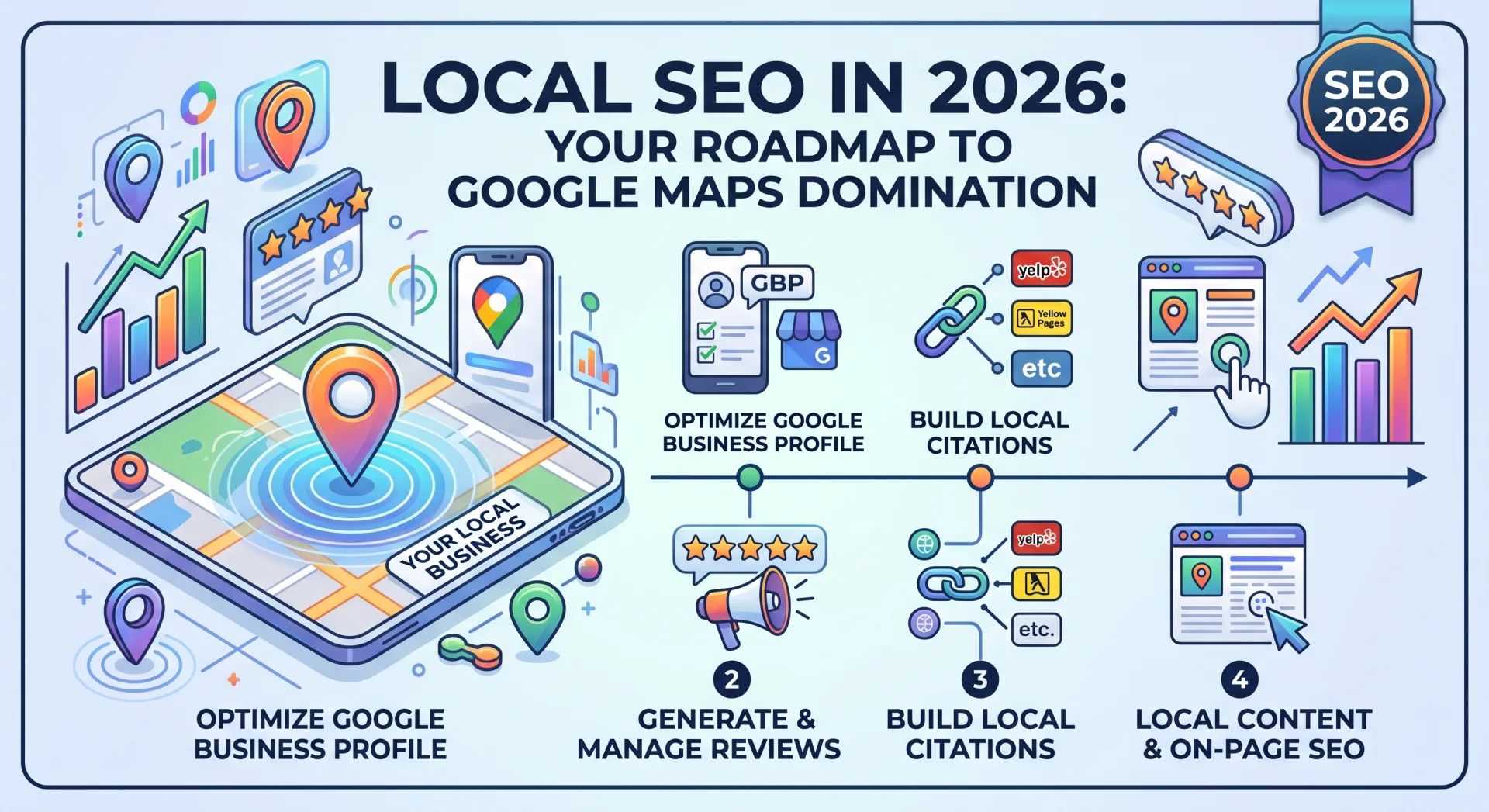
In the rapidly evolving digital landscape, local businesses face an ongoing challenge: standing out in a crowded online marketplace. By 2026, mastering local SEO will be more critical than ever for attracting nearby customers and driving growth. This comprehensive guide will equip local business owners and franchise marketers with actionable strategies to dominate Google Maps, secure top positions in the local pack, and effectively leverage customer reviews to build trust and authority. From optimizing your Google Business Profile to implementing advanced citation building techniques and reputation management, we'll cover the essential steps to ensure your local business thrives in the coming years.
The core of local SEO success lies in understanding how search engines, particularly Google, interpret and rank local businesses. It's not just about having a website; it's about signaling to Google that your business is relevant, reputable, and geographically pertinent to searchers in your area. This involves a multi-faceted approach that combines technical optimization with strategic content creation and proactive community engagement. Ignoring these elements means ceding valuable visibility to competitors who are actively investing in their local online presence.
Our focus will be on practical, implementable tactics that yield tangible results. We'll delve into the nuances of each strategy, providing clear steps and insights that you can apply directly to your business. Whether you're a small independent shop or a multi-location franchise, the principles outlined here will form the bedrock of a robust local SEO strategy designed for long-term success.
Optimizing Your Google Business Profile (GBP) for Maximum Visibility
Your Google Business Profile (formerly Google My Business) is the cornerstone of your local SEO strategy. It's your digital storefront on Google Search and Maps, and its optimization directly impacts your visibility in the local pack. By 2026, an incomplete or poorly optimized GBP will be a significant handicap, making it harder for potential customers to find you.
The first step is to claim and verify your GBP. Once verified, meticulously fill out every section with accurate and consistent information. This includes your business name, address, phone number (NAP), website, business hours, categories, services, and a detailed description. Google uses this information to understand what your business does and where it's located, matching it with relevant local searches.
Beyond the basics, focus on selecting the most precise primary and secondary categories. These categories are crucial for Google to classify your business accurately. For instance, a "coffee shop" is more specific and effective than a generic "restaurant." Regularly update your hours, especially for holidays or special events, to prevent customer frustration and negative reviews.
Leveraging GBP Features for Engagement and Ranking
Google Business Profile offers a suite of features designed to enhance your listing and encourage customer interaction. Utilizing these features consistently can significantly boost your local search performance. One often-underestimated feature is GBP Posts. These short updates can announce promotions, new products, events, or general business news. They appear directly on your GBP and can drive traffic to your website or physical location.
Another powerful feature is the Products and Services section. For many businesses, especially retailers and service providers, detailing your offerings here provides Google with more context about your business and helps you rank for specific product or service-related local searches. Include high-quality images and clear descriptions for each item.
Regularly uploading high-quality photos to your Google Business Profile is vital. Businesses with photos receive more requests for directions and more clicks to their websites. Aim for a mix of exterior shots, interior views, product photos, and team photos to give customers a comprehensive look at your business.
Harnessing the Power of Customer Reviews
Customer reviews are arguably the most influential factor in local SEO, both for search engine ranking and consumer trust. Positive reviews signal to Google that your business is reputable and provides a good customer experience, while also convincing potential customers to choose you over competitors. By 2026, businesses with a strong, consistent flow of positive reviews will have a distinct advantage.
The first step in building a robust review profile is to actively solicit reviews from satisfied customers. Don't wait for them to leave one; make it easy and encourage them. This can be done through direct requests at the point of sale, follow-up emails, or even QR codes placed in your establishment. Provide clear instructions on how and where to leave a review, primarily focusing on Google.
Equally important is responding to all reviews, both positive and negative. Acknowledging positive feedback shows appreciation and reinforces customer loyalty. Addressing negative reviews professionally and empathetically demonstrates your commitment to customer satisfaction and problem-solving. This public interaction can turn a potentially damaging review into an opportunity to showcase excellent customer service.
Strategies for Generating and Managing Reviews
To consistently generate reviews, integrate requests into your customer journey. For example, after a service is completed or a purchase is made, send a polite email asking for feedback. You can even create a dedicated landing page on your website with direct links to your Google Business Profile review section.
Managing reviews also involves monitoring them regularly. Tools and services can alert you when new reviews are posted, allowing for timely responses. Develop a clear internal policy for how to handle different types of reviews, ensuring consistency across your team. Remember, authenticity is key; avoid offering incentives that violate Google's review policies.
Building Local Citations and Backlinks
Local citations are mentions of your business's Name, Address, and Phone number (NAP) on other websites, even without a direct link. These can include online directories, local business listings, and industry-specific platforms. Consistent and accurate NAP information across the web reinforces your business's legitimacy and location to Google, bolstering your local SEO efforts.
The more high-quality citations your business has, the more trustworthy and established it appears to search engines. Key citation sources include Yelp, Yellow Pages, Facebook, and industry-specific directories. Ensure your NAP details are identical across all these platforms. Even a slight discrepancy in spelling or phone number format can confuse search engines and dilute the impact of your citations.
Beyond basic citations, building local backlinks is crucial. These are links from other reputable local websites (e.g., local news sites, community organizations, partner businesses) that point to your website. Local backlinks pass "link juice" and relevance, signaling to Google that your website is an authoritative source within your local community. Seek opportunities for partnerships, sponsorships, or content collaborations with other local entities to earn these valuable links.
Auditing and Cleaning Up Your Citations
Over time, inconsistencies in NAP information can arise due to business changes, data entry errors, or outdated listings. Performing a regular citation audit is essential to identify and correct these discrepancies. Tools are available that can help you scan for your business's citations and highlight any inconsistencies.
When you find incorrect information, proactively reach out to the directory or platform owner to request an update. This cleanup process, though often tedious, is critical for maintaining a strong and consistent local SEO foundation. Think of it as ensuring all roads lead correctly to your business's digital doorstep.
On-Page SEO for Local Searches
While GBP and citations focus on off-site signals, your website's on-page optimization remains a vital component of local SEO. By 2026, a website that is not optimized for local search terms will struggle to compete, even with a strong GBP. Your website needs to clearly communicate to search engines and users what you do and where you do it.
Start by incorporating local keywords naturally into your website content. This includes your homepage, service pages, and blog posts. For example, if you're a plumber in "Springfield," use phrases like "plumbing services in Springfield," "Springfield emergency plumber," or "best plumber near me in Springfield." Avoid keyword stuffing, which can harm your rankings.
Ensure your NAP information is prominently displayed on every page of your website, ideally in the footer or header. This reinforces consistency with your GBP and citations. Create a dedicated "Contact Us" page that includes your full address, phone number, business hours, and an embedded Google Map of your location.
Technical On-Page Elements for Local SEO
Beyond content, several technical on-page elements contribute to local search visibility. Optimize your title tags and meta descriptions to include your target local keywords and business name. These snippets are what users see in search results, so make them compelling and informative.
Implement local schema markup on your website. Schema markup is a type of microdata that helps search engines better understand the information on your pages. For local businesses, using LocalBusiness schema can provide specific details like your address, phone number, opening hours, and even customer review ratings directly in search results, leading to rich snippets and increased click-through rates.
Here's an example of how LocalBusiness schema markup might look in JSON-LD format, which is Google's preferred method:
<script type="application/ld+json">
{
  "@context": "http://schema.org",
  "@type": "LocalBusiness",
  "name": "Your Business Name",
  "image": "http://www.yourwebsite.com/logo.png",
  "url": "http://www.yourwebsite.com",
  "telephone": "+1-555-123-4567",
  "address": {
    "@type": "PostalAddress",
    "streetAddress": "123 Main St",
    "addressLocality": "Anytown",
    "addressRegion": "CA",
    "postalCode": "90210",
    "addressCountry": "US"
  },
  "geo": {
    "@type": "GeoCoordinates",
    "latitude": "34.052235",
    "longitude": "-118.243683"
  },
  "openingHoursSpecification": [
    {
      "@type": "OpeningHoursSpecification",
      "dayOfWeek": [
        "Monday",
        "Tuesday",
        "Wednesday",
        "Thursday",
        "Friday"
      ],
      "opens": "09:00",
      "closes": "17:00"
    }
  ],
  "priceRange": "$$",
  "hasMap": "https://maps.app.goo.gl/YourGoogleMapsLink"
}
</script>
This code should be placed in the <head> or <body> section of your relevant web pages. Remember to replace the placeholder information with your actual business details.
Content Marketing for Local Businesses
Beyond direct service or product pages, content marketing plays a crucial role in attracting local customers and establishing your business as an authority in your niche. By 2026, businesses that consistently produce valuable, locally relevant content will naturally attract more traffic and improve their local search rankings.
Start a blog on your website and create content that addresses common questions or problems faced by your local target audience. For a local bakery, this might include "Best Wedding Cake Flavors in [City Name]," or "Where to Find Gluten-Free Pastries in [Neighborhood Name]." For a plumbing service, "Tips for Preventing Winter Pipe Bursts in [City Name]" would be highly relevant.
This type of content not only attracts searchers looking for information but also allows you to naturally integrate local keywords and demonstrate your expertise. Share these blog posts on social media and encourage local engagement. The more valuable and shareable your content is, the more visibility it will gain.
Creating Local Landing Pages for Multiple Locations or Services
If your business has multiple physical locations or offers distinct services across different geographical areas, creating dedicated local landing pages is essential. Each landing page should be optimized for a specific location or service, featuring unique content, local keywords, and the relevant NAP information for that specific branch or service area.
For example, a franchise with five locations should have five distinct landing pages, each with its own optimized GBP linked to it. These pages should include local testimonials, photos specific to that location, and directions. This strategy helps Google understand the distinct presence of each location and allows each to rank independently in local searches.
Avoid duplicating content across multiple local landing pages. Google penalizes duplicate content. Ensure each page offers unique value, tailored to the specific location or service it represents, to maximize its local SEO impact.
Monitoring and Adapting Your Local SEO Strategy
Local SEO is not a "set it and forget it" endeavor. The digital landscape is constantly changing, with Google regularly updating its algorithms and features. To maintain dominance in Google Maps and local search by 2026, continuous monitoring and adaptation are paramount.
Regularly track your Google Business Profile insights to understand how customers are finding you and interacting with your listing. Pay attention to metrics like views, search queries, website clicks, and direction requests. This data provides valuable feedback on what's working and where improvements are needed.
Keep an eye on your competitors' local SEO strategies. Analyze what they are doing well and identify gaps or opportunities you can exploit. Are they getting more reviews? Are they ranking for certain keywords you're missing? Use this competitive intelligence to refine your own approach.
Staying Ahead of Algorithm Changes and Trends
Google's local search algorithm is continually evolving. Stay informed about major updates and new features related to local SEO. Follow reputable SEO blogs and industry news sources. For instance, the increasing importance of mobile-friendliness and page speed will only grow by 2026, directly impacting local search rankings, as many local searches occur on mobile devices.
Embrace new technologies and platforms that gain traction. Voice search, for example, is becoming more prevalent, and optimizing your content for natural language queries (e.g., "best pizza near me that delivers") will be crucial. By being proactive and adaptable, your local business can not only survive but thrive in the competitive local search environment of 2026 and beyond.
Conclusion
Dominating Google Maps and securing a strong local online presence in 2026 requires a strategic, multi-faceted approach. By meticulously optimizing your Google Business Profile, actively soliciting and managing customer reviews, building a strong foundation of local citations and backlinks, and implementing effective on-page and content marketing strategies, your local business can significantly enhance its visibility and attract a steady stream of nearby customers. The key is consistency, attention to detail, and a commitment to continuous improvement.
The landscape of local search will continue to evolve, but the fundamental principles of relevance, prominence, and proximity will remain at its core. By investing in these areas today, local business owners and franchise marketers can build a robust digital presence that not only withstands future changes but also positions them as leaders in their local markets, driving sustainable growth and success.
What is the most important factor for local SEO in 2026?
While many factors contribute, an optimized and regularly updated Google Business Profile (GBP) combined with a strong, consistent stream of positive customer reviews will be the most critical elements for local SEO success in 2026. These two factors heavily influence both Google's ranking algorithms and consumer trust.
How often should I update my Google Business Profile?
You should aim to update your Google Business Profile regularly, ideally at least once a month. This includes posting updates, adding new photos, responding to reviews, and ensuring all business information (hours, services, etc.) remains accurate. Any changes to your business operations should be reflected immediately.
Can I remove negative reviews from my Google Business Profile?
Generally, you cannot remove negative reviews unless they violate Google's content policies (e.g., spam, hate speech, off-topic). The best approach is to respond professionally and empathetically to negative reviews, offering solutions or clarifications. This shows potential customers that you care about customer service.
What are local citations and why are they important?
Local citations are mentions of your business's Name, Address, and Phone number (NAP) on other websites like online directories (Yelp, Yellow Pages) or local business listings. They are important because they signal to Google that your business is legitimate and confirm its location, which helps improve your local search rankings and overall online authority.
How can I get local backlinks to my website?
To get local backlinks, focus on building relationships with other local businesses, community organizations, and local media. This could involve sponsoring local events, partnering with complementary businesses, writing guest posts for local blogs, or getting featured in local news. The goal is to earn links from reputable local sources.
Is mobile-friendliness important for local SEO?
Absolutely. A vast majority of local searches happen on mobile devices. Google prioritizes mobile-friendly websites in its search results. Ensuring your website is responsive, loads quickly on mobile, and provides an excellent user experience for mobile users is crucial for local SEO success by 2026.



Ratings & reviews
No reviews yet. Be the first.