
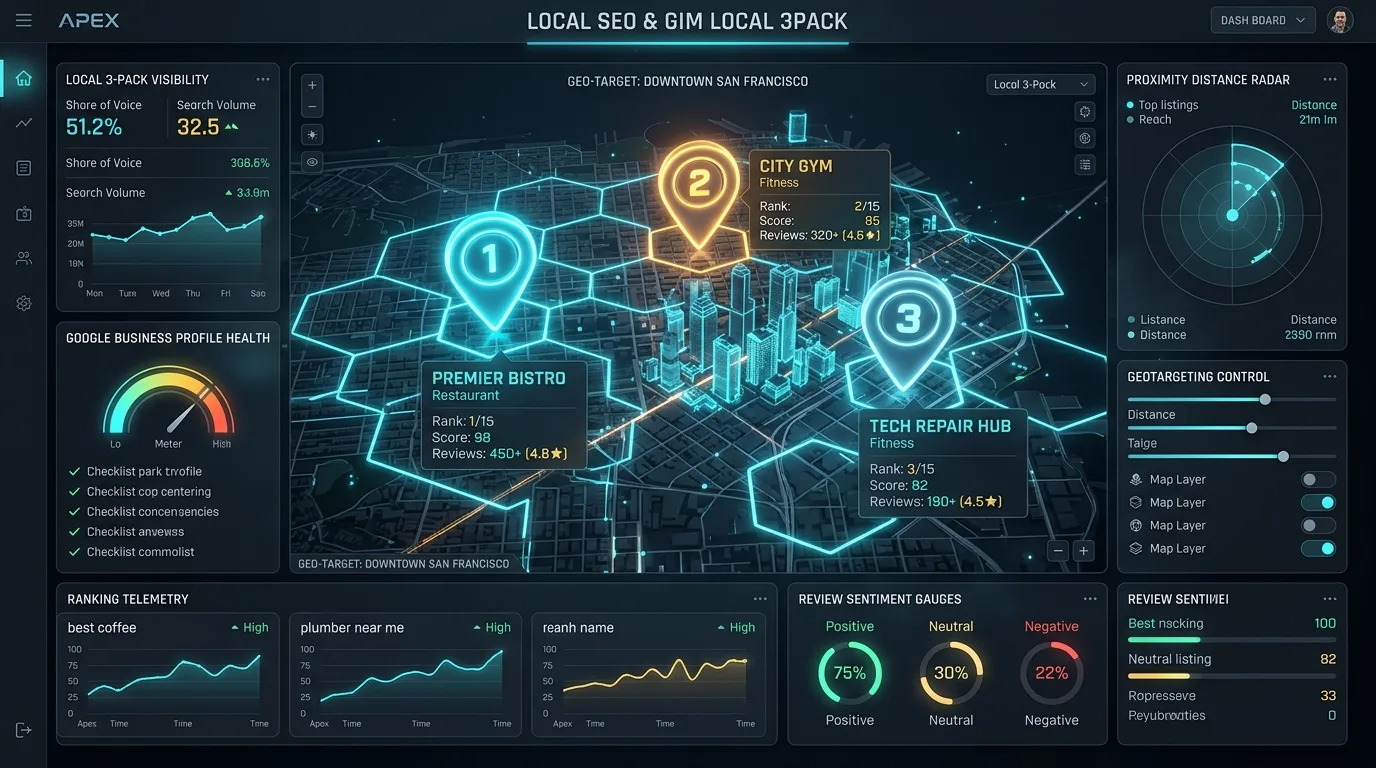
For multi-location enterprises, physical retail chains, healthcare networks, and local service businesses, visibility on Google Maps and the coveted Local 3-Pack is not merely an auxiliary marketing channel—it is the single highest-converting organic discovery engine in digital commerce. In 2026, algorithmic shifts driven by hyper-localized neural matching, real-time geofencing, multi-modal search via Google Lens, and strict entity verification have fundamentally redefined how local prominence and proximity are calculated. This master engineering guide dissects the technical anatomy of modern Local SEO, providing an authoritative roadmap to dominate local organic search, outmaneuver aggressive competitors, and scale physical foot-traffic revenue.
2026 Local Search Algorithmic Reality:
According to comprehensive local search clickstream studies, over 44% of total local search clicks are captured directly within the Google Maps Local 3-Pack, outperforming standard organic blue links by more than 2.8x in transactional intent. Furthermore, over 76% of smartphone users who perform a “near me” commercial search visit a related physical location within 24 hours.
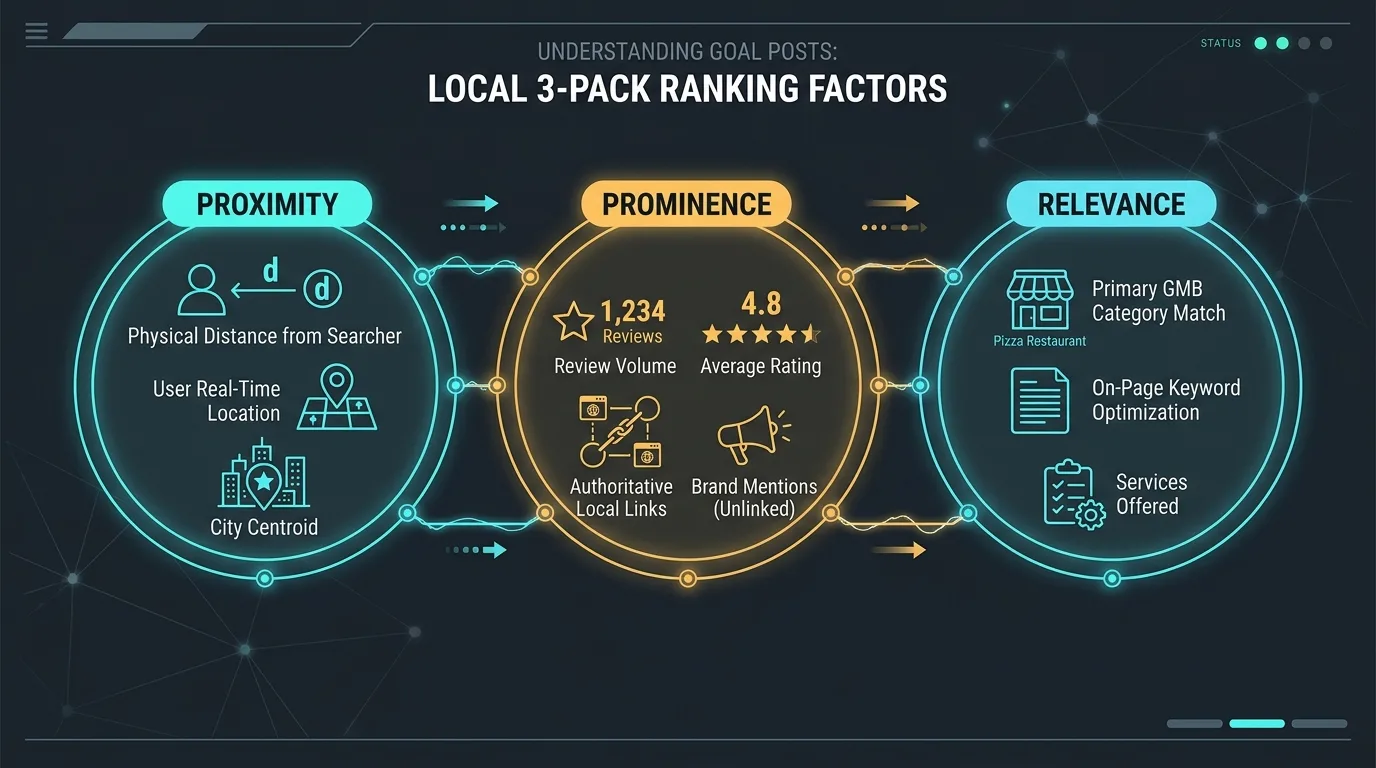
Figure 1: The Core Local 3-Pack Algorithmic Pillars — Proximity, Prominence, and Relevance Weightings in 2026.
Chapter 1: The Triad of Local Algorithmic Ranking Signals
Google's local ranking engine evaluates millions of geographic, contextual, and historical data points to determine which three businesses earn placement in the Local 3-Pack. Fundamentally, every query processed by Google Maps operates across three interdependent mathematical dimensions: Proximity, Prominence, and Relevance.
1. Proximity: The Unyielding Physical Constraint
Proximity measures the geographic physical distance between the searcher's verified coordinates (determined via GPS telemetry, Wi-Fi tri-angulation, cellular tower handoffs, or localized IP routing) and the physical latitude/longitude of the business entity. Key technical considerations include:
- User-Centric Proximity: Ranking positions drop off exponentially as the physical distance from the searcher increases, forming distinct hexagonal rank-drop zones around city centers.
- City Centroid Influence: For broad queries lacking explicit GPS context (e.g., “commercial litigation lawyer Chicago” executed on a desktop), Google defaults to distance from the official municipality centroid.
- Geofenced Service Area Boundaries: For Service Area Businesses (SABs) operating without public storefronts, boundary overlap and verified service radii determine visibility eligibility.
2. Prominence: Digital Authority and Offline Stature
Prominence reflects how deeply entrenched, reputable, and recognized a business entity is both across the web and in the physical world. Prominence acts as the ultimate equalizer: an exceptionally prominent brand can often outrank closer competitors who lack digital authority. Key components of Prominence include:
- Review Velocity and Sentiment: Total volume of verified customer reviews, average star rating, frequency of incoming feedback, and semantic keyword enrichment inside review text.
- Inbound Local Equity: Backlinks and contextual citations originating from hyper-local domains (local newspapers, municipal chambers of commerce, regional universities, and neighborhood sports sponsorships).
- Entity Knowledge Graph Solidification: Consistent co-occurrences of the brand entity alongside geographic Wikidata nodes and civic geographic data.
3. Relevance: Semantic Matching and Intent Alignment
Relevance determines how precisely a business profile and its associated website match the explicit transactional intent of the search query. It evaluates primary Google Business Profile (GBP) categories, secondary category selections, localized page copy, structured service menus, and metadata tags.
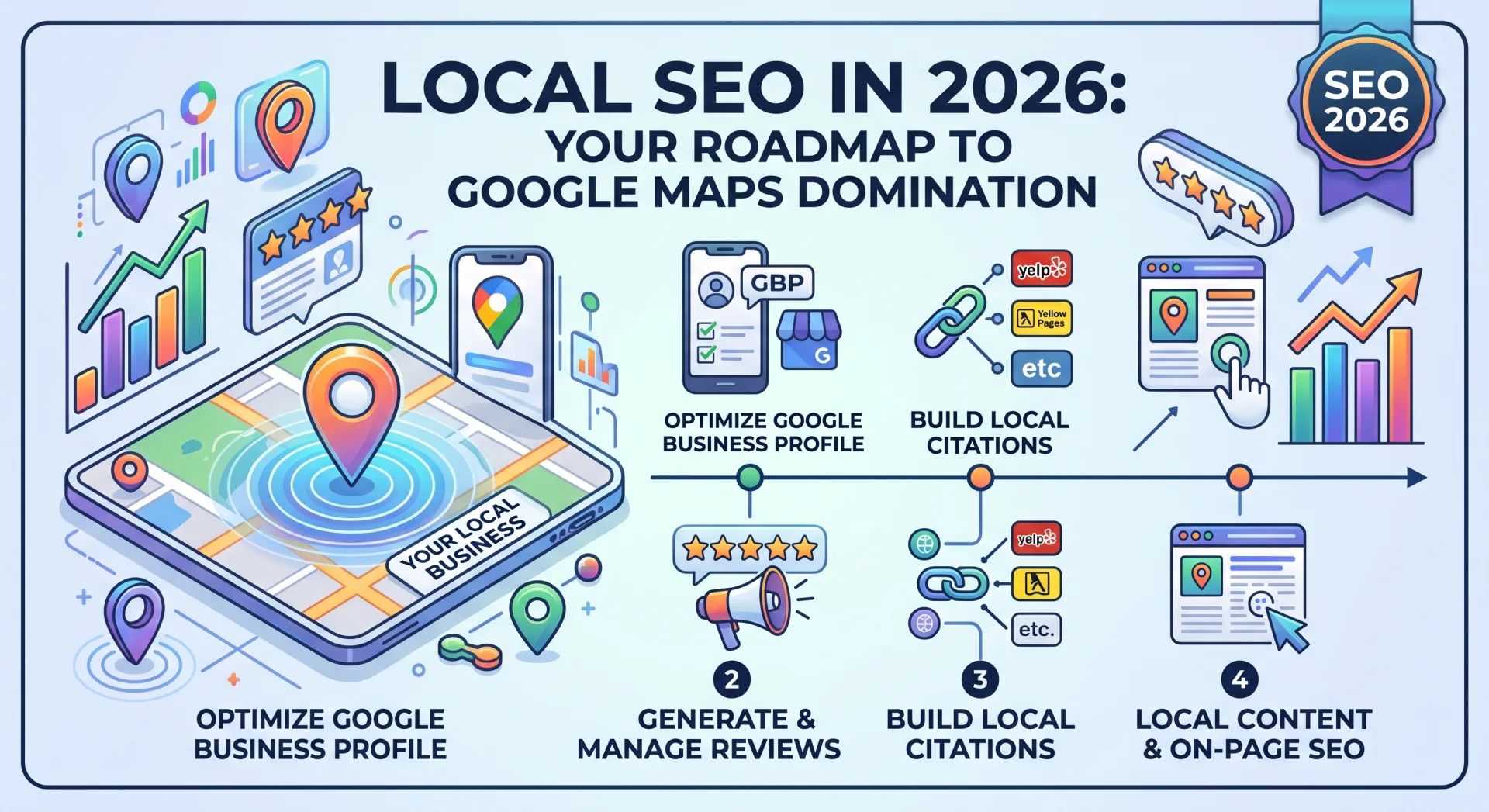
Chapter 2: Google Business Profile (GBP) 2026 Optimization Standards
Your Google Business Profile serves as the canonical source of truth for Google's local knowledge graph. Treating your GBP listing as a static phonebook entry is an immediate guarantee of algorithmic obsolescence. In 2026, profile optimization requires continuous, dynamic data governance.
| GBP Element | Algorithmic Weight | Optimization Best Practice | Critical Violation to Avoid |
|---|---|---|---|
| Primary Category | Highest (Crucial) | Select the most specific niche category that aligns with core commercial revenue. | Changing categories frequently, which triggers automated video re-verification suspensions. |
| Secondary Categories | High | Add up to 5-8 supporting secondary categories that reflect genuine auxiliary services. | Category stuffing with unrelated sectors to artificially capture broad traffic. |
| Business Name (Title) | Highest | Use exact legal entity name as displayed on physical signage and corporate filings. | Injecting geographic tags or keywords not present on physical exterior signage. |
| Attributes & Amenities | Moderate | Enable all applicable verified attributes (Wheelchair accessible, Veteran-owned, Wi-Fi, etc.). | Leaving attributes empty, forfeiting voice search and conversational AI filter visibility. |
| Products & Services Catalog | High | Populate exhaustive service descriptions with precise pricing, specifications, and deep links. | Generic one-line descriptions without direct URL landing page associations. |
1. Category Optimization Architecture
The selection of your Primary Category accounts for up to 60% of your profile's algorithmic relevance score. Competitor audits consistently reveal that businesses ranking #1 in competitive metros choose hyper-specific primary categories (e.g., choosing “Personal Injury Attorney” rather than generic “Lawyer”, or “Commercial HVAC Contractor” rather than “Heating Contractor”).
2. The Exterior Signage and Video Verification Protocol
Google's automated spam detection systems deploy computer vision algorithms to cross-reference video verification uploads with Google Street View imagery and municipal registries. When undergoing verification:
- Ensure permanent, non-removable physical signage is clearly captured showing the exact business name matching the GBP title.
- Record continuous video demonstrating unlocking physical facilities, accessing commercial equipment, and showing utility bills or corporate leases matching the registered street address.
- Never utilize virtual offices, P.O. boxes, or co-working spaces lacking permanent branded dedicated exterior office signage.
Chapter 3: The Citation Ecosystem & Tier-1 Data Aggregator Syndication
A local citation is any online mention of your company's core identifiers: Name, Address, and Phone Number (NAP). While low-tier directory submissions have become negligible in modern SEO, maintaining uncompromised NAP fidelity across Tier-1 data aggregators is mandatory for establishing algorithmic entity confidence.
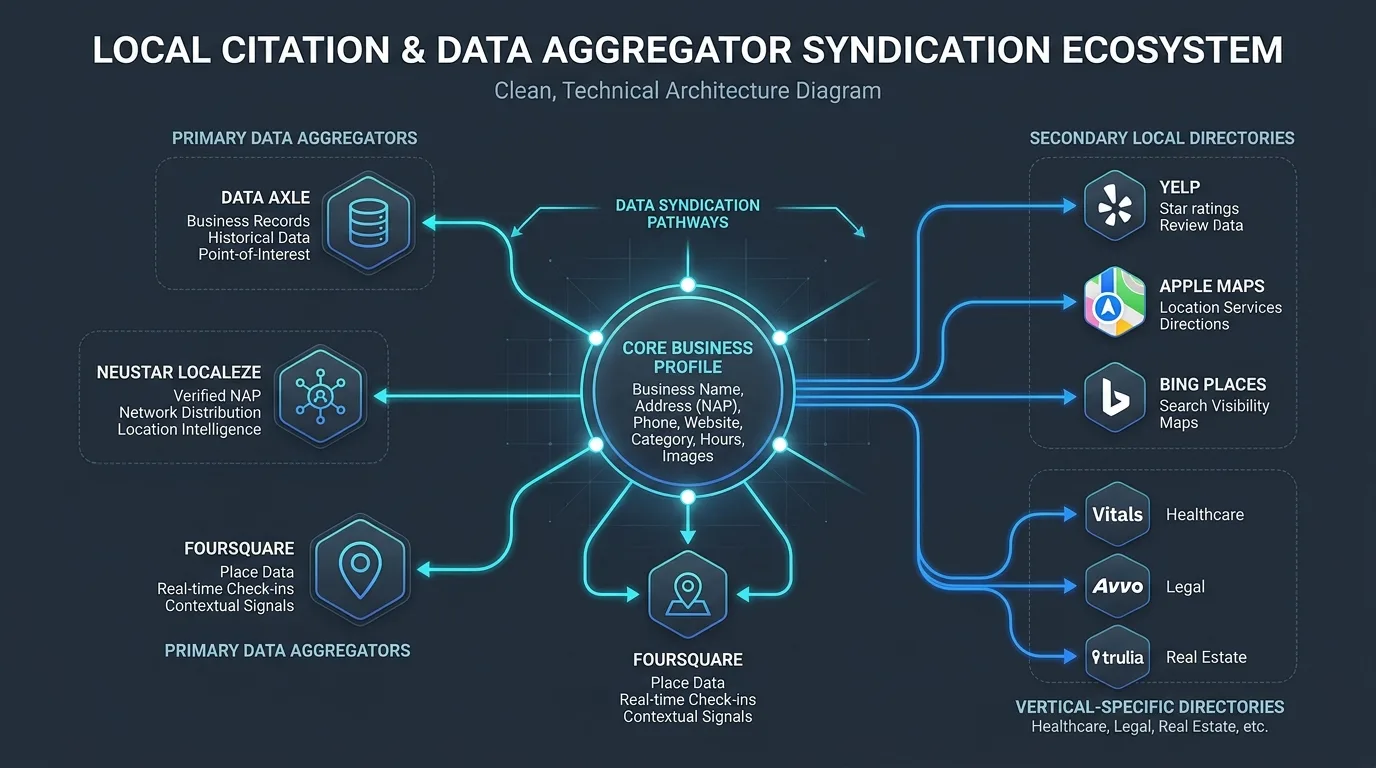
Figure 2: The Canonical Local Data Syndication Flow from Core Aggregators to Tier-1 Consumer Directories.
1. The Core Data Aggregators
Major search engines, mobile operating systems, in-dash vehicular GPS units, and AI assistants (Apple Intelligence, Siri, Gemini) do not crawl the entire web for local business phone numbers. Instead, they ingest structured location datasets from three primary commercial aggregators:
- Data Axle (formerly Infogroup): Powers commercial credit bureaus, enterprise B2B search, and navigation databases.
- Neustar Localeze: Feeds real-time telecommunications registries, mobile directory applications, and municipal mapping providers.
- Foursquare: The dominant point-of-interest (POI) provider supplying location coordinates to Apple Maps, Uber, Twitter, and major consumer platforms.
The Danger of Citation Fragmentation:
A mismatch as trivial as “Suite 400” versus “Ste 400”, or an outdated secondary phone number circulating on legacy aggregators, divides Google's entity trust score. Conflicting citation datasets dilute algorithmic confidence, directly resulting in unpredictable drops from the Local 3-Pack.
Chapter 4: Multi-Location Geo-Targeted Landing Page URL Architecture
For national brands and regional enterprises managing 10 to 1,000+ brick-and-mortar storefronts, website landing page architecture serves as the vital link between Google Maps listings and organic search authority. Creating duplicate doorway pages that swap city names will trigger devastating organic ranking penalties.
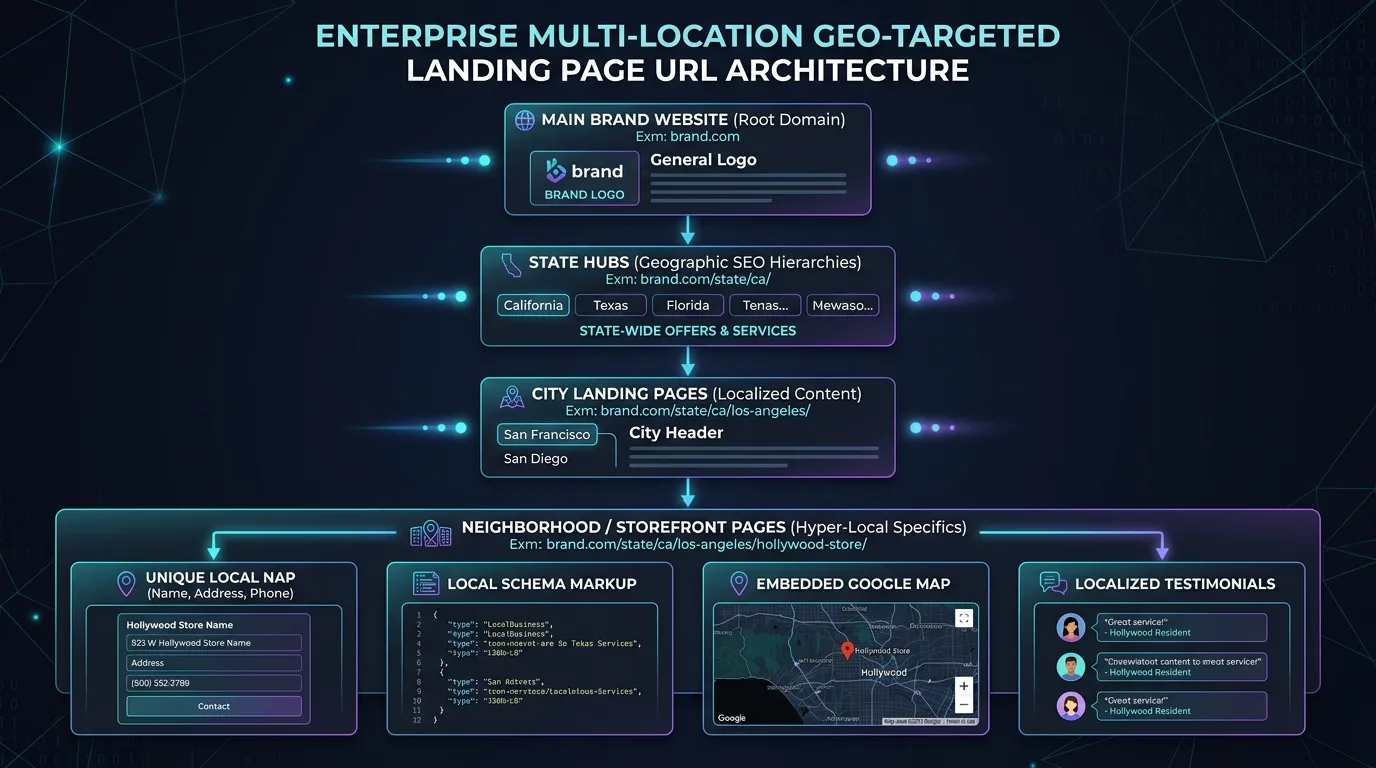
Figure 3: Clean Hierarchical URL Taxonomy and Content Blueprint for Multi-Store Local Landing Pages.
1. Hierarchical URL Structure
Maintain an organized, logical subfolder taxonomy that reflects real-world geographic distribution rather than flat, unstructured URL parameters:
# Clean Geographic URL Structure for Enterprise Local Sites:
- • State Hub Level: https://example.com/locations/california/
- • Metro / City Level: https://example.com/locations/california/san-francisco/
- • Physical Store Level: https://example.com/locations/california/san-francisco/downtown-market-st/
2. The Anatomy of an Unpenalizable Local Landing Page
Each individual storefront page linked directly from the corresponding GBP listing must deliver genuine, non-duplicated information gain. A world-class local landing page must incorporate:
- Exact Local NAP Matching GBP: Embedded with Schema.org microdata matching the GBP title and phone number exactly.
- Interactive Google Maps Embed: Featuring the official storefront place pin to reinforce geographic entity coordinates.
- Localized Staff Profiles & Certifications: Bio sketches and licensing details for the specific on-site practitioners or management team.
- Hyper-Local Directions & Parking Guidance: Textual instructions describing arrival routes from major highways, public transit stops, and nearby landmarks.
- Verified Store-Specific Customer Testimonials: Displaying reviews sourced specifically from customers who transacted at that physical branch.
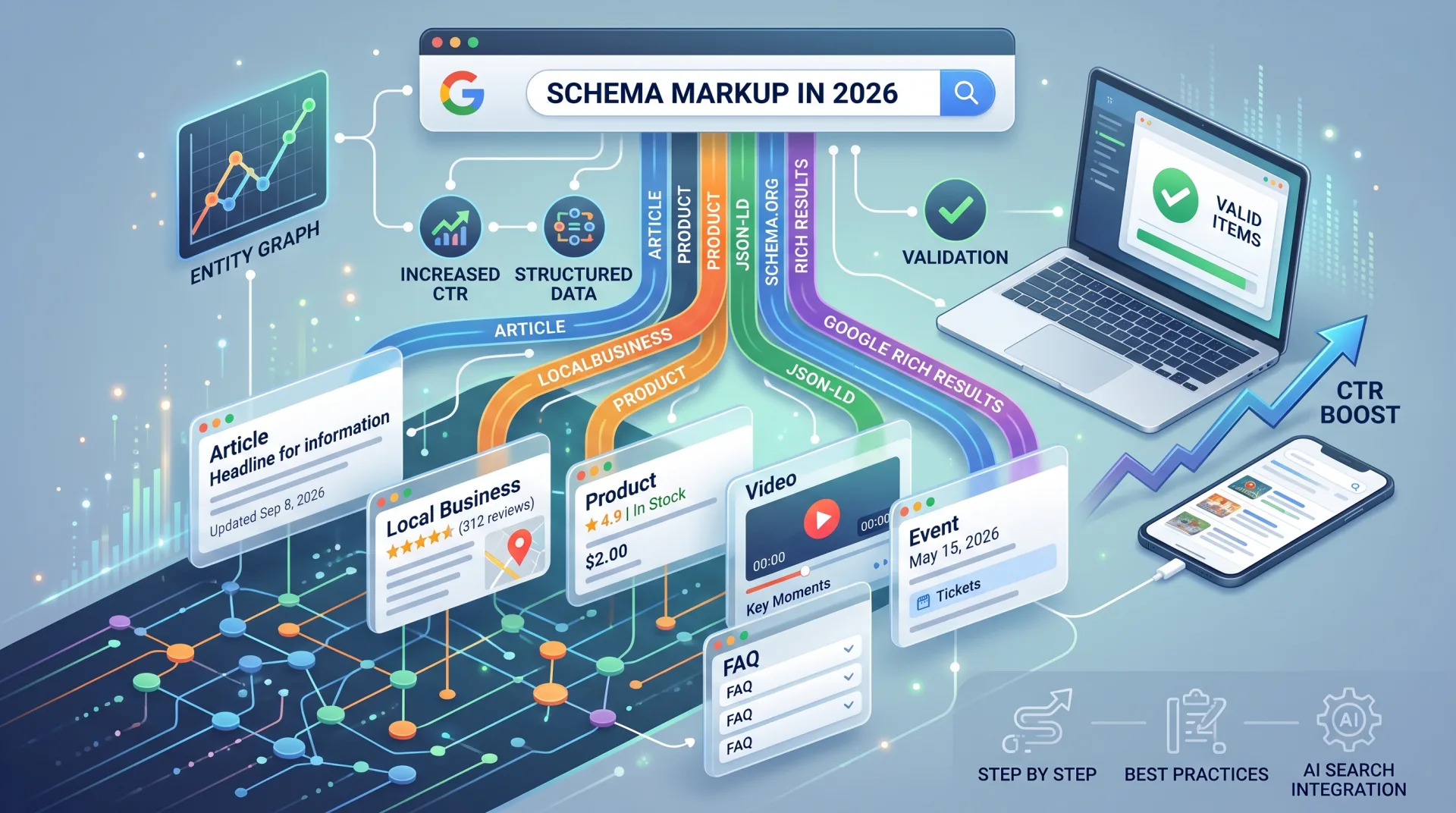
Chapter 5: Technical Schema Markup for Local Entities
Connecting your web architecture to Google's Knowledge Graph requires structured JSON-LD schema markup. Implementing complete LocalBusiness schema establishes machine-readable disambiguation of your geographic entities.
{
  "@context": "https://schema.org",
  "@type": "MedicalClinic",
  "@id": "https://example.com/locations/san-francisco/#clinic",
  "name": "Apex Spine & Joint Institute",
  "image": "https://example.com/images/sf-clinic-exterior.webp",
  "telephone": "+1-415-555-0192",
  "priceRange": "$$",
  "address": {
    "@type": "PostalAddress",
    "streetAddress": "750 Market Street, Suite 400",
    "addressLocality": "San Francisco",
    "addressRegion": "CA",
    "postalCode": "94102",
    "addressCountry": "US"
  },
  "geo": {
    "@type": "GeoCoordinates",
    "latitude": 37.786521,
    "longitude": -122.405623
  },
  "url": "https://example.com/locations/san-francisco/",
  "openingHoursSpecification": [
    {
      "@type": "OpeningHoursSpecification",
      "dayOfWeek": ["Monday", "Tuesday", "Wednesday", "Thursday", "Friday"],
      "opens": "08:00",
      "closes": "18:00"
    },
    {
      "@type": "OpeningHoursSpecification",
      "dayOfWeek": "Saturday",
      "opens": "09:00",
      "closes": "14:00"
    }
  ],
  "sameAs": [
    "https://www.facebook.com/ApexSpineSF",
    "https://www.yelp.com/biz/apex-spine-san-francisco",
    "https://maps.google.com/?cid=10823984712093847"
  ]
}
Chapter 6: Customer Review Velocity, Sentiment & Conversion Telemetry
Customer reviews represent both a direct algorithmic ranking signal and the single most critical conversion lever in local marketing. The 2026 local ranking algorithm does not merely count stars—it analyzes natural language processing (NLP) semantics, review velocity consistency, and merchant response agility.
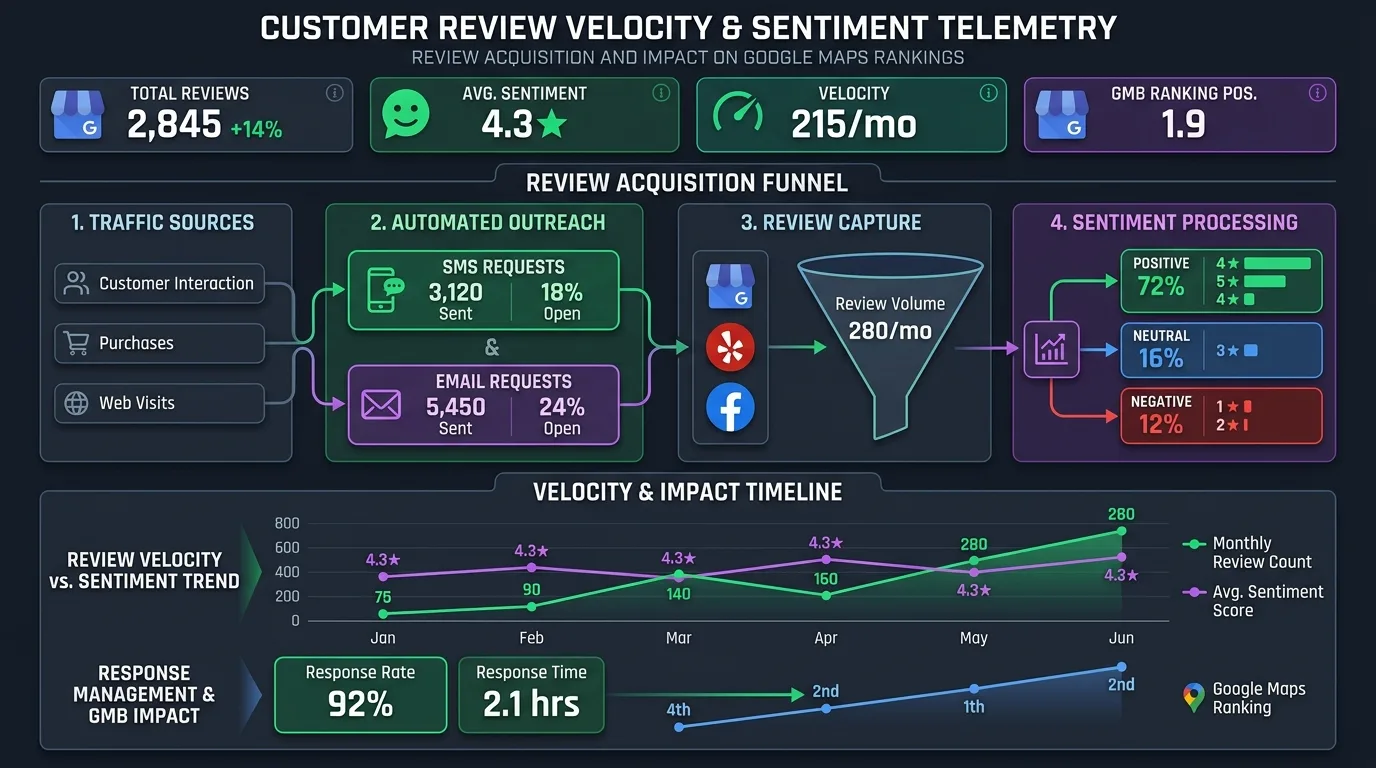
Figure 4: Automated Review Acquisition Funnel, Sentiment Processing, and Resulting Ranking Velocity.
1. Review Velocity vs. Artificial Review Spikes
Google's SpamBrain algorithm actively flags suspicious review behavior. Gaining 50 reviews in a single weekend followed by three months of zero activity triggers automated review filtering and potential shadow-banning. Instead, engineering a sustainable review velocity cadence (e.g., 3 to 5 verified reviews weekly) signals genuine, continuous operational excellence.
2. The Review Content Keyword Factor
When verified reviewers mention specific products, treatments, or service terms in their reviews (e.g., “Dr. Smith performed my dental implant flawlessly”), Google's NLP classifiers extract these entity tokens and award matching prominence badges (“Mentions dental implants”) in the Local 3-Pack.
The Optimal Review Response Formula:
Always respond to 100% of reviews within 24 to 48 hours. In positive responses, reinforce the localized service keywords naturally (e.g., “Thank you for trusting our downtown Chicago team with your transmission repair”). In negative responses, remain professional, provide a direct offline phone line, and never argue publicly.
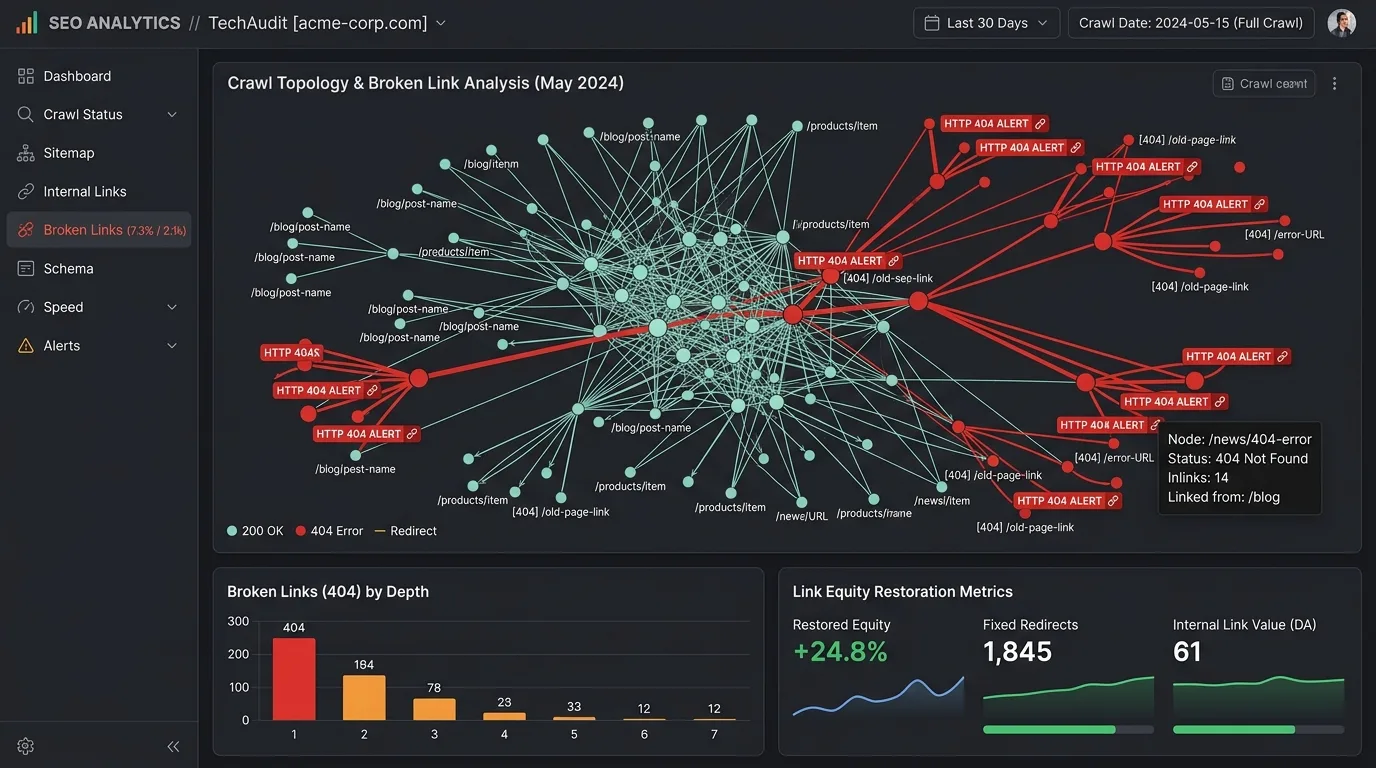
Chapter 7: Hyper-Local Link Building Tactics
National DA 80+ links do not carry the same contextual weight in the Local 3-Pack as genuine hyper-local links. Google prioritizes geographic topical relevance when ranking local businesses. Proven hyper-local link acquisition playbooks include:
| Tactic | Target Domain Types | Acquisition Strategy | SEO Impact |
|---|---|---|---|
| Local Sponsorships | Little League, youth sports, 5K charity runs, arts festivals | Donate $250-$500 in exchange for a dedicated sponsor profile and homepage link. | High Geographic Relevance |
| Chamber of Commerce | City and regional Chambers, Downtown Business Alliances | Annual membership fee provides an authoritative, vetted civic entity backlink. | High Trust & NAP Anchor |
| Local University Scholarships | Community colleges, trade schools, regional universities (.edu) | Create a $1,000 annual student scholarship featured on financial aid resource pages. | Tier-1 Authority (.edu) |
| Local News Thought Leadership | City newspapers, local business journals, regional TV portals | Provide expert commentary on local economic, medical, or real estate developments. | Tier-1 Editorial Prominence |
Chapter 8: Geogrid Rank Tracking, Proximity Isoline Analysis & Spam Defense
Tracking local search performance using a static IP address or standard desktop SERP scraping produces fundamentally deceptive data. In local search, your ranking is not a single scalar integer (e.g., “rank #2”)—it is a continuous, dynamic geographic field that fluctuates with every block, intersection, and neighborhood across a metropolitan region.
1. Geogrid Visibility Scanning
Modern enterprise local SEO teams employ multi-point geogrid scanners (such as Local Falcon, Places Scout, or BrightLocal) that deploy programmatic API calls mimicking mobile user GPS coordinates at fixed intervals (typically a 7x7, 9x9, or 13x13 grid spaced 0.5 miles apart). Geogrid analysis produces two critical metrics:
- Average Share of Voice (ASOV): The percentage of grid scanner points where your business profile successfully occupies a top-3 ranking position within the Local 3-Pack.
- Share of Local Voice (SoLV): A weighted calculation reflecting the total percentage of addressable search impressions captured across the designated commercial market.
2. Proximity Isoline Contouring
By mapping your ranking performance onto topological isoline charts, you can pinpoint the exact geographic boundaries where your proximity signal degrades. When a steep ranking cliff is identified only 1.2 miles north of your storefront, the solution is rarely to spam your title; rather, it requires creating neighborhood-specific content, sponsoring events within that specific zip code, and building hyper-local citations that anchor your digital presence in that target micro-district.
3. Competitor Spam Redressal Protocols
In high-stakes commercial niches (such as emergency plumbing, locksmithing, water damage restoration, and legal representation), rogue competitors frequently flood Google Maps with fake listings, fabricated residential addresses, and keyword-stuffed titles (e.g., “Best Emergency Plumber Chicago Fast Cheap”). Fighting local spam is an active, essential ranking strategy:
- Gathering Ground Truth Evidence: Capture photographic evidence of the physical address showing lack of business presence, vacant lots, or mailbox rental facilities.
- Submitting Formal Redressal Complaints: Utilize Google's official Business Redressal Complaint Form, supplying corporate registration records, photographic proof, and Street View discrepancies.
- Monitoring Suspension Impact: When fraudulent competitor listings are removed, your legitimate business profile instantly recaptures organic share of voice across the surrounding geogrid nodes.
Chapter 9: The 25-Point Local SEO Technical & Entity Audit Checklist
Before launching an aggressive local expansion campaign or investing heavily in local link acquisition, conduct a comprehensive diagnostic audit across every operational dimension of your local presence.
| Audit Category | Checkpoint Item | Technical Standard & Verification Protocol |
|---|---|---|
| 1. GBP Governance | Primary Category Precision | Primary category matches top-ranking local competitors and represents primary revenue. |
| Exact Legal Name Fidelity | Business title matches signage exactly without artificial geographic or service keywords. | |
| Holiday & Special Hours | Special holiday hours updated at least 14 days in advance to prevent “Closed” badges. | |
| 2. Citation Fidelity | Core Aggregator Sync | Direct active records claimed and verified on Data Axle, Neustar Localeze, and Foursquare. |
| Phone Number Uniformity | Direct local area code phone number utilized across all listings rather than generic 800 numbers. | |
| Duplicate Listing Purge | All historical, unclaimed, or duplicate Google Maps pins merged or deleted. | |
| 3. Landing Page SEO | Store-Specific URL Association | GBP website button links directly to unique storefront landing page, not the generic homepage. |
| LocalBusiness JSON-LD Schema | Valid schema containing precise geo-coordinates, opening hours, sameAs social links. | |
| Interactive Maps Integration | Official Google Maps place pin iframe embedded directly into the footer or contact section. | |
| 4. Review Systems | Steady Review Velocity | Automated post-purchase SMS/email review invitation pipeline operational without gating. |
| 100% Response Rate SLA | All reviews responded to within 48 hours using natural localized terminology. |
Chapter 10: Voice Search, Conversational AI Overviews & Multimodal Local Discovery
As search behavior migrates from static desktop queries to voice-activated smart assistants (Siri, Google Assistant, Amazon Alexa) and conversational AI interfaces (Google Gemini, SearchGPT, Perplexity), local intent is increasingly resolved without a traditional web SERP. In conversational local search, there are no “top 10 results”—there is only a single synthesized recommendation or a concise 3-item carousel.
1. Conversational Query Phrasing and Natural Language Semantics
Voice and multimodal searches feature significantly longer character lengths and conversational phrasing (e.g., “Find a quiet coffee shop near downtown with outdoor seating, fast Wi-Fi, and gluten-free pastries open right now”). To capture these complex long-tail conversational retrievals:
- Optimize Attribute Completeness: Ensure all micro-attributes in your Google Business Profile (e.g., outdoor seating, gender-neutral restrooms, wheelchair accessible entrance, free Wi-Fi) are actively enabled.
- Structure Conversational FAQ Schema: Embed localized question-and-answer pairs on your landing pages directly addressing operational queries, parking nuances, and walk-in policies.
- Deploy Multi-Modal Visual Search Signals: High-resolution geotagged photographs of physical storefront interiors and menus allow Google Lens and Gemini Vision to recognize physical amenities and recommend your establishment during visual search queries.
The Zero-Click Local Future:
In generative voice environments, search engines rely almost exclusively on verified structured data and real-time business status. Maintaining 100% accurate live hours, active menu feeds, and rapid messaging response ensures your business profile is selected as the definitive answer by autonomous AI agents.

Ratings & reviews
No reviews yet. Be the first.