
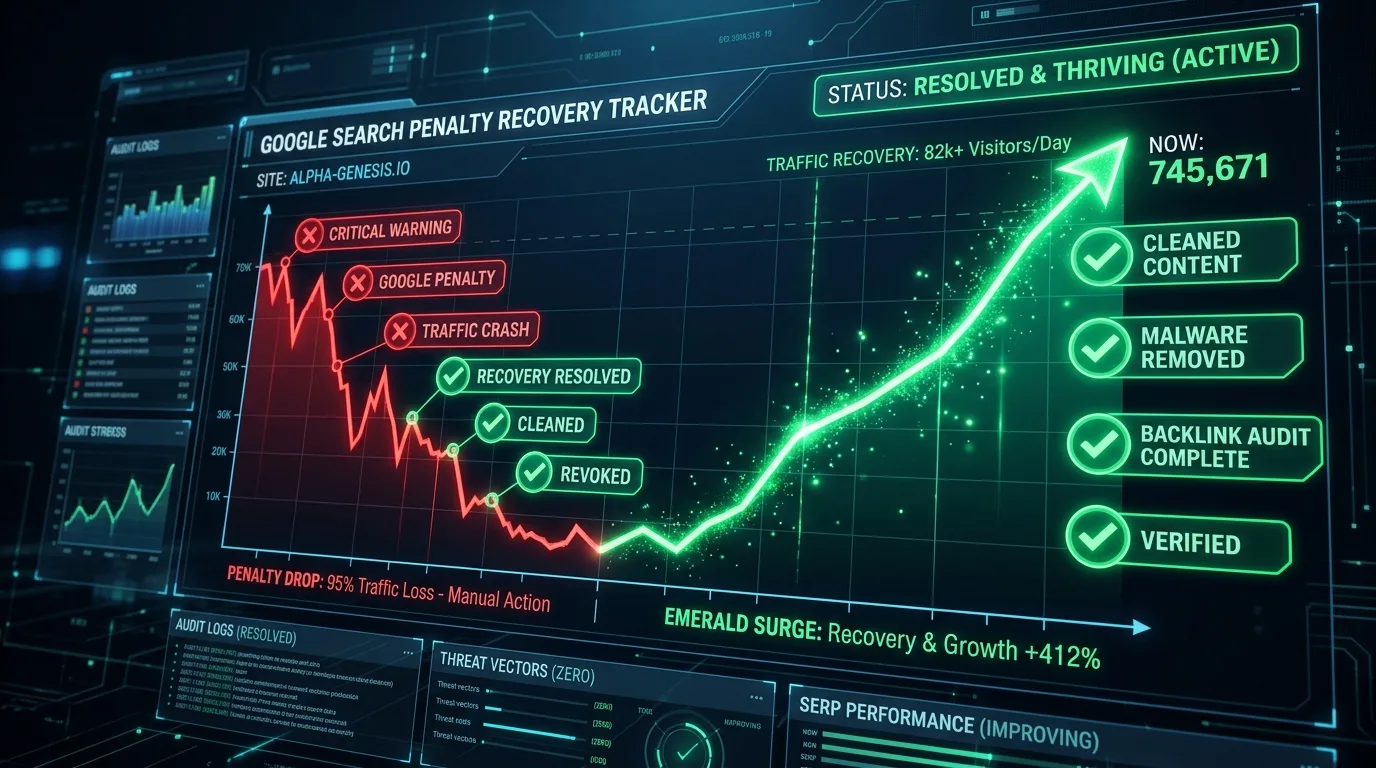
Waking up to find that your organic search traffic has collapsed overnight is every website owner's, digital marketer's, and technical SEO's ultimate nightmare. Within hours, keyword rankings that took years of dedicated engineering and content strategy to build vanish from Google's search engine results pages (SERPs). Inquiries drop, conversion pipelines dry up, and revenue plummets.
In 2026, the search landscape is more merciless and sophisticated than ever before. Google's webspam prevention systems, AI-powered quality classifiers, and broad core ranking algorithms operate at unprecedented speed and granularity. The March 2024 core update, subsequent Spam Updates, and the continuous integration of the Helpful Content System have permanently rewritten the rules of organic search.
However, a severe traffic crash is not a permanent death sentence. Whether your domain was struck by an explicit Manual Action from Google's human webspam team or suffered a catastrophic algorithmic devaluation following a broad Core Update, systematic recovery is entirely achievable. This playbook is an authoritative, step-by-step forensic engineering manual. Spanning root-cause diagnosis, toxic backlink elimination, deep content pruning, the anatomy of a winning Reconsideration Request, and long-term search governance, this guide provides the exact roadmap required to rehabilitate your domain and reclaim your organic rankings.
Chapter 1: The Anatomy of a Penalty: Manual Actions vs. Algorithmic Devaluations
Before touching a single line of code or deleting a single article, you must diagnose the exact nature of the traffic loss. In search engine optimization, the colloquial term "Google Penalty" is applied carelessly to two completely distinct technical phenomena: Manual Actions and Algorithmic Devaluations.
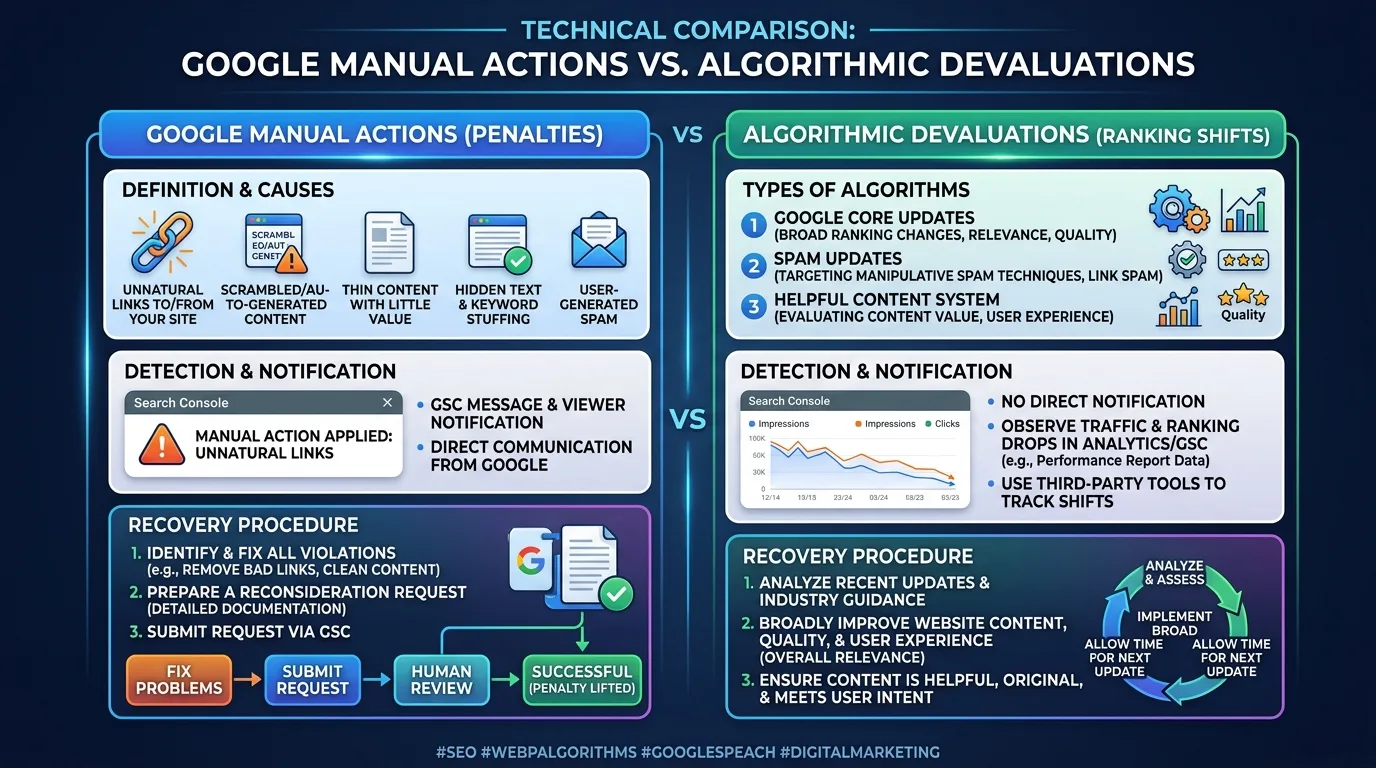
Confusing a manual action with an algorithmic drop will guarantee that your recovery efforts fail. Each condition is triggered by different systems, evaluated through different mechanisms, and requires a fundamentally different remediation protocol.
| Diagnostic Dimension | Manual Actions (True Penalties) | Algorithmic Devaluations (Ranking Drops) |
|---|---|---|
| Origin & Mechanism | Applied directly by a human reviewer at Google after an algorithmic flag or competitor spam report. | Computed automatically by machine-learning ranking models, SpamBrain, or Core systems without human intervention. |
| Search Console Visibility | Explicit alert in Google Search Console under "Security & Manual Actions" → "Manual Actions". | Completely invisible in GSC manual actions tab. "No issues detected" is reported despite massive traffic loss. |
| Common Triggers | Unnatural outbound/inbound links, scaled content abuse, site reputation abuse ("parasite SEO"), cloaking, pure spam. | Low Information Gain, thin aggregated content, excessive affiliate density, poor E-E-A-T, broad relevance shifts. |
| Recovery Mechanism | Remediate violations, document evidence, and submit a formal Reconsideration Request to Google. | Holistic website overhaul (pruning, rewriting, architectural restructuring) and waiting for future algorithm cycles. |
| Recovery Speed | 1 to 6 weeks following approved reconsideration review. | Months; typically requires subsequent broad core or spam update refreshes. |
The 2026 Policy Landscape: New Spam Vector Classifications
In recent update cycles, Google has formalized strict enforcement policies addressing modern web abuses. If your site was penalized recently, it likely falls into one of these newer policy categories:
- Scaled Content Abuse: Producing mass pages with the primary intention of manipulating search rankings, regardless of whether created via generative AI, scraping, programmatic templates, or human content farms. If hundreds of pages offer zero incremental "Information Gain" compared to existing indexed web documents, the domain faces swift site-wide demotion.
- Site Reputation Abuse (The "Parasite SEO" Rule): Third-party content published on a trusted host domain without adequate oversight or involvement of the host site, designed to exploit the host's domain authority to rank for unrelated commercial queries (e.g., a reputable news publication hosting unvetted payday loan or casino review portals).
- Expired Domain Abuse: Purchasing aged, authoritative expired domains and repurposing them to host low-quality affiliate content or build private blog networks (PBNs) to pass historical link equity.
- Unnatural Links (Inbound & Outbound): Buying or selling links that pass PageRank, participating in private link networks, utilizing automated software to generate forum/comment links, or distributing large-scale guest posting campaigns with over-optimized commercial anchor text.
Chapter 2: Phase 1: Rapid Forensic Triage & Diagnostic Audit
When rankings plummet, panic is the enemy of recovery. Rushing to disavow thousands of valid backlinks or randomly unpublishing dozens of high-performing URLs will compound your damage. Follow this rigorous diagnostic tree to isolate the root cause.
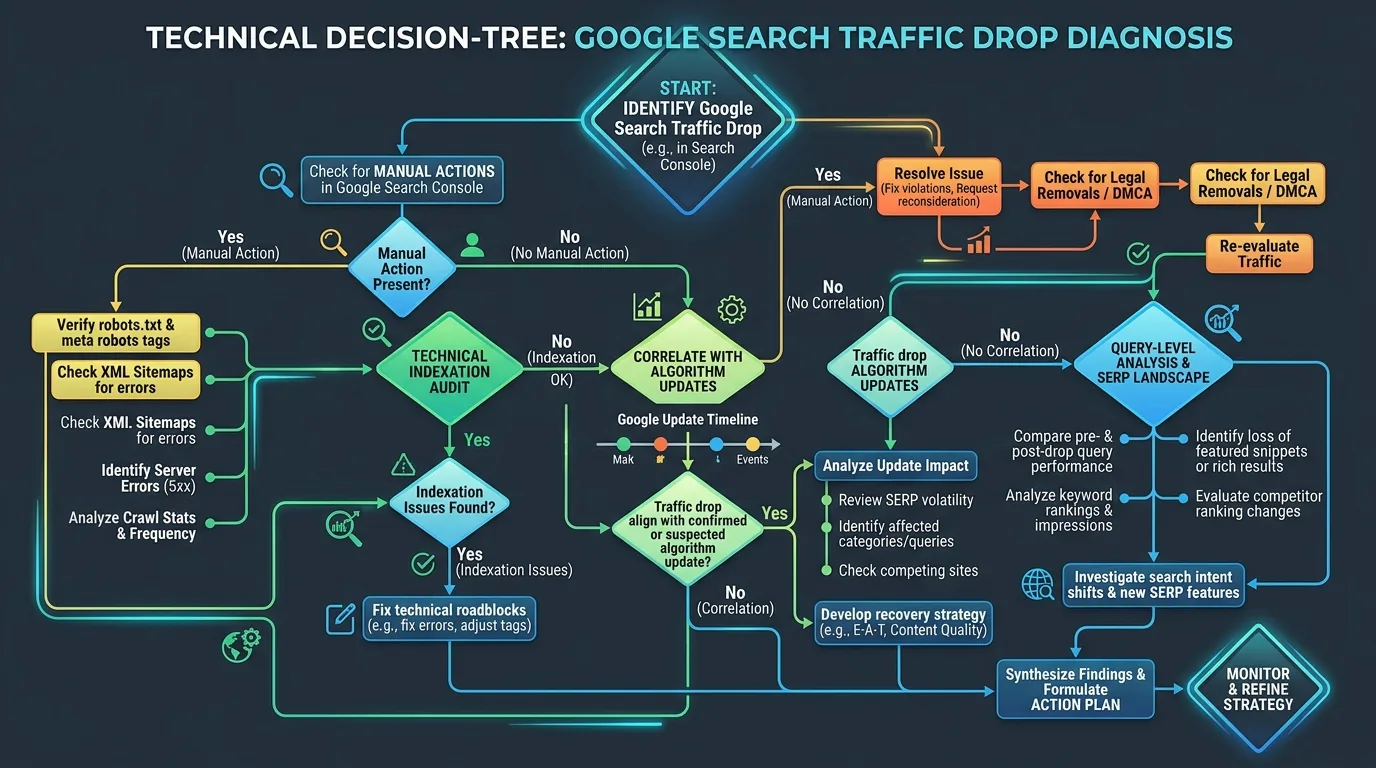
Step 1: Rule Out Self-Inflicted Technical Indexing Disasters
Before concluding that Google has penalized your domain, verify that your own technical infrastructure hasn't accidentally blocked search engine crawlers. More than 20% of suspected "penalties" are actually catastrophic developer deployment bugs:
- Robots.txt Disallow Rules: Inspect
https://yourdomain.com/robots.txt. Verify that a staging configuration containingDisallow: /was not pushed to production. - Meta Robots
noindexDirectives: Inspect the HTML source of your primary landing pages. Check for accidental<meta name="robots" content="noindex, nofollow">tags injected by CMS updates, SEO plugin glitches, or staging environment flags. - HTTP Response Headers: Use
curl -I https://yourdomain.comto inspect server response headers. Confirm that your web server (Nginx, Apache, Caddy, or Cloudflare Workers) is not returning anX-Robots-Tag: noindexheader. - Canonical Tag Self-Destruction: Ensure that canonical tags across page templates point to the correct, absolute canonical URLs and are not pointing to
localhost, staging domains, or 404 error pages. - Server 5xx Outages & Crawl Budget Exhaustion: Open Google Search Console → Settings → Crawl Stats. Review the "Host status" breakdown. If Googlebot encountered widespread 500, 502, or 503 errors over several consecutive days, it will aggressively de-index pages to protect users from broken experiences.
Step 2: Correlate the Crash Date with Confirmed Google Updates
Examine your organic performance graph in Google Search Console (filter by Search type: Web, date range: last 3 months). Pinpoint the exact calendar date when the decline began:
Case 1: Sudden Drop Within 24-48 Hours (Drop > 70%)
→ Strongly indicates an explicit Manual Action OR a severe technical de-indexing event.

Case 2: Step-Function Drop Over 5-14 Days During a Broad Core Update Rollout
→ Strongly indicates an Algorithmic Devaluation (Core Update or Helpful Content evaluation).

Case 3: Steady, Continuous Decay Over Several Months
→ Indicates competitive displacement, technical rot, or gradual link decay rather than an active penalty.
Cross-reference your drop date against the official Google Search Status Dashboard and industry volatility trackers (Semrush Sensor, MozCast, RankRanger). If your traffic collapse aligns precisely with the launch date of a confirmed Core Update or Spam Update, your site was re-evaluated algorithmically.
Step 3: Analyze Penalty Granularity (Site-Wide vs. Directory vs. Query)
A crucial diagnostic step is determining the blast radius of the traffic loss:
- Site-Wide Penalty: Traffic drops uniformly across every category, blog post, product page, and even brand searches (e.g., searching for your exact brand name no longer yields your homepage as result #1). Typically triggered by pure spam, severe link schemes, or domain-level algorithmic devaluations.
- Directory / Sub-folder Penalty: Only specific URL segments (e.g.,
/blog/,/reviews/, or/tools/) crash, while core commercial or ecommerce catalog pages remain unaffected. Strongly correlates with scaled thin content, automated content generation, or site reputation abuse. - Query-Level Degradation: You retain top rankings for brand terms and navigational queries, but lose competitive non-brand keywords. Indicates that competitors demonstrated superior Information Gain or that your page-level E-E-A-T signals weakened.
Chapter 3: Phase 2: Diagnosing & Remediating Manual Actions
To avoid acquiring manipulative links in the first place and to rebuild your authority cleanly, align your link acquisition strategy with our deep dive on safe, white-hat link-building tactics for 2026.

If Google Search Console displays a yellow warning icon under Manual Actions, a human member of Google's webspam team has reviewed your site and determined that it violates Google Search Essentials guidelines. Here is the exact technical remediation protocol for every major manual action type.
1. Manual Action: "Unnatural Links to Your Site"
Never disavow backlinks blindly. Google's SpamBrain automatically ignores the majority of scraper spam and low-tier scraper sites without penalizing your domain. Only disavow links when you have an active Manual Action for Unnatural Links or when your domain engaged in deliberate, paid link-building schemes that cannot be removed manually.
This action is issued when Google detects an artificial, deceptive, or manipulative pattern of inbound links pointing to your domain (paid links, private blog networks, automated link-building services, optimized anchor-text syndication).
The 4-Step Link Remediation Protocol:
- Aggregate Complete Backlink Intelligence: Export your backlink profile from at least three disparate sources to capture a comprehensive dataset:
- Google Search Console (Links → Export External Links → More Sample Links)
- Ahrefs Site Explorer (All Backlinks → 1 link per domain)
- Semrush Backlink Audit
- Toxicity Scoring & Categorization: Audit referring domains against strict red-flag criteria:
- PBNs (Private Blog Networks): Footprints including identical IP subnets, shared Whois privacy providers, generic WordPress themes with zero comments, and disparate content topics hosted on the same domain.
- Commercial Anchor-Text Saturation: Thousands of exact-match commercial anchors (e.g., "cheap car insurance", "best crypto wallet") originating from foreign-language scrapers or low-tier directory submissions.
- Sitewide Footer & Sidebar Links: Widgets, theme sponsors, or affiliate partner badges passing PageRank without
rel="nofollow"orrel="sponsored"attributes.
- Exhaustive Manual Outreach for Removal: Before submitting a disavow file, Google's human reviewers demand proof of physical effort. You must attempt to contact webmasters to delete toxic links:
- Send professional removal emails to webmaster contact addresses or WHOIS contact forms.
- Document every email sent: Date, Recipient Address, Target URL, Referring URL, and Outcome (Deleted, Ignored, Demanded Payment). Take screenshots of contact forms submitted.
- Compiling and Uploading the Google Disavow File: For every toxic domain that refuses to remove the link or fails to respond after 14 days, format an official Disavow text file (
.txtencoded in UTF-8 or 7-bit ASCII):
# Disavow File for example.com - Remediated February 2026
# Contact outreach attempted across 124 domains; 38 links removed manually.
# The following remaining domains failed to respond or demanded fees for removal.

# Private Blog Network footprints identified via manual review
domain:spamblognetwork12.com
domain:rankboosterseo-directory.org
domain:free-backlinks-service.net

# Paid guest post links with manipulative exact-match anchor text
domain:cheaparticlesyndicate.info
domain:digitalmarketingguestposthub.biz

# Individual spam page containing scraped content injection
https://compromised-site.com/hacked-directory/viagra-links.html
Upload the completed file via the official Google Disavow Tool (search.google.com/search-console/disavow-links). Note: Always disavow at the domain: level rather than individual URLs to neutralize future sub-pages created by the same spam network.
2. Manual Action: "Scaled Content Abuse" & "Thin Content with Little or No Added Value"
This penalty targets domains that published hundreds or thousands of low-quality pages created with minimal human curation, superficial AI text generation, or automated scraping.
Remediation Protocol:
- Inventory All Content: Export all published URLs from your CMS. Identify pages that generate near-zero organic impressions, have high bounce rates (> 90%), or provide no unique insights.
- Implement Aggressive Pruning: For pages that serve no user purpose and cannot be meaningfully enhanced, delete them immediately and return an explicit HTTP 410 Gone status code. HTTP 410 instructs Googlebot that the page was permanently and intentionally destroyed, accelerating de-indexing compared to a standard 404.
- Consolidate Fragmented Content: If you have 20 thin articles targeting slight variations of the same query (e.g., "SEO tips for dentists", "SEO tips for doctors", "SEO tips for lawyers"), consolidate them into a single, authoritative 4,000-word flagship resource. Implement 301 redirects from the 19 pruned URLs to the master pillar page.
3. Manual Action: "Site Reputation Abuse"
Introduced to curb parasite SEO, this penalty is applied when authoritative domains host third-party commercial content with little or no editorial oversight.
Remediation Protocol:
- Immediately unpublish, delete, or apply
noindexto all third-party white-label sections, syndicated affiliate coupon hubs, or sponsored directories that do not align with your core brand expertise. - If third-party content must remain live, block Googlebot entirely via
robots.txtor apply<meta name="robots" content="noindex, nofollow">and audit all internal links pointing to that directory.
Chapter 4: Phase 3: The Complete Reconsideration Request Masterclass
Once you have physically resolved every violation cited in your manual action notice, you must submit a formal Reconsideration Request through Google Search Console. This request is reviewed by a real human engineer on Google's Search Quality team.
What Google Reviewers Demand to See
Google human reviewers reject submissions that attempt to shift blame to competitors or past marketing agencies. Always acknowledge full institutional ownership of the violation, document concrete outreach efforts in a transparent public spreadsheet, and outline permanent organizational guardrails.
Google reviewers read thousands of requests weekly. They instantly reject submissions that make excuses, deny responsibility, attack competitors, or claim ignorance. A winning reconsideration request contains three mandatory elements:
- Complete Acknowledgement of Violation: Clear, unambiguous ownership of the issue. Acknowledge exactly which guidelines were breached and why (e.g., "We engaged a third-party SEO agency that employed manipulative link schemes without proper governance").
- Exhaustive Evidence of Remediation: Transparent proof of the work completed. Include a public, viewable Google Sheet link containing your audit logs, outreach attempts, deleted links, and the disavow file submitted.
- Permanent Governance & Prevention Guardrails: Structural safeguards put in place to ensure the violation can never recur (e.g., hiring an in-house SEO director, terminating spam vendor contracts, implementing editorial review boards).
Production-Tested Reconsideration Request Template
Use this battle-tested template as the structural blueprint for your submission:
Subject: Reconsideration Request for [example.com] - Manual Action: Unnatural Inbound Links

Dear Google Search Quality Team,

We are submitting this Reconsideration Request following a comprehensive, site-wide audit and remediation of unnatural inbound links pointing to [example.com].

1. ACKNOWLEDGEMENT OF THE VIOLATION
We take full responsibility for the violation of Google Search Essentials regarding link schemes. Between [Month, Year] and [Month, Year], our organization engaged an external agency that acquired manipulative, paid links with optimized commercial anchor text. We understand that these tactics undermined the integrity of Google's search results.

2. REMEDIATION ACTIONS TAKEN
Over the past 45 days, our technical team executed an exhaustive link remediation campaign:
- Backlink Inventory: We compiled 14,820 external links across Google Search Console, Ahrefs, and Semrush, consolidating them into a unified audit database.
- Manual Outreach & Link Removal: We manually investigated every linking domain. We identified 312 toxic referring domains. We initiated direct email and contact-form outreach to every site owner requesting complete removal.
- Results: We successfully obtained permanent removal of 84 toxic links.
- Disavow File Submission: For the remaining 228 domains where webmasters failed to respond or demanded payment, we uploaded a comprehensive disavow file at the domain level on [Date].

All documentation—including outreach logs, screenshots of contact forms, and our categorized link database—is transparently accessible in this read-only Google Sheet:
[Link to Public Google Sheet: https://docs.google.com/spreadsheets/d/...]

3. PREVENTATIVE SAFEGUARDS & FUTURE COMPLIANCE
To guarantee permanent adherence to Google's Search Essentials:
- We have terminated all contracts with the third-party marketing agency responsible.
- We have instituted an in-house Editorial & SEO Quality Policy forbidding the purchase, exchange, or solicitation of manipulative backlinks.
- All future external link acquisition will follow organic, white-hat digital PR and editorial standards.

We respectfully request that you review our domain and consider lifting the manual action.

Sincerely,
[Your Name / Title]
[Your Company Name]
[Contact Information]
Chapter 5: Phase 4: Recovering from Algorithmic Devaluations (Core & Spam Updates)
Surviving algorithmic evaluations requires publishing content that demonstrates genuine Information Gain. Learn how to craft articles that satisfy both user intent and search algorithms in our guide on Content SEO: How to Write Articles That Rank and Convert.

If your traffic crashed during a broad Core Update or Spam Update rollout without a manual action warning in Search Console, submitting a reconsideration request is impossible because there is no manual action to reconsider. Algorithmic recovery requires a holistic, systemic transformation of your website's content quality, information gain, and architectural integrity.
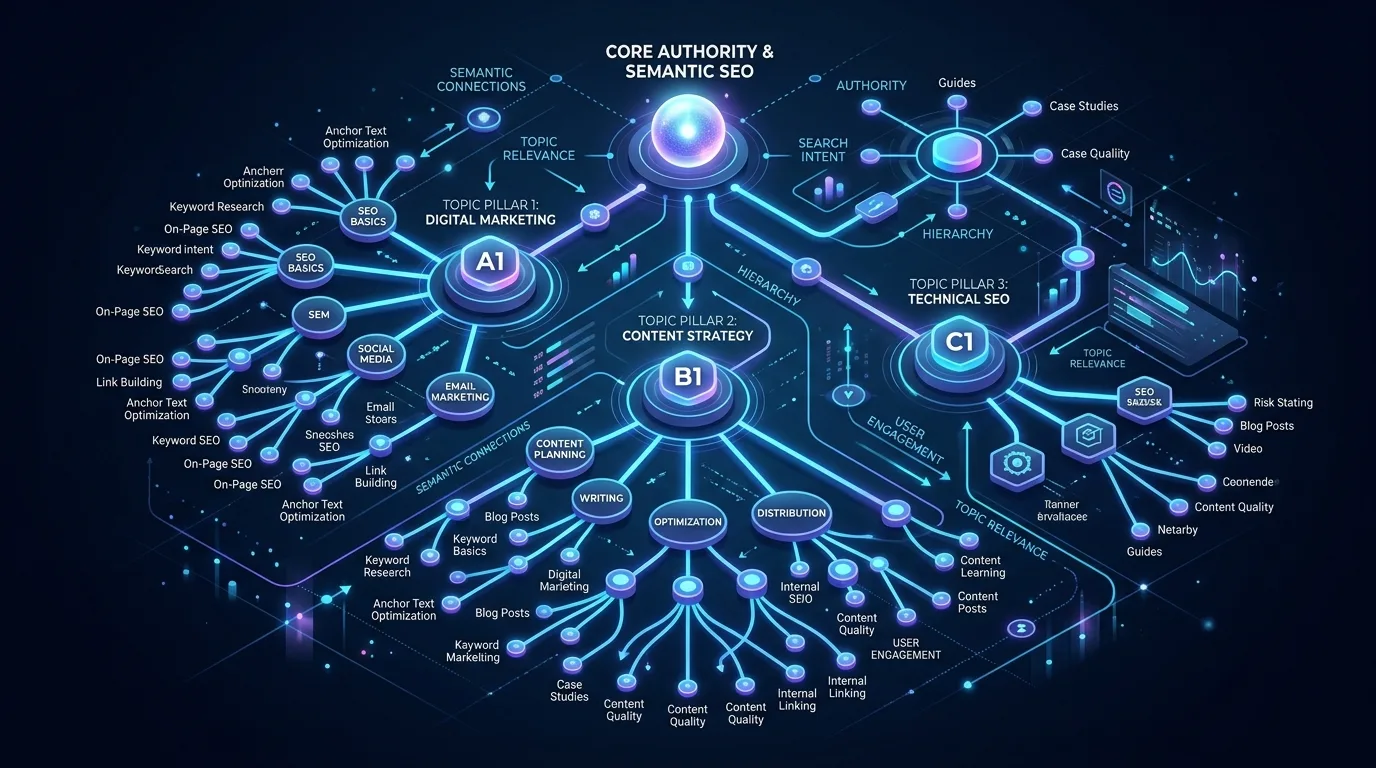
The 4-Quadrant Content Audit Decision Matrix
Do not attempt to fix a penalized domain by lightly tweaking meta tags or sprinkling synonyms. You must perform an aggressive content audit across 100% of your indexed URLs, sorting every page into one of four operational quadrants:
| Quadrant | Content Profile / Criteria | Action Required | Technical Implementation |
|---|---|---|---|
| Q1: Keep & Enhance | High organic value, genuine user engagement, strong original research, unique expert insights. | Retain URL, update factual data, elevate visual diagrams, expand unique case studies. | HTTP 200; update lastmod in XML sitemap. |
| Q2: Consolidate & Merge | Multiple thin or overlapping articles competing for identical search intents (keyword cannibalization). | Merge the best insights of 3-10 weak articles into a single master pillar guide. | 301 Redirect obsolete URLs to the master pillar URL. |
| Q3: Complete Rewrite | Valuable commercial query target, but current article is generic, AI-synthesized, or lacks Information Gain. | Scrap legacy text. Re-author from scratch with first-hand experience, original testing, and unique data. | HTTP 200; refresh author bio schema and publication dates. |
| Q4: Aggressive Pruning | Zero traffic over 12 months, thin automated content, outdated news, low-quality affiliate summaries. | Permanently eradicate from domain to conserve crawl budget and lift site-wide quality threshold. | HTTP 410 Gone (Permanently Deleted). |
The Power of HTTP 410 Gone Over 404
When executing content pruning at scale, configure your server to return HTTP 410 Gone rather than HTTP 404 Not Found. While a 404 indicates that a resource is currently missing (prompting Googlebot to repeatedly re-crawl the URL for weeks in case it returns), HTTP 410 explicitly asserts that the resource was intentionally and permanently destroyed. Googlebot de-indexes 410 responses significantly faster, liberating crawl equity for your authoritative master pages.
# Nginx Server Block Example: Returning HTTP 410 Gone for Pruned Directories
location ^~ /pruned-legacy-content/ {
    return 410;
}
Elevating "Information Gain" & First-Hand E-E-A-T
Google's Helpful Content System penalizes content that merely rehashes existing search results without adding net-new value. To recover, every surviving article on your domain must pass the Information Gain Test:
- Original Data & Proprietary Case Studies: Include proprietary survey data, client experiments, benchmark graphs, or failure analysis that does not exist anywhere else on the web.
- First-Hand Photographic & Video Evidence: Replace stock photography with original screenshots, unboxing photographs, software walkthroughs, or hands-on testing evidence.
- Author Authority & Proof of Experience: Implement robust Author Bio schemas (
Personschema) linking to verifiable LinkedIn profiles, published books, industry speaking engagements, and credentials. Remove anonymous or fictitious bylines immediately. - Ad & Monetization Hygiene: Audit mobile page layouts. If aggressive interstitial popups, auto-playing video players, or full-screen affiliate banners push editorial content below the initial mobile fold, your domain will remain trapped in algorithmic devaluation. Enforce clean, respectful user experience standards.
Chapter 6: Phase 5: Post-Recovery Tracking & SERP Reclamation
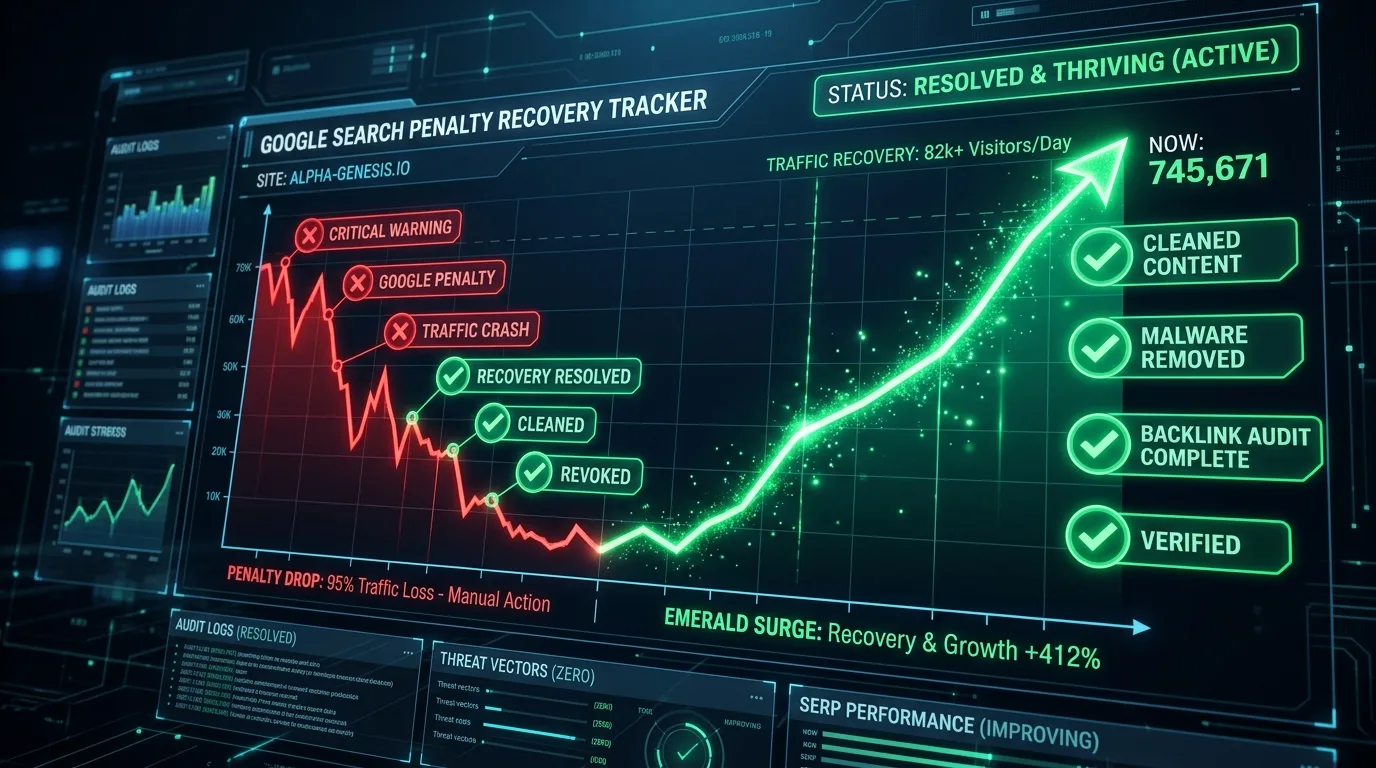
Recovery is rarely instantaneous. Once your technical remediations, content pruning, and disavow submissions are deployed, you must monitor recovery telemetry across high-precision tracking dashboards.

Accelerating Googlebot Re-crawling
To speed up the evaluation of your remediated pages, do not wait passively for Googlebot to stumble across them:
- Submit Cleaned XML Sitemaps: Generate dedicated XML sitemaps containing exclusively your Q1 and Q3 high-quality URLs with updated
<lastmod>timestamps. Submit them directly in Google Search Console. - Leverage the Google Search Console URL Inspection Tool: Request indexing manually on your top 20 most critical pillar pages to trigger immediate crawler prioritization.
- Internal Link Recirculation: Link prominently to newly updated pillar guides directly from high-traffic, healthy pages (such as your homepage and navigation menu).
Realistic Recovery Timelines
| Penalty Type | First Rebound Signs | Full Traffic Recovery Timeline |
|---|---|---|
| Manual Action (Unnatural Links) | 7 to 14 days after approval notice. | 30 to 90 days (rankings recalibrate as artificial link equity is removed). |
| Manual Action (Scaled Content Abuse) | 14 to 30 days post-reconsideration. | 60 to 120 days as pruned URLs drop from index. |
| Algorithmic Core Update Devaluation | Minor incremental impression gains within 30-60 days. | Subsequent broad Core Update cycle (typically 3 to 6 months). |
| Algorithmic Spam Update Devaluation | After Googlebot re-crawls disavowed links/pruned content. | Subsequent Spam Update rollout or ongoing SpamBrain classifier updates. |
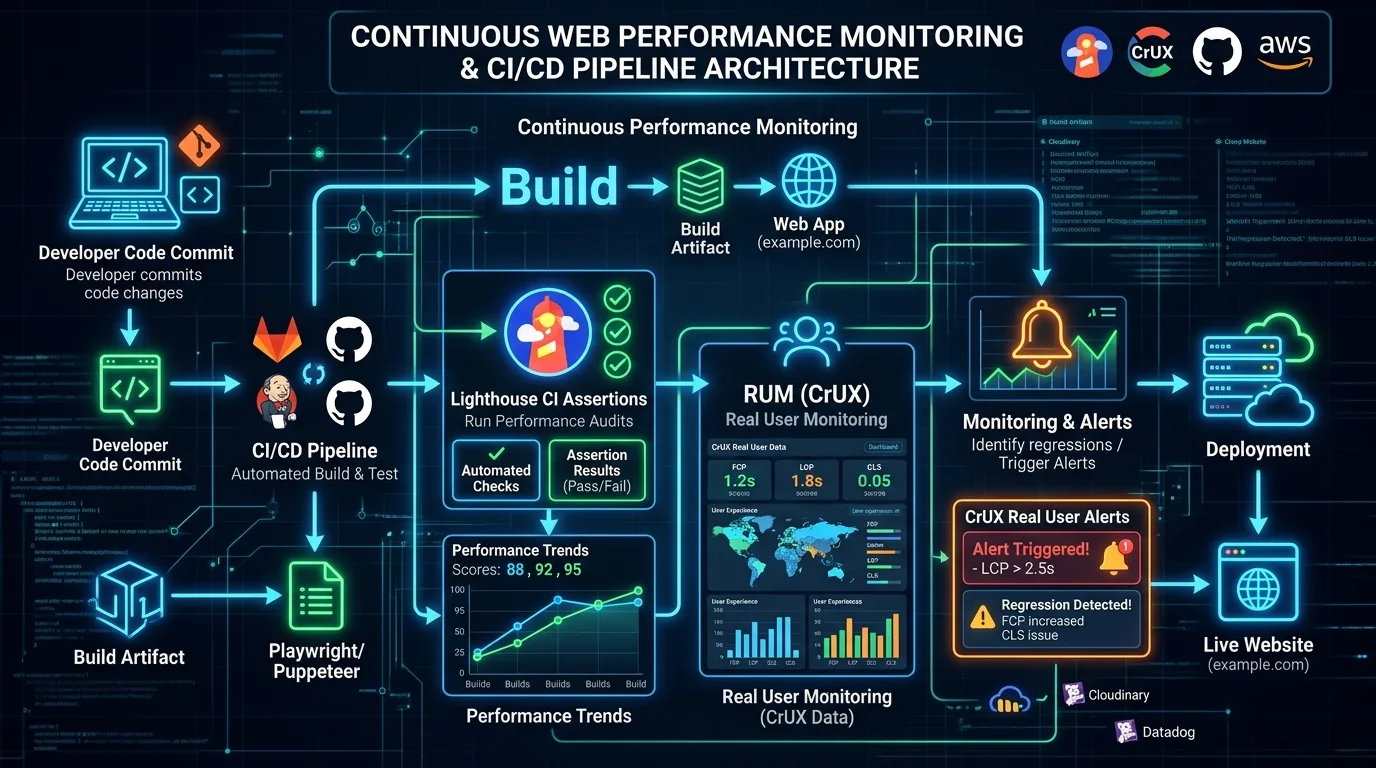
Chapter 7: Establishing Permanent Search Governance & CI/CD Auditing
The ultimate goal of recovery is establishing an operational defense system that ensures your domain can never be penalized again. High-growth organizations enforce automated compliance and strict editorial governance.
The 5 Golden Rules of Permanent Penalty Immunity
- Zero Tolerance for Manipulative Link Schemes: Never buy paid guest posts, PBN links, or automated directory submissions. Build links through high-authority digital PR, proprietary research releases, and un-coerced editorial citations.
- Mandatory Information Gain Thresholds for Publishing: Prohibit publishing generic AI summaries. If an article does not contain original data, hands-on expert testing, or proprietary frameworks, it must not be approved by editors.
- Weekly Automated Backlink Profile Audits: Set up automated API webhooks connecting Ahrefs or Semrush to Slack. Receive instant alerts whenever your domain experiences an unnatural surge in foreign-language anchors or spam referring domains.
- Quarterly Content Health Audits: Schedule recurring quarterly audits to prune decaying URLs, merge cannibalizing content, and update outdated statistical claims.
- Strict Separation of Editorial and Advertising: All sponsored content, paid partnerships, and affiliate hyperlinks must carry explicit
rel="sponsored"orrel="nofollow"attributes to avoid outbound link penalties.
Frequently Asked Questions (FAQ)
1. How do I know if my traffic drop is a manual penalty or an algorithmic update?
Log in to Google Search Console and navigate to Security & Manual Actions → Manual Actions. If you see a red/yellow warning listing a specific violation (e.g., "Unnatural links to your site"), you have an explicit Manual Action. If this screen says "No issues detected" yet your organic traffic collapsed over the course of several days during a known Google update, your site suffered an Algorithmic Devaluation.
2. Can I submit a Reconsideration Request for an algorithmic core update drop?
No. Google does not accept Reconsideration Requests for algorithmic devaluations. There is no manual action to lift. Recovery requires overhauling your site's content quality, removing thin/scaled content, upgrading E-E-A-T signals, and waiting for Google's automated systems to re-evaluate your domain during subsequent algorithm update rollouts.
3. Should I disavow all low-quality backlinks automatically?
No. Google's algorithms (including SpamBrain) are highly proficient at automatically ignoring low-level web spam and scraper links without penalizing your domain. You should only use the Disavow Tool if you have an active Manual Action for unnatural links, or if your domain engaged in deliberate, large-scale paid link schemes that you cannot manually remove.
4. Does deleting content (pruning) really help recover organic traffic?
Yes. Low-quality, thin, unhelpful pages drag down the overall quality threshold of your entire domain. By deleting dead URLs with HTTP 410 Gone or consolidating overlapping articles with 301 redirects, you concentrate your domain authority and prove to Google's quality classifiers that 100% of your indexed pages offer genuine user value.
5. Is it faster to abandon a penalized domain and start a new one?
In 90% of cases, rehabilitating an established domain with historical authority is significantly faster and more valuable than starting from zero in Google's "sandbox." However, if a domain has suffered multiple consecutive manual actions, holds an irredeemable backlink profile of 99% PBN spam, and has no brand search equity, migrating to a fresh domain may be considered as a last resort.
6. How long does Google take to respond to a Reconsideration Request?
Google typically processes reconsideration requests within 1 to 4 weeks. You will receive an official notification in Google Search Console stating whether your request was approved ("Manual action revoked") or rejected ("Reconsideration request rejected"). If rejected, Google often provides sample URLs that remain non-compliant.
7. Will my rankings return to their exact previous positions after recovery?
Not necessarily. If your previous rankings were artificially inflated by manipulative backlinks or keyword-stuffed content, you will not return to inflated positions once those tactics are neutralized. However, high-quality, rehabilitated pages will regain organic impressions, stabilize in top SERP positions, and establish sustainable, penalty-proof growth.
8. Can AI-generated content trigger a Google penalty?
Google's official stance is that AI-generated content does not violate guidelines simply because it was created by AI. However, using AI to produce high volumes of superficial, generic content without human oversight or added Information Gain falls directly under Scaled Content Abuse, which triggers severe manual actions and algorithmic demotions.
Actionable 25-Point Google Penalty Recovery Checklist
- [ ] Check Google Search Console → Security & Manual Actions → Manual Actions.
- [ ] Verify
robots.txtis not disallowing search crawlers. - [ ] Audit primary page templates to verify no accidental
noindextags or headers exist. - [ ] Review GSC Crawl Stats for 5xx server outages or host connection failures.
- [ ] Correlate traffic crash dates against the Google Search Status Dashboard and industry update trackers.
- [ ] Determine penalty scope: domain-wide, sub-folder specific, or query-level.
- [ ] Export complete backlink profile from Google Search Console, Ahrefs, and Semrush.
- [ ] Identify and categorize toxic PBNs, paid links, and manipulative exact-match anchors.
- [ ] Execute documented manual outreach to webmasters requesting link removals.
- [ ] Compile a clean UTF-8 Google Disavow text file using
domain:syntax. - [ ] Upload the disavow file via Google's official Disavow Tool.
- [ ] Draft an honest, evidence-backed Reconsideration Request containing public audit spreadsheets.
- [ ] Submit the Reconsideration Request via Google Search Console (Manual Actions only).
- [ ] Conduct a site-wide content inventory across 100% of indexed URLs.
- [ ] Classify all pages into the 4-Quadrant Content Audit Matrix (Keep, Merge, Rewrite, Prune).
- [ ] Permanently delete low-value, zero-traffic pages using HTTP 410 Gone server responses.
- [ ] Consolidate keyword-cannibalizing articles into authoritative pillar guides with 301 redirects.
- [ ] Rewrite prioritized pages to infuse proprietary data, first-hand testing, and unique insights.
- [ ] Remove intrusive interstitial ads, aggressive affiliate overlays, and layout clutter.
- [ ] Implement verified Author Bio schema markup linking to verifiable industry credentials.
- [ ] Rebuild internal linking architecture using structured, semantic topic clusters.
- [ ] Submit updated XML sitemaps with accurate
<lastmod>timestamps in GSC. - [ ] Set up automated Slack webhooks for weekly backlink toxicity monitoring.
- [ ] Enforce editorial governance prohibiting the purchase of manipulative links or mass AI scraping.
- [ ] Track 28-day rolling recovery trends in Google Search Console and analytics dashboards.

Ratings & reviews
No reviews yet. Be the first.