
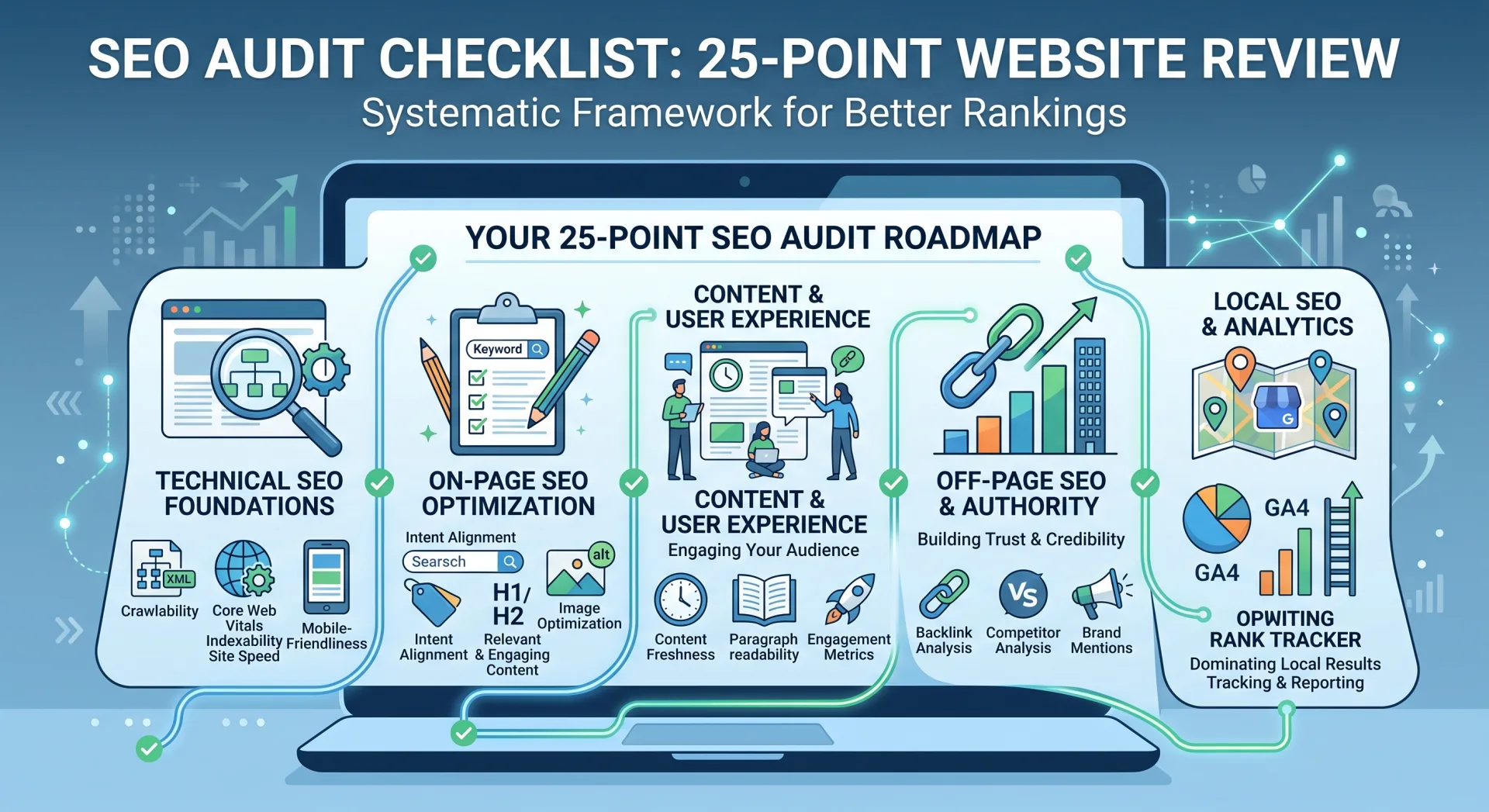
Performing a thorough SEO audit is a critical step for anyone looking to improve their website's search engine performance. This comprehensive 25-point checklist provides a systematic framework to identify gaps and opportunities across technical SEO, on-page optimization, content quality, and off-page factors. By meticulously reviewing each element, webmasters and SEO consultants can pinpoint issues hindering rankings, enhance user experience, and ultimately drive more organic traffic. This guide will walk you through actionable steps to conduct an effective website review, ensuring your site is optimized to meet modern search engine standards and outrank competitors.
A well-executed SEO audit isn't just about finding problems; it's about building a foundation for sustainable growth. Many websites suffer from hidden technical errors, outdated content strategies, or overlooked backlink opportunities that prevent them from reaching their full potential. This checklist is designed to uncover these areas, providing a clear roadmap for implementing improvements that translate into tangible results. Whether you're a seasoned SEO professional or new to website optimization, following this structured approach will empower you to make data-driven decisions and elevate your site's visibility.
Technical SEO Foundations: Ensuring Search Engine Crawlability and Indexability
Technical SEO forms the backbone of any successful search engine strategy. If search engines can't efficiently crawl and index your site, all other optimization efforts will be in vain. This section focuses on essential technical checks to ensure your website is accessible and understandable to crawlers, laying the groundwork for better rankings.
Ignoring technical SEO issues is akin to building a house on a shaky foundation. Even the most compelling content or robust backlink profile won't compensate for fundamental technical flaws that prevent search engines from discovering and evaluating your pages. A thorough technical audit ensures that your site communicates effectively with search engine bots.
1. XML Sitemap Optimization
An XML sitemap acts as a roadmap for search engines, listing all important pages on your site that you want crawled and indexed. Ensure your sitemap is up-to-date, free of errors, and submitted to Google Search Console and other relevant webmaster tools. It should only include canonical URLs and exclude noindexed pages.
Regularly review your XML sitemap to confirm it accurately reflects your current site structure. Broken links, redirects, or pages blocked by robots.txt should not appear in your sitemap. A clean, optimized sitemap helps search engines discover new content quickly and efficiently.
2. Robots.txt File Configuration
The robots.txt file tells search engine crawlers which parts of your site they can and cannot access. A misconfigured robots.txt can inadvertently block critical pages from being indexed, severely impacting your organic visibility. Verify that no essential pages or directories are disallowed.
Use Google Search Console's robots.txt tester to identify and fix any issues. Ensure that your robots.txt file points to your XML sitemap for easier discovery. It’s a powerful tool, but use it with caution, as incorrect directives can have significant negative consequences.
3. Canonicalization and Duplicate Content
Duplicate content, even within your own site, can confuse search engines and dilute ranking signals. Implement canonical tags (rel="canonical") to specify the preferred version of a page when multiple URLs display similar content. This is crucial for variations like www vs. non-www, http vs. https, and pages with tracking parameters.
Conduct a site-wide scan for potential duplicate content issues. Tools like Screaming Frog or Ahrefs can help identify pages with identical or highly similar content that may require canonicalization. Consistent use of canonical tags ensures that search engines attribute all ranking signals to a single, authoritative version of your content.
4. Site Speed and Core Web Vitals
Page load speed is a critical ranking factor and a significant contributor to user experience. Google's Core Web Vitals (Largest Contentful Paint, First Input Delay, Cumulative Layout Shift) measure real-world user experience aspects of loading performance, interactivity, and visual stability. Optimize images, leverage browser caching, minify CSS/JavaScript, and consider a Content Delivery Network (CDN).
Use Google PageSpeed Insights, Lighthouse, or GTmetrix to analyze your site's performance and identify specific areas for improvement. Prioritize fixing issues that negatively impact Core Web Vitals scores, as these directly influence your search rankings and user satisfaction.
5. Mobile-Friendliness
With mobile-first indexing, Google primarily uses the mobile version of your content for indexing and ranking. Ensure your website is fully responsive and provides an excellent user experience on all devices. Test your site using Google's Mobile-Friendly Test tool.
Beyond responsiveness, check for touch target sizes, readable font sizes, and easy navigation on mobile devices. A seamless mobile experience is no longer optional; it's a fundamental requirement for search visibility.
6. HTTPS Implementation
HTTPS (Hypertext Transfer Protocol Secure) is a security protocol and a confirmed ranking signal. Ensure your entire website uses HTTPS. If you've recently migrated, verify that all internal links and canonical tags point to the HTTPS versions, and implement proper 301 redirects from HTTP to HTTPS.
Check for mixed content warnings, where HTTP resources are loaded on an HTTPS page. These warnings can degrade security and user trust. A fully secure website protects user data and builds credibility with both users and search engines.
On-Page SEO Optimization: Crafting Relevant and Engaging Content
On-page SEO involves optimizing individual web pages to rank higher and earn more relevant traffic in search engines. This section focuses on content quality, keyword integration, and user experience factors directly on your pages.
Effective on-page optimization goes beyond just stuffing keywords. It's about creating high-quality, valuable content that genuinely addresses user intent, while also signaling relevance to search engines through strategic placement of keywords and proper HTML structure. This balance is key to attracting and retaining your target audience.
7. Keyword Research and Intent Alignment
Review your existing content's keyword targeting. Are you targeting relevant keywords with sufficient search volume? More importantly, does your content truly align with the user intent behind those keywords? A page targeting "best running shoes" should offer product reviews and comparisons, not just a history of running.
Conduct fresh keyword research to identify new opportunities and refine existing targeting. Look for long-tail keywords and semantic variations to enrich your content and capture a wider range of user queries. Understanding user intent is paramount for creating content that ranks and converts.
8. Title Tags and Meta Descriptions
Optimize your title tags and meta descriptions for every important page. Title tags should be unique, include your primary keyword, and be compelling enough to encourage clicks. Meta descriptions, while not a direct ranking factor, significantly influence click-through rates (CTR) by providing a concise summary of the page's content.
Keep title tags under 60 characters and meta descriptions under 160 characters to ensure they display fully in search results. Write them to be informative and persuasive, acting as mini-advertisements for your content.
9. Header Tag Structure (H1, H2, H3, etc.)
Use header tags (H1, H2, H3, etc.) to structure your content logically, making it easier for both users and search engines to read and understand. Each page should have one H1 tag, typically containing the primary keyword, and subsequent H2s and H3s should break down the content into manageable sections.
Ensure your header tags accurately reflect the content of their respective sections and incorporate relevant keywords where natural. A clear hierarchical structure improves readability and helps search engines grasp the main topics and subtopics of your page.
10. Content Quality and Depth
Evaluate the quality, depth, and originality of your content. Is it comprehensive, accurate, and truly valuable to your target audience? Does it answer common questions, provide unique insights, or solve user problems? Thin, generic, or poorly written content will struggle to rank.
Look for opportunities to expand on existing content, update outdated information, or combine fragmented pieces into more authoritative resources. High-quality content is a cornerstone of successful SEO, driving engagement and earning natural backlinks.
11. Image Optimization (Alt Text, File Size)
Optimize all images on your website. Compress image files to reduce page load time without sacrificing quality. Use descriptive alt text for every image, incorporating relevant keywords where appropriate. Alt text aids accessibility for visually impaired users and helps search engines understand image content.
Consider using modern image formats like WebP for better compression. Ensure image filenames are descriptive (e.g., red-running-shoes.jpg instead of IMG001.jpg). Proper image optimization contributes to both user experience and search engine visibility.
12. Internal Linking Structure
Review your internal linking strategy. A strong internal linking structure helps distribute "link equity" throughout your site, guides users to related content, and signals to search engines the importance of certain pages. Ensure important pages receive sufficient internal links from relevant, authoritative pages.
Use descriptive anchor text for internal links, avoiding generic phrases like "click here." An effective internal linking strategy enhances crawlability, indexability, and the overall user journey on your site.
Content and User Experience: Engaging Your Audience
Beyond technical and on-page elements, the actual content and how users interact with it play a massive role in SEO. Search engines increasingly prioritize user experience signals, making engaging and valuable content a non-negotiable for high rankings.
Google's algorithms are sophisticated enough to understand user satisfaction. Pages that keep users engaged, answer their questions thoroughly, and provide a positive experience are more likely to be rewarded with higher visibility. This section focuses on evaluating your content from a user-centric perspective.
13. Content Freshness and Updates
Regularly update and refresh your existing content. Outdated information can deter users and signal to search engines that your content is no longer relevant. Identify cornerstone content that could benefit from updates, new statistics, or expanded sections.
Content freshness can be a ranking factor, especially for topics where information changes rapidly. Schedule regular content audits to identify opportunities for improvement and ensure your information remains current and authoritative.
14. Readability and Formatting
Is your content easy to read and digest? Use short paragraphs, clear headings, bullet points, and white space to break up text. Avoid jargon where possible and maintain a consistent tone of voice. Good formatting improves user engagement and reduces bounce rates.
Tools like Hemingway Editor or Readable.io can help assess the readability of your content. Aim for a reading level that is appropriate for your target audience, making your valuable information accessible to as many people as possible.
15. User Engagement Metrics
Analyze user engagement metrics in Google Analytics, such as bounce rate, time on page, and pages per session. High bounce rates or low time on page can indicate that your content isn't meeting user expectations or that there are usability issues.
Investigate pages with poor engagement metrics to understand the underlying causes. It could be irrelevant content, slow loading times, confusing navigation, or a poor mobile experience. Addressing these issues can significantly improve your SEO.
16. Schema Markup Implementation
Implement structured data (Schema Markup) to help search engines better understand the context of your content and potentially display rich snippets in search results. Examples include LocalBusiness, Product, Review, Article, FAQPage, or HowTo schema.
Use Google's Structured Data Testing Tool or Rich Results Test to validate your schema implementation. Rich snippets can significantly increase your CTR by making your search listings more appealing and informative.
17. Broken Links (Internal and External)
Scan your website for broken internal and external links. Broken links create a poor user experience and can waste crawl budget. They also prevent link equity from flowing correctly throughout your site. Use tools like Screaming Frog or Ahrefs to identify and fix these.
For internal broken links, simply update them to the correct URL. For external broken links, you can either remove them, update them to a working source, or consider finding a relevant, high-quality replacement.
Off-Page SEO and Authority: Building Trust and Credibility
Off-page SEO refers to actions taken outside of your own website to impact your rankings within search engine results pages (SERPs). These typically involve building high-quality backlinks, fostering social signals, and cultivating a strong brand presence.
While you have direct control over your website's content and technical aspects, off-page SEO requires influencing external sources. It's about demonstrating to search engines that your website is a trusted, authoritative source in its niche, a signal largely conveyed through the quality and quantity of links pointing to your site.
18. Backlink Profile Analysis
Conduct a thorough analysis of your backlink profile. Look at the quality, relevance, and authority of linking domains. Are you acquiring links from reputable, industry-relevant websites? Identify any toxic or spammy backlinks that could harm your rankings and consider disavowing them.
Use tools like Ahrefs, SEMrush, or Majestic to audit your backlinks. Monitor your backlink growth over time and identify opportunities for ethical link building to enhance your site's authority.
19. Competitor Backlink Analysis
Analyze the backlink profiles of your top-ranking competitors. Identify common linking domains and strategies they employ. This can reveal untapped opportunities for your own link building efforts and inform your content strategy.
Understanding where your competitors get their links can provide a roadmap for your own outreach. Look for patterns in their link acquisition, such as guest posting, resource pages, or industry directories, and assess if these are viable strategies for your site.
20. Brand Mentions and Online Reputation
Monitor online mentions of your brand, even those without a direct link. Search engines are increasingly sophisticated at understanding brand sentiment and authority. A strong, positive online reputation can indirectly influence your search rankings.
Address negative reviews or mentions professionally and promptly. Encourage satisfied customers to leave reviews on relevant platforms. Building a positive brand presence across the web reinforces your authority and trustworthiness.
Local SEO (If Applicable): Dominating Local Search Results
For businesses serving a specific geographic area, Local SEO is paramount. This section focuses on optimizing your presence for local search queries, helping customers in your vicinity find you.
Local SEO is distinct from broader organic SEO because it prioritizes proximity and local intent. If your business relies on local customers, neglecting these specific optimizations means missing out on highly qualified leads who are ready to make a purchase or visit your establishment.
21. Google Business Profile Optimization
Ensure your Google Business Profile (formerly Google My Business) is fully optimized, accurate, and up-to-date. Include your business name, address, phone number (NAP), website, hours of operation, photos, and categories. Encourage and respond to customer reviews.
Regularly post updates, offers, and events to your Google Business Profile. This active management signals to Google that your business is relevant and engaged, improving your visibility in local search and map results.
22. Local Citations and Directories
Verify that your business is listed consistently across major online directories and local citation sites (Yelp, Yellow Pages, industry-specific directories). Inconsistent NAP information can confuse search engines and harm your local rankings.
Audit your existing citations for accuracy and proactively seek out new, relevant local directories. The more consistent and numerous your citations, the stronger your local authority signals will be.
Analytics and Performance Monitoring: Tracking Progress and Iterating
An SEO audit is not a one-time task; it's a continuous process. This section emphasizes the importance of setting up proper tracking and regularly monitoring your performance to measure the impact of your optimizations and identify new areas for improvement.
Without robust analytics, you're essentially flying blind. Tracking key metrics allows you to understand what's working, what isn't, and how your website is performing against its SEO goals. This data-driven approach is essential for continuous improvement and maximizing your return on investment.
23. Google Analytics Setup and Goals
Ensure Google Analytics (or a similar analytics platform) is correctly installed and configured. Set up relevant goals (e.g., form submissions, purchases, newsletter sign-ups) to track conversion performance from organic search traffic.
Regularly review your organic search performance in Google Analytics to identify trends, popular pages, and areas for improvement. This data is invaluable for refining your SEO strategy and demonstrating ROI.
24. Google Search Console Monitoring
Regularly monitor Google Search Console for critical insights. Check for crawl errors, security issues, manual actions, and index coverage problems. Analyze your search performance reports to identify top-performing queries, pages, and opportunities for optimization.
Search Console is your direct line of communication with Google. Pay close attention to any messages or warnings, as these often indicate high-priority issues that need immediate attention to prevent negative impacts on your rankings.
25. Rank Tracking and Reporting
Implement a reliable rank tracking tool to monitor your target keywords' positions in search results. Track your progress over time and correlate ranking changes with the SEO optimizations you've implemented.
Generate regular reports to communicate your SEO performance to stakeholders. Focus on key metrics like organic traffic growth, keyword rankings, and conversion rates to demonstrate the value of your ongoing SEO efforts.
Conclusion
Conducting a comprehensive 25-point SEO audit is a powerful exercise that provides a holistic view of your website's strengths and weaknesses. By systematically addressing technical issues, optimizing on-page elements, enhancing content quality, building authority, and monitoring performance, you can create a robust foundation for sustained organic growth. This detailed website review checklist empowers you to identify critical gaps and prioritize actionable strategies that will significantly improve your search engine rankings and drive valuable traffic to your site.
Remember, SEO is not a one-time fix but an ongoing journey. Regular audits, coupled with continuous monitoring and adaptation to algorithm changes, are essential for maintaining and improving your online visibility. By embracing this structured approach to SEO, you'll not only fix existing problems but also uncover new opportunities to outpace competitors and achieve your digital marketing objectives.
How often should I conduct a full SEO audit?
It's generally recommended to conduct a full, in-depth SEO audit at least once a year. However, for rapidly changing websites, highly competitive niches, or after significant website redesigns/migrations, a more frequent audit (e.g., every 6 months) might be necessary. Continuous monitoring of analytics and Search Console should be daily/weekly.
What are the most critical issues to address first in an SEO audit?
Prioritize technical SEO issues that hinder crawlability and indexability, such as robots.txt blocks on important pages, broken links, or severe site speed problems. After that, address critical on-page issues like missing title tags or duplicate content. These foundational elements directly impact whether your site can even be seen by search engines.
Can I perform an SEO audit without expensive tools?
While professional tools (Ahrefs, SEMrush, Screaming Frog) significantly streamline the process, you can perform a basic SEO audit using free tools like Google Search Console, Google Analytics, Google PageSpeed Insights, and manual checks. For larger sites, however, paid tools become almost essential for efficiency and depth of analysis.
How long does it take to see results after implementing audit recommendations?
The timeframe for seeing results varies widely depending on the severity of the issues, the competitiveness of your niche, and the speed at which search engines recrawl your site. Minor technical fixes might show results in weeks, while comprehensive content and backlink strategies can take several months to a year to yield significant ranking improvements.
What is the difference between an SEO audit and ongoing SEO maintenance?
An SEO audit is a comprehensive, point-in-time review to identify existing problems and opportunities, often resulting in a list of tasks. Ongoing SEO maintenance, on the other hand, involves continuous activities like content updates, new content creation, link building, keyword monitoring, and addressing new technical issues as they arise, based on the insights gained from audits and performance tracking.


Ratings & reviews
No reviews yet. Be the first.